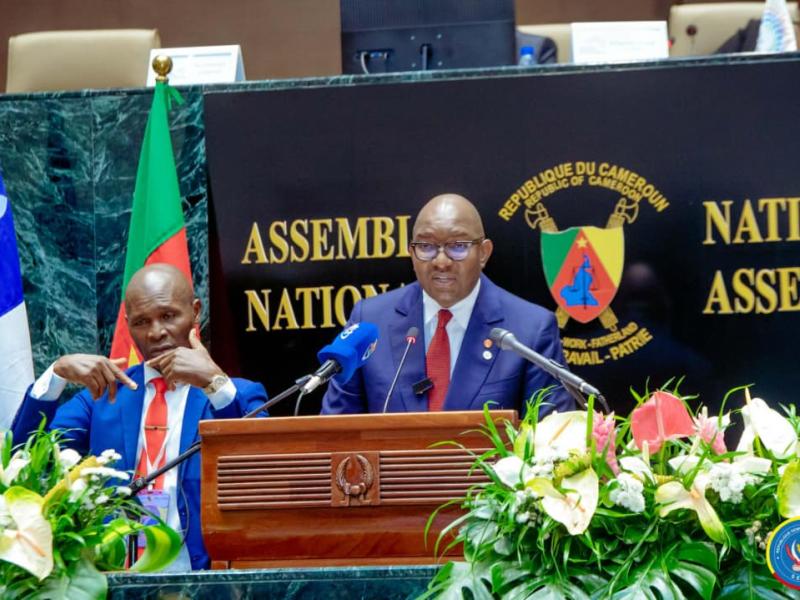
At the 51st Session of the Francophonie Parliamentary Assembly (APF) held in Yaoundé from July 6 to 11, 2026, the Democratic Republic of the Congo (DRC) seized the opportunity to spotlight its critical role in global climate preservation while condemning the ecological devastation caused by Rwanda’s backing of the M23 armed group in eastern DRC.
DRC positions itself as a “solution country” amid climate crisis
Jean-Michel Sama Lukonde Kyenge, President of the DRC Senate, delivered a keynote address emphasizing the country’s strategic importance in combating climate change. His remarks aligned with President Félix Antoine Tshisekedi’s vision, positioning the DRC as a natural “solution country” due to its vast ecological resources.
The Senate President highlighted the Congo Basin—home to the world’s second-largest tropical forest—and the nation’s unparalleled biodiversity. He underscored the Kivu-Kinshasa Green Corridor, a 500,000 km² initiative aimed at bolstering global climate resilience. Yet, he lamented that despite these assets, international support remains insufficient to address the mounting environmental challenges.
M23 aggression linked to severe ecological damage
Sama Lukonde did not mince words when addressing the ecological fallout of the M23 conflict, which he described as an “unjust aggression orchestrated by Rwanda through its proxy forces.” The ongoing violence, he argued, has triggered catastrophic consequences for both human security and the environment in eastern DRC.
The conflict has led to:
- Massive displacement of local populations, exacerbating humanitarian crises.
- Destruction of ecosystems, including deforestation and wildlife decimation.
- Pollution of vital water sources, threatening both health and agriculture.
- Long-term climate disruption, as war-induced environmental degradation undermines global efforts to achieve carbon neutrality.
Sama Lukonde stressed that sustainable climate action cannot coexist with the ongoing plunder and destruction of natural resources through armed conflict. He called for urgent international solidarity to support peace initiatives and the implementation of the Washington Accords, which aim to stabilize the region.
Call for a Francophonie climate pact
In his closing remarks, the Senate President urged the Francophonie community to adopt a unified climate pact. This pact would prioritize:
- Solidarity among member states to address climate vulnerabilities.
- Support for forest-adjacent communities in the DRC and beyond.
- Recognition of the Congo Basin’s role in global climate regulation.
Additionally, Sama Lukonde announced the DRC’s endorsement of Julianna Lumumba’s candidacy for the Francophonie leadership, signaling the country’s commitment to strengthening multilateral cooperation on environmental and governance fronts.
A platform for youth and parliamentary diplomacy
The APF Yaoundé session, attended by over 300 parliamentarians from 42 Francophonie member states, also hosted the 11th edition of the Francophonie Youth Parliament (PFJ). Bringing together 61 young leaders from 29 sections, the PFJ provided a vital space for youth voices in shaping policies on climate, peace, and sustainable development.
The week-long event featured intensive debates in permanent commissions and thematic networks, covering political, economic, social, and environmental issues critical to the Francophonie’s future.