ebola in DRC: rebuilding trust amid the outbreak
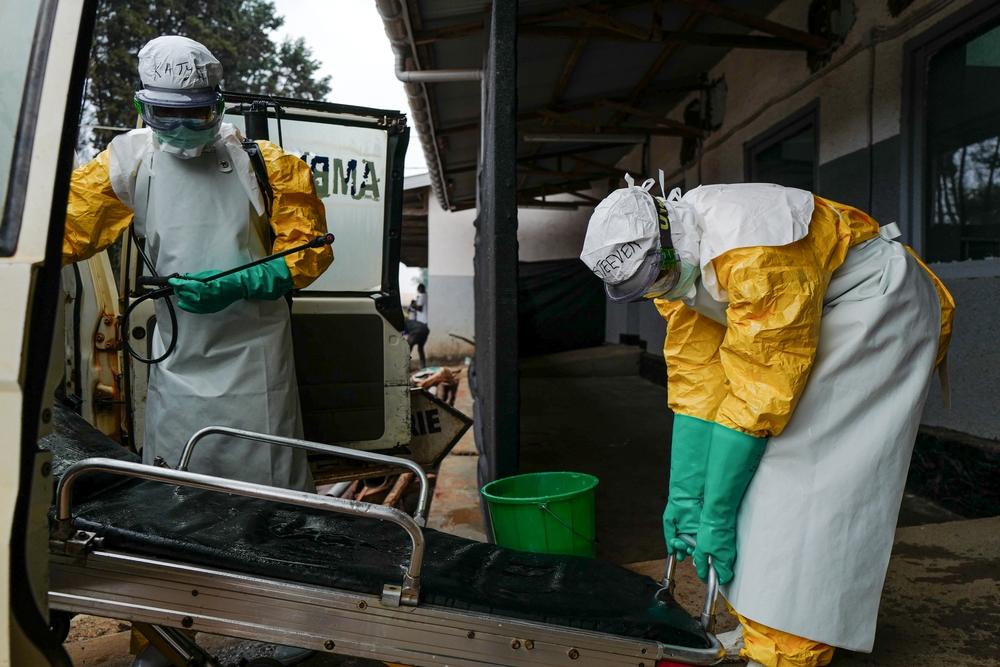
The Ebola virus continues to spread across eastern Democratic Republic of the Congo (DRC). In North Kivu, beyond medical care and the opening of a new Ebola Treatment Centre in Butembo, Médecins Sans Frontières is working closely with local communities and stakeholders in Butembo and Beni. The goal: restore trust, adapt care to local constraints, and strengthen community awareness.
the threat of misinformation and fear of the ‘Ebola business’
The 17th Ebola outbreak is unfolding in an unstable security context that fuels distrust and false information. In Butembo and Beni, within North Kivu province in eastern DRC, residents remain deeply scarred by the 2018-2020 epidemic. Grief over lost loved ones, lack of information, and bans on visiting the sick have eroded trust in the medical response.
In 2019, tensions escalated to the point of partially burning down a treatment centre (CTE), forcing MSF to temporarily suspend operations in the area.
« Some people advised us not to go to the health centre, claiming doctors would make my husband sick », shares Elise*, who is accompanying her husband, who tested positive for Ebola.
In a region where humanitarian aid is scarce, the return of medical teams has revived old fears. « Rumours spread across all layers of the population », observes Dr. Pablo Paluku Lwanzo, chief medical officer for Butembo health zone. « Some deny the existence of the disease or accuse us of poisoning. »
This misinformation is compounded by memories of the documented ‘Ebola business’ during past crises, marked by financial abuses and even gender-based violence. These past events continue to undermine the safety of humanitarian workers on the ground.
while the virus spreads at an unprecedented pace
As of 13 July 2026, Butembo and Beni recorded 122 and 31 confirmed cases, respectively, with 77 and 20 deaths. « These figures are far below reality », warns Hugo Soubrier, MSF epidemiologist in North Kivu. « Patients arrive at an advanced stage, which explains the high mortality rate. Nearly half of those infected had contact with unidentified cases. »
a new isolation centre offers hope for families
Denise’s sister was admitted to the new isolation centre in Butembo, opened by MSF in early July. Each day, Denise and her relatives can visit her through a glass window. « It reassures me to see her », Denise shares. « The idea behind this isolation is to contain the spread of the virus while allowing families to stay in touch with patients. »
In Butembo, our teams repurposed a building from the general referral hospital to establish a 35-bed Ebola Treatment Centre.
empowering communities to combat the epidemic
To curb the virus’s spread, which has reached Tshopo and Haut-Uélé provinces, and rebuild trust, MSF is placing communities at the heart of the response. « They have firsthand experience with Ebola and deep knowledge of the terrain », explains Margot Grelet, project coordinator in Butembo. « Our role is to provide medical expertise, equipment, and treatments. »
MSF teams regularly meet with community and religious leaders to tailor interventions. The priority is to encourage early medical consultation at the first signs of symptoms to improve chances of recovery.
community leaders drive awareness and prevention
In Beni, 50 km from Butembo, the same participatory approach is in place. « We rely on group leaders, opinion influencers, and civil society to relay prevention messages », says Delphine Ferry, health promotion manager. 150 community relays trained by MSF address families’ questions about the Bundibugyo virus and treatment centres.
bringing care closer to patients and easing their fears
This commitment to proximity is reflected in concrete operational choices. In addition to a 26-bed care centre nearing completion near Beni’s referral hospital, MSF supports two local health centres by providing free primary care. Twelve observation rooms have been set up in Kanzulinzuli and Malepe health areas, with eleven more under construction in Madrandele and Kasabinyole. These spaces safely isolate and treat suspected cases while maintaining essential visual and social connections with loved ones.
*Names have been changed to protect the privacy of those interviewed.