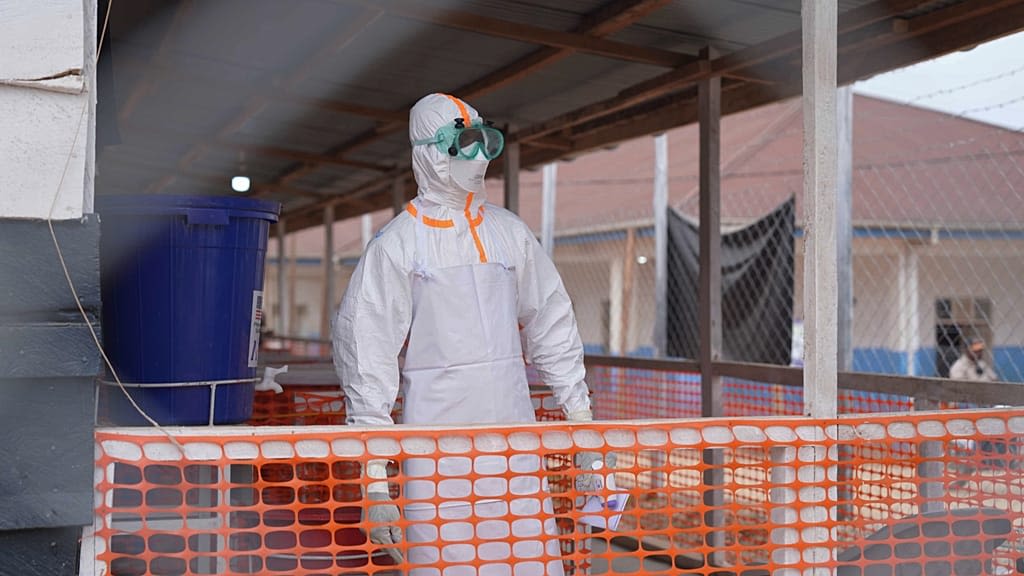
Ebola outbreak in Democratic Republic of Congo claims over 2,000 lives
The Ebola epidemic in the Democratic Republic of Congo has now claimed over 2,011 lives, according to the latest official figures, raising concerns that this may become the deadliest outbreak in the country’s history. Government data released overnight shows a total of 4,381 confirmed cases reported so far.
While the first 1,000 deaths took nearly nine weeks to accumulate, the death toll doubled in just three weeks, highlighting how rapidly the health crisis is escalating beyond current containment and response efforts.
The surge in cases and fatalities is partly attributed to severe challenges in delivering medical and logistical support to remote communities. Ongoing rebel violence, deteriorating road networks, and healthcare worker strikes—driven by unpaid wages—have severely disrupted response operations.
“The situation is alarming,” said Dr. Jean-Marie Akandabo, a clinician working with patients in Ituri, in the northeast. He urged immediate scaling up of response measures in affected areas.
This is the 17th recorded Ebola outbreak in the DRC, already considered the most extensive in the country’s history. Public health officials warn it “could become the largest Ebola flare-up ever recorded.”
The current fatality rate stands at 45.9%, significantly higher than the 39.6% recorded during the devastating West Africa Ebola epidemic between 2014 and 2016, which resulted in over 11,000 deaths from 28,000 cases. That remains the deadliest Ebola outbreak on record globally.
State of emergency declared
The current outbreak was officially declared on May 15, but health authorities note that genetic sequencing indicates the virus likely began circulating months earlier, in February. A state of emergency has been declared across the DRC.
This outbreak differs from most previous ones because it involves the rare Bundibugyo strain of Ebola, for which no approved vaccines or treatments currently exist. Clinical trials for experimental vaccines have begun in Ituri Province, the epicenter of the outbreak in eastern Congo.
“Without an effective vaccine, controlling this outbreak depends entirely on early detection and isolating patients in secure treatment facilities until recovery or, tragically, death,” explained Professor Paul Hunter, an infectious disease specialist at the University of East Anglia, UK. “In remote conflict zones with poor infrastructure and communication blackouts, contact tracing and early case identification are nearly impossible,” he added.
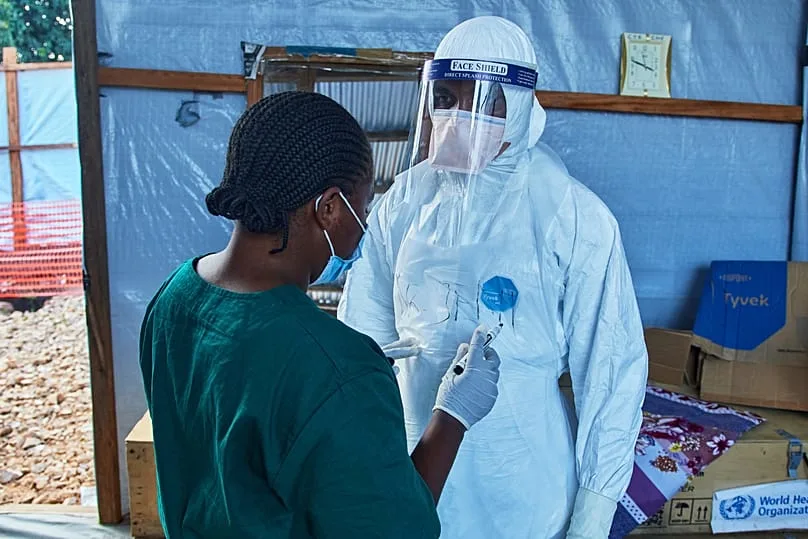
On Friday, WHO vaccine experts recommended launching large-scale human trials of the only currently licensed Ebola vaccine, Ervebo, to assess whether it offers cross-protection against the Bundibugyo strain driving the current outbreak in the DRC, for which no specific vaccine exists yet.
Ervebo has proven safe and effective against the most common Ebola strain, known as the Zaire strain. Preliminary data, including animal studies, suggest it may provide some level of protection against the rare Bundibugyo strain currently spreading in the DRC.
Two potential vaccines targeting the Bundibugyo strain are in early human clinical trials, while a third is undergoing development and preparing for initial testing.
Dr. Mohamed Yakub Janabi, WHO Regional Director for Africa, warned that officials are “racing to catch up with the virus, which has a head start.”
Ebola spreads through contact with bodily fluids and causes severe hemorrhagic fever. The virus was first identified in 1976 near the Ebola River in what is now the Democratic Republic of Congo.

More Stories
Can Benin’s port workforce transformation hinge on a €15 million Luxembourg gamble?
Burkina Faso’s shrinking public payroll: a household burden as schools reopen
Can a Tripoli-Yaoundé air link take off without a clear aviation roadmap?