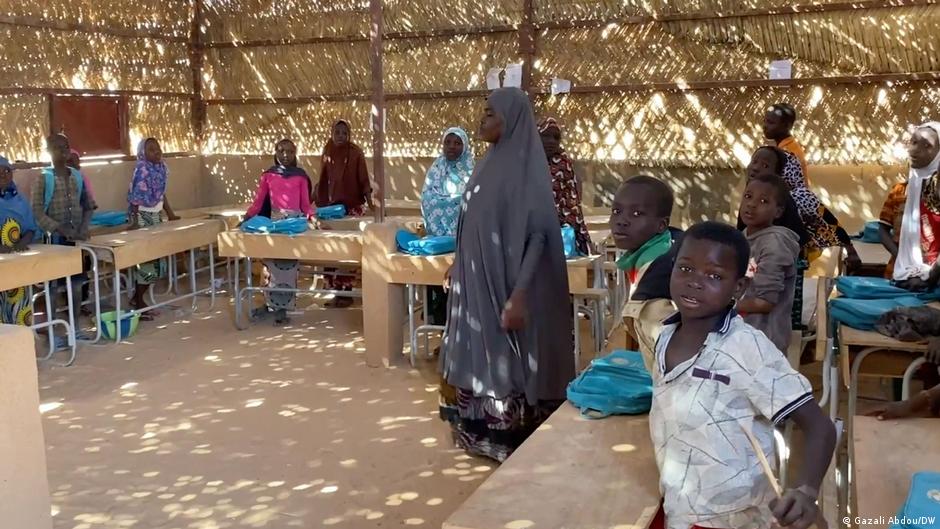
In the southwestern city of Gaya, a classroom hums with voices of children aged 9 to 12 as they reflect on a lesson that goes beyond textbooks. Today’s discussion isn’t about math or science—it’s about human rights.
One young student shares, “Before this class, I thought rights were only for adults—like driving or voting.” Another chimes in, “Now I know we have the right to healthcare, and no one can hurt us.” A third adds, “We can speak up too. Teachers and parents should listen. If we need something, we can explain without getting scolded.”
The lesson is part of a daily morality class at the Gaya mission school, where educators are redefining how children perceive their place in society. Aïssatou, the teacher leading the session, observes a clear shift in her students’ behavior. “The moment the bell rings, the discussion doesn’t stop. These children are eager to apply what they’ve learned. They absorb and act on these values immediately.”
a structured approach to teaching rights
The school follows the Competency-Based Approach (APC), a methodology that gradually introduces children to their rights through age-appropriate activities. According to Omar, an education advisor, “Starting in preschool, we use stories and songs to teach foundational rights like access to education and healthcare. As children progress to primary school, morality classes reinforce these concepts. By the time they reach secondary school, they’re introduced to civic instruction and broader human rights principles.”
This structured learning ensures that even the youngest students grasp the basics of their rights, long before they’re old enough to vote or work.
the harsh reality for many children
Not all children in Niger have the privilege of attending school regularly. Some, like an 11-year-old boy collecting plastic bottles in the streets of Gaya, have never set foot in a classroom. When asked about his understanding of rights, he shrugs and says, “Rights are for adults.” His words underscore a harsh truth: for countless children in the region, discussions about rights remain a distant concept.
The contrast between the classroom and the streets highlights the urgency of expanding child rights education beyond school walls. Educators and community leaders emphasize that these lessons must reach every child, regardless of their circumstances, to foster a generation that understands and defends their fundamental freedoms.