ebola and conflict: a deadly combination in eastern Democratic Republic of the Congo
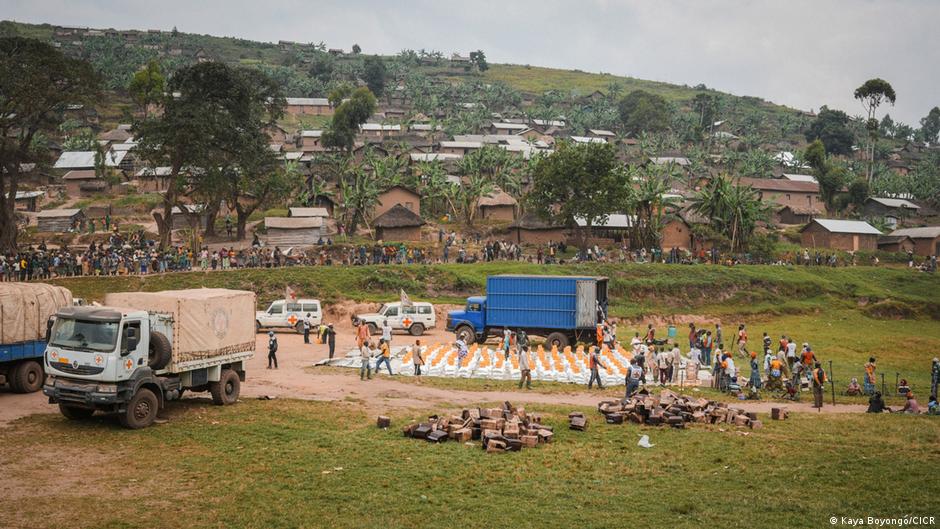
Families in eastern Democratic Republic of the Congo are trapped in a nightmare of overlapping crises. The relentless Ebola outbreak has pushed already vulnerable communities to the brink, while years of armed conflict have devastated livelihoods, displaced countless families, and choked off access to farmland and markets. The International Committee of the Red Cross has restarted critical food and seed distributions, reaching over 80,000 people despite severe movement restrictions. Yet the question remains: how can aid workers reach those forced to choose between the terror of disease and the gnawing pain of hunger?
When disease meets displacement: the perfect storm in eastern DRC
The eastern provinces of the Democratic Republic of the Congo have endured more than two decades of near-constant violence. Armed groups, intercommunal clashes, and military operations have carved deep scars into the social and economic fabric of the region. For many families, displacement isn’t a one-time event but a recurring nightmare, with each move stripping away another layer of security and stability.
Now, the Ebola epidemic has layered a new catastrophe onto this already fragile landscape. Movement restrictions meant to curb the spread of the virus have paralyzed local economies, shuttering markets and halting trade. Families that once relied on small-scale farming now find their fields inaccessible or their crops rotting in the ground. The result is a dangerous spiral: as hunger rises, so does the pressure to break quarantine rules, risking further transmission of Ebola.
Breaking the cycle: how aid groups are trying to restore hope
The International Committee of the Red Cross has launched renewed food and seed distribution programs across eastern DRC, targeting families whose coping mechanisms have been worn down by conflict and disease. These distributions provide not just immediate relief but seeds for the next planting season, giving communities a chance to rebuild their food security from the ground up. Yet the scale of need far exceeds available resources, and logistical challenges—from roadblocks to armed checkpoints—often delay deliveries.
In this Q&A, Abdoul-Karim Diomande, Head of Programs for the ICRC in the Democratic Republic of the Congo, explains how the organization is adapting its approach to meet the moment. He highlights the urgent need for sustained funding, stronger coordination with local leaders, and innovative solutions to deliver aid without putting communities at further risk.
Q: The Ebola outbreak is unfolding against a backdrop of chronic conflict and mass displacement. How has this public health emergency worsened the daily struggles of households in eastern DRC?
Abdoul-Karim Diomande: The Ebola epidemic hasn’t arrived in a vacuum. It has compounded the devastation wrought by years of conflict that have systematically eroded people’s ability to recover and rebuild. Each new wave of violence leaves families with fewer resources and less resilience. When Ebola enters the picture, it further constrains their coping strategies and stifles economic activity. Movement restrictions and market closures hit hardest those already living in precarious conditions. The poorest households bear the heaviest burden, often forced to choose between risking infection or facing starvation.
Q: What are the most pressing impacts on food security and agricultural production today?
Abdoul-Karim Diomande: The food security situation has deteriorated sharply. Insecurity has forced many families to abandon their farmland, concentrating agricultural activity around safer but overworked plots near villages. This over-exploitation risks depleting soil fertility in the long term. Agricultural extension services, which should be supporting farmers to improve yields, are barely functional due to conflict and restricted access to displaced communities. Households’ resilience is stretched to the limit. Border regions face even graver challenges, as trade restrictions and closed frontiers disrupt the flow of goods and income that communities once depended on for survival.

More Stories
Can Kribi port be Cameroon’s gateway to industrial transformation after 15 years?
Abidjan’s bold stand: can the US bypass sovereignty to dump expelled migrants?
Can debt serve education? The question Côte d’Ivoire answered in New York