Published today at 5:47 PMReading time: 4 minutes
Morocco’s Azrou College: a berber leadership incubator
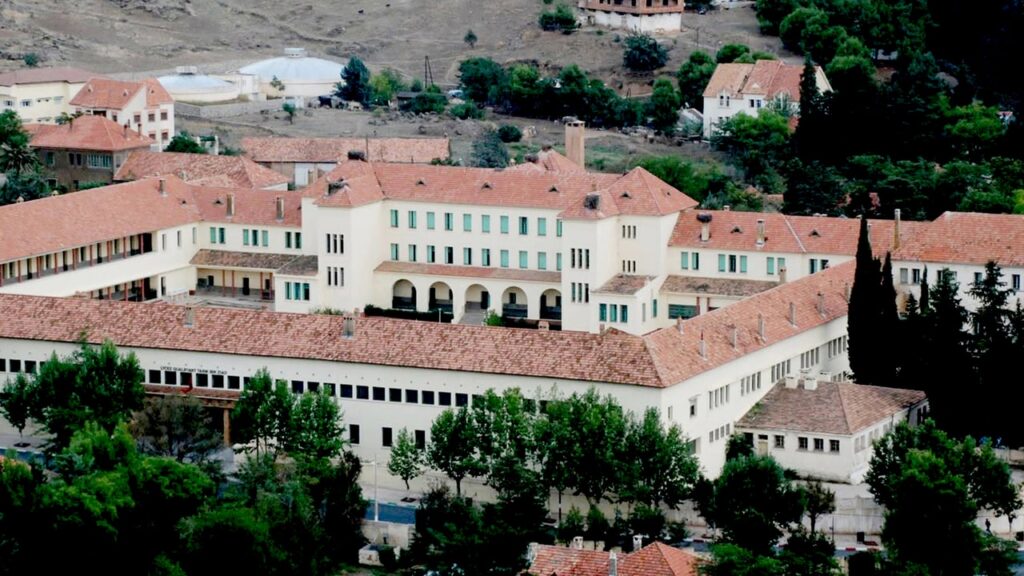
 Conceived by French colonial authorities as the cornerstone of a berber policy in Morocco, Azrou College was designed to cultivate a francophone Amazigh elite loyal to the protectorate. Its graduates were expected to serve in administration and the military, far from the nationalist hotbeds of Fès and Rabat. Yet history took a different turn. From its classrooms emerged independence activists, ministers, governors, judges—and thirteen generals. Some served King Mohammed V and Hassan II, while others were caught up in the 1971 and 1972 coups. Drawing on Mohamed Benhlal’s research in Le collège d’Azrou: une élite berbère civile et militaire au Maroc, 1927-1959 and firsthand accounts from alumni, this piece explores how the college became one of Morocco’s most influential elite factories—and why its original political mission ultimately failed.
From colonial blueprint to nationalist cradle
The French Protectorate established Azrou College in 1927 with a clear objective: to groom a generation of Amazigh leaders who would align with colonial interests. Located in the Middle Atlas, the institution aimed to distance students from nationalist movements in Morocco’s urban centers. Yet, the very alumni who were meant to uphold the protectorate’s agenda became key figures in the country’s independence struggle.
Elite formation and unexpected outcomes
The college’s curriculum blended French academic rigor with cultural assimilation policies. Graduates emerged fluent in French, equipped with technical skills, and prepared for careers in civil service or the military. Over three decades, the institution produced thirteen generals, numerous ministers, governors, and judges. Among the most notable alumni were figures who later played pivotal roles during the reigns of Mohammed V and Hassan II.
Alumni who shaped a nation
- Mohammed V’s inner circle: Several graduates became trusted advisors to the king, advising on governance and security matters.
- Military leadership: Thirteen alumni rose to the rank of general, with some directly involved in the 1971 and 1972 coups against Hassan II.
- Judicial and administrative roles: Many graduates served as judges, governors, and ministers, shaping post-independence Morocco’s institutions.
A legacy of contradiction
Despite its origins as a tool of colonial control, Azrou College evolved into a paradoxical symbol of national resilience. Its alumni not only contributed to Morocco’s independence but also helped define its post-colonial identity. The institution’s story reflects the broader tensions between colonial ambition and the unwavering spirit of self-determination that defined 20th-century Morocco.
Scholars like Mohamed Benhlal have highlighted how the college’s graduates defied the expectations placed upon them. Far from becoming docile administrators, they became architects of Morocco’s modern state, proving that education can be both a tool of control and a catalyst for change.

More Stories
Can debt serve education? The question Côte d’Ivoire answered in New York
Cameroon’s glasses affair: can press freedom survive such a costly verdict?
Can Côte d’Ivoire preserve the economic memory of Abdoulaye Koné after his death at 91?