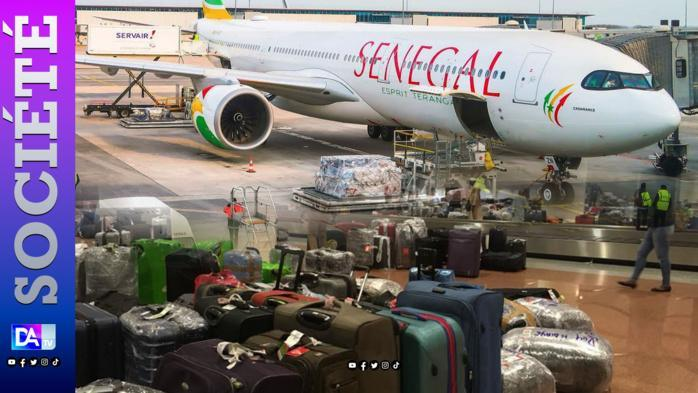
Air Senegal faces an Interpol probe into suspected crew-assisted trafficking
Is a single carton of milk the thin line between an air stewardess’s duty and unwitting participation in a transnational drug ring? Air Senegal’s leadership is grappling with this unsettling question after an Interpol investigation uncovered a suspected smuggling network allegedly involving members of the airline’s cabin crew on its Dakar–Paris–Dakar routes.
The probe centres on allegations that flight attendants and stewards transported unauthorised goods—including oversized luggage, car bumpers, and a suspicious milk carton ultimately revealed to contain hard drugs—on behalf of a France-based company. What initially appeared as isolated misconduct has ballooned into a cross-border inquiry with potential ramifications for aviation security, corporate accountability, and Senegal’s international reputation.
From milk cartons to hard drugs: the red flags in the cabin
The investigation took a dramatic turn when an Air Senegal flight attendant, entrusted with a consumer milk carton during a Paris departure, discovered its contents had been swapped for an illicit substance. According to sources familiar with the case, a colleague had directed her to a third party for the handoff—only for the contact to vanish once the suspicious package was flagged.
The incident is not an isolated one. Official documents suggest that similar practices may have recurred on multiple flights, including previous cases involving luggage from New York, where 13 crew members were later implicated in transporting goods reportedly compensated per suitcase. Restrictions on their flying duties were reportedly imposed before reinstatement, pending further review.
Safety lapses and corporate accountability: what the investigation reveals
Air Senegal’s management has confirmed receipt of the Interpol findings and implemented precautionary measures targeting crew members assigned to the Dakar–Paris–Dakar corridor. Notably, some personnel lacked the mandatory safety certification required for sensitive routes—a revelation that raises broader concerns about oversight and training protocols within the airline.
The company has distanced itself from purely financial motivations behind the alleged acts, citing competitive cabin crew wages as a safeguard against supplemental income-seeking behaviour. Yet critics argue that the scale and organisation of the suspected network point to deeper systemic issues, possibly extending beyond individual greed to include operational vulnerabilities.
Could this be the tipping point for aviation accountability in West Africa?
As Interpol continues to untangle the web of interactions, identities, and transactions linked to the suspected trafficking ring, the airline faces mounting pressure to restore trust. With the Dakar–Paris route a vital artery for both passengers and cargo, the stakes couldn’t be higher: ensuring passenger safety, preserving Senegal’s aviation reputation, and redefining the boundaries of crew responsibility in an era of heightened global scrutiny.
The next phase of the investigation promises to expose whether this scandal is rooted in isolated lapses—or whether it reflects a more insidious challenge to air travel integrity across the region.



More Stories
Can a €544,042 pledge from Benin redefine Africa’s HIV response?
Can Benin’s port workforce transformation hinge on a €15 million Luxembourg gamble?
Burkina Faso’s shrinking public payroll: a household burden as schools reopen