escalating clashes in South Kivu as armed groups seize key military post
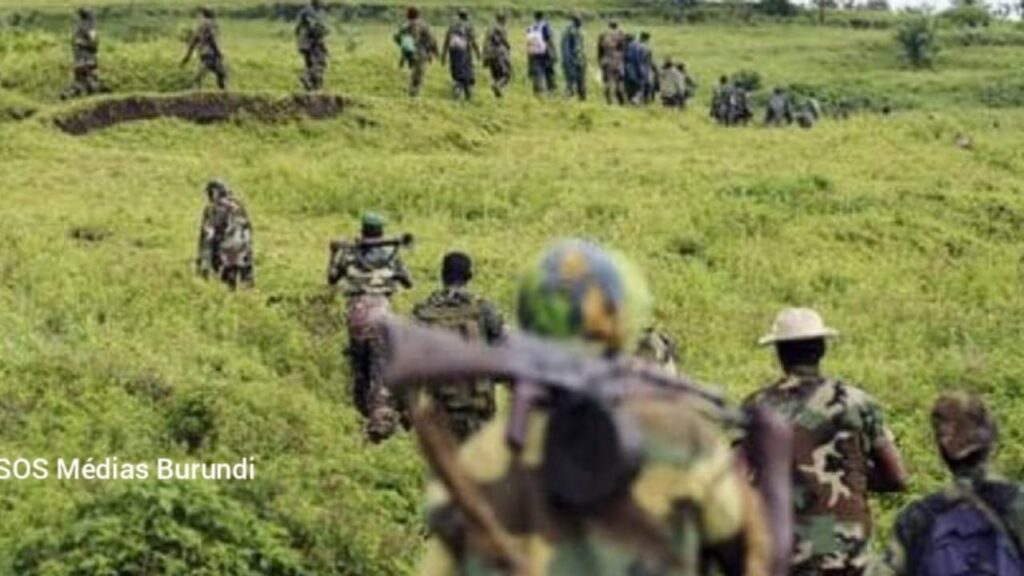
Minembwe, 6 July 2026 — Two armed factions operating in the Democratic Republic of the Congo’s South Kivu province, Twirwaneho and the M23/AFC-M23 coalition, have claimed control of Point Zéro, a critical military outpost in the Itombwe highlands. According to their joint statement, the position had served as a major stronghold for the Congolese Armed Forces (FARDC), Burundian Defence Forces (FDNB), and allied Wazalendo militias backed by Kinshasa.
The announcement came after a sustained offensive launched on 4 July, which the groups described as culminating in the capture of Point Zéro following hours of fierce fighting. Their communiqué, signed by Twirwaneho’s military spokesperson Fidèle Rugabo, declared, « Point Zéro is now under our control, » adding that FARDC, FDNB troops, and Wazalendo fighters had abandoned their posts.
Local sources in Minembwe report intense clashes along key supply routes connecting Mikenge, Kalongi, and Rubemba. Residents, weary from months of violence, cautiously awaited developments, hoping the shift in control might bring a lull in hostilities.
« We’ve been living through relentless fighting since the start of the year. If this position has truly been taken, perhaps it could ease the attacks in the region, » said one resident.
While unverified reports suggest additional retreats by FARDC and FDNB forces from positions including Point Zéro, Mikenge, Kalongi, Rubemba, and Kakenge toward Mutambala, Mukera, and Fizi territory, these claims remain unconfirmed.
Point Zéro: a strategic crossroads in the highlands
The Point Zéro base, nestled within the Itombwe massif, sits at the nexus of critical supply lines linking Minembwe, Mikenge, Mwenga, and Fizi. Its seizure underscores the intensifying battle for dominance in the South Kivu highlands, where FARDC, Burundian troops, Wazalendo militias, and Twirwaneho fighters—aligned with the AFC-M23 coalition—continue to clash.
Since the M23/AFC-M23 withdrawal from Uvira in January 2026, the highlands have become a flashpoint, with confrontations escalating across the region.
Burundi’s military footprint in eastern DRC
The presence of Burundian forces in the Democratic Republic of the Congo is governed by a bilateral security cooperation agreement between Gitega and Kinshasa. Both governments have repeatedly affirmed the deployment of over 29,000 Burundian soldiers in eastern DRC between August 2022 and December 2025, initially targeting Burundian armed groups like RED-Tabara before expanding operations alongside FARDC against multiple insurgent factions.
Recent months have seen shifting troop movements across Mwenga, Fizi, and Uvira territories, coinciding with a surge in hostilities between government-aligned forces and the two armed groups.
regional tensions and enduring instability
The conflict in eastern DRC remains deeply intertwined with regional rivalries. Kinshasa has repeatedly accused Kigali of backing the M23/AFC-M23, a claim Rwanda denies. Meanwhile, Rwanda accuses FARDC of collaborating with the Democratic Forces for the Liberation of Rwanda (FDLR), a militia comprising former Hutu extremists linked to the 1994 genocide against Tutsis.
Burundi, too, has accused Rwanda of supporting hostile armed groups in eastern DRC, while Kigali has criticized Gitega’s ties with the FDLR and other factions operating in the region.
diplomatic efforts fail to curb fighting
The latest claims emerge despite recent diplomatic efforts to stabilize eastern DRC, including accords signed in Washington on 27 June 2026 under US mediation, aimed at reducing hostilities and guiding military disengagement. Yet, clashes persist on the ground, particularly in the unstable highlands of South Kivu—a region plagued by local rivalries, communal tensions, and geopolitical rivalries that fuel a protracted and complex conflict.
At the time of reporting, no official response had been issued by FARDC, FDNB, or Burundian authorities regarding the armed groups’ assertions.