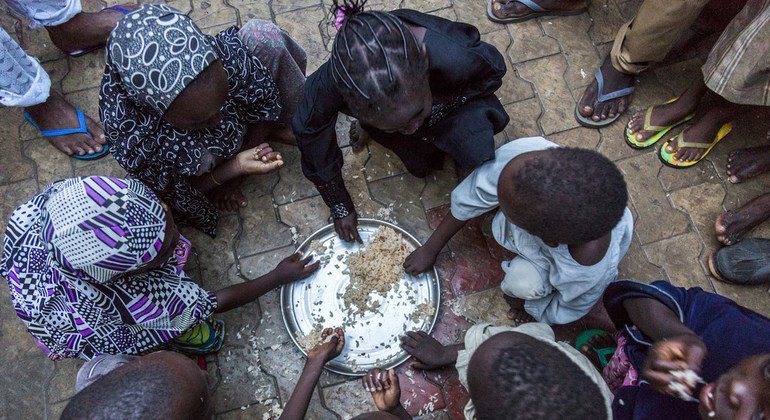
The combination of budget cuts and surging violence is driving millions in West and Central Africa toward a catastrophic food emergency. The World Food Programme (WFP) warns that 55 million people—including over 13 million children—could face life-threatening hunger this summer if urgent action isn’t taken.
regional hunger crisis deepens due to funding gaps and conflict
According to recent WFP analysis, over three million people in the region are projected to face emergency-level food insecurity (IPC Phase 4) this year—a sharp increase from 1.5 million in 2020. Four countries—Nigeria, Chad, Cameroon, and Niger—account for 77% of food insecurity cases, with 15,000 people in Nigeria’s Borno State at risk of catastrophic famine (IPC Phase 5), the first such threat in nearly a decade.
Sarah Longford, WFP’s Deputy Regional Director for West and Central Africa, highlights the devastating impact of reduced funding: “The funding shortfalls we saw in 2025 have worsened hunger and malnutrition across the region. As needs outpace resources, the risk of youth despair and instability grows.”
Mali: rising acute hunger amid aid cuts
In Mali, reduced food rations have led to a 64% surge in acute hunger in some areas, while communities receiving full rations saw a 34% decline. Persistent insecurity disrupts supply chains, leaving 1.5 million Malians vulnerable to food crises.
Nigeria: malnutrition crisis escalates without funding
Nigeria faces a critical funding gap in 2025, forcing WFP to slash nutrition programs for over 300,000 children. Malnutrition levels have escalated from “serious” to “critical” in northern states, with only 72,000 people assisted in February 2026—down from 1.3 million in the same period last year.
Cameroon: half a million at risk of losing vital aid
In Cameroon, over 500,000 vulnerable people could lose access to lifesaving support unless emergency funding is secured in the coming weeks.
13 million children on the brink of starvation
Jean Martin Bauer, WFP’s Director of Food Security and Nutrition Analysis, warns that 13 million children in the region are at risk this year. He stresses that nutrition programs must be prioritized to prevent and treat malnutrition: “When we talk about IPC Phase 5, we’re looking at 15,000 people in Nigeria’s Borno State who face immediate starvation risk.” Such conditions drastically increase mortality rates beyond normal levels.
urgent funding plea: $453 million needed in six months
To break the cycle of recurring hunger, WFP calls for a paradigm shift in 2026, urging national governments and partners to invest in proactive measures, early action, and resilience-building. The agency urgently requires $453 million over the next six months to sustain critical humanitarian aid across the region.
Longford emphasizes the broader stakes: “Supporting crisis-hit communities is essential to prevent hunger from fueling further displacement, conflict, and instability.”
proven solutions exist—but remain underfunded
WFP has long addressed root causes of acute food insecurity through resilience programs, school feeding initiatives, community infrastructure, and social protection systems. Since 2018, resilience efforts have restored over 300,000 hectares of degraded land, transforming barren landscapes into arable farmland and protecting four million people from climate shocks.
Bauer concludes: “The solutions are known and effective. The challenge is funding. Without it, progress remains out of reach.”