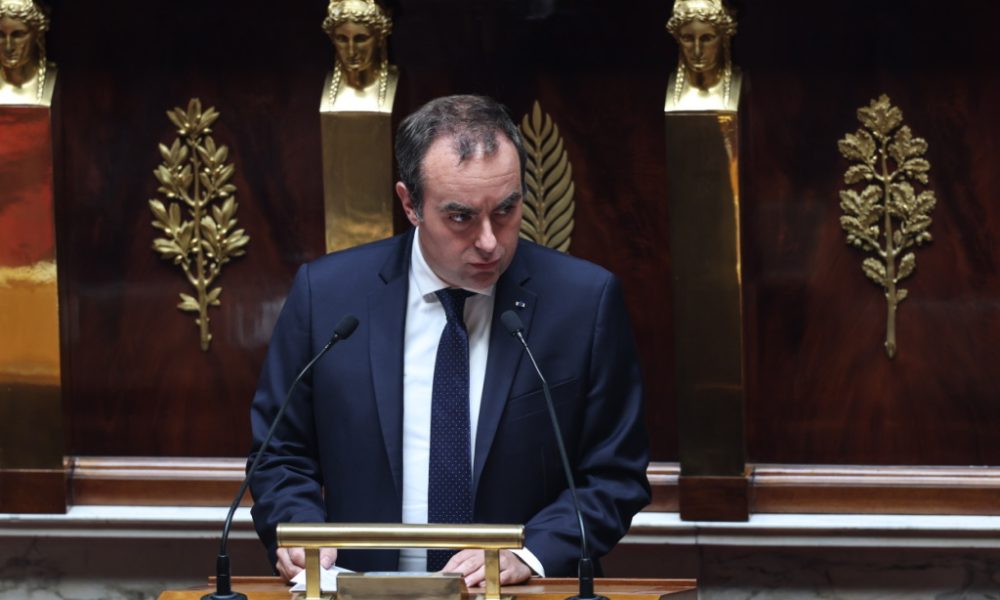
 French Prime Minister Sébastien Lecornu is set to make his first foreign trip to Morocco on Tuesday.
French Prime Minister Sébastien Lecornu is embarking on a two-day visit to Rabat, from Wednesday to Thursday, with the primary objective of solidifying the burgeoning ties between France and Morocco. A key aspiration for this diplomatic engagement is to pave the way for a potential state visit by King Mohammed VI to Paris.
Leading a delegation of approximately a dozen ministers, including Jean-Noël Barrot for Foreign Affairs and Laurent Nuñez for the Interior, Prime Minister Lecornu is scheduled to meet his Moroccan counterpart, Aziz Akhannouch. This significant gathering marks a “high-level meeting” between the two governments, the first of its kind since 2019.
Franco-Moroccan relations have seen a notable improvement following French President Emmanuel Macron’s recognition of Moroccan sovereignty over the contested Western Sahara territory in the summer of 2024, a move that drew strong disapproval from Alger.
President Macron’s subsequent three-day state visit to Rabat in October of that year was met with considerable ceremony. This visit effectively brought an end to three years of strained relations, which had been fueled by various factors, including alleged espionage concerns and a significant visa dispute. The trip culminated in the signing of numerous bilateral agreements.
“The relationship is now excellent, and it is time to reap the benefits,” commented Hasni Abidi, Director of the Centre for Studies and Research on the Arab and Mediterranean World (Cermam) in Genève.
Morocco: a diplomatic priority
Morocco has emerged as the primary focus of French diplomacy within the Maghreb region, signaling a shift where Paris is no longer prioritizing the delicate balance it once sought to maintain with Alger.
Hasni Abidi emphasized that “Emmanuel Macron no longer considers the need to balance France’s relationship between Morocco and Algeria,” particularly given the persistently fragile nature of France’s ties with Alger.
This marks Sébastien Lecornu’s inaugural international trip since assuming his role as Prime Minister in autumn 2025, a period that has otherwise been characterized by a notably discreet start to his tenure.
Following a military honors reception on Wednesday evening, both Prime Ministers are scheduled to participate in a wreath-laying ceremony at the royal mausoleum on Thursday morning, preceding their bilateral discussions.
A subsequent meeting between the two nations’ delegations will take place at the Moroccan Ministry of Foreign Affairs, where several agreements are expected to be signed. This segment of the visit aims to foster deeper cooperation across economic, security, migratory, and defense sectors.
Historian Pierre Vermeren observed that with relations with Alger remaining challenging, “Emmanuel Macron, nearing the end of his term, is keen to avoid a perceived failure in the Maghreb with Algeria and is therefore resolutely turning towards Morocco.”
According to Vermeren, Rabat is positioned to serve as an “intermediary” in assisting Paris to “re-establish” connections with several Sub-Saharan African nations. Both France and Morocco share common interests in combating the jihadist threat prevalent in the Sahel region.
A potential royal visit?
Security, migratory, and judicial cooperation with Rabat has already resumed. Laurent Nuñez is scheduled to hold discussions with his counterpart, Abdelouafi Laftit, specifically regarding the potential extradition to France of Franco-Moroccan national Ismael Benahmed, who is suspected of a 2019 murder in Paris and was recently apprehended in Morocco.
For its part, Rabat commends France’s backing of the Moroccan autonomy plan for Western Sahara, a stance that played a role in the adoption of a new UN resolution favorable to Morocco in 2025.
The territory, a former Spanish colony and classified by the UN as a “non-self-governing territory,” has been the subject of a nearly half-century-long dispute between Morocco and the Sahrawi independence movement, the Front Polisario, which is supported by Alger. This renewed Franco-Moroccan alignment is also anticipated to stimulate further French investments.
During the peak of the visa crisis in 2021 and 2022, when Paris opted to halve the number of visas issued to Moroccan citizens, Rabat responded by not only halting the repatriation of its undocumented nationals but also by strategically engaging with other European countries on commercial fronts.
The pinnacle of this evolving relationship could be a visit by King Mohammed VI to France, potentially accompanied by the signing of a treaty that would formally establish an “exceptional” Franco-Moroccan partnership.
While the foreign ministers of both nations announced the principle of such a visit in late May, a specific date remains undisclosed. The last visit by a Moroccan sovereign to France occurred in March 2000, when King Mohammed VI undertook a three-day trip with the explicit aim of strengthening bilateral cooperation.