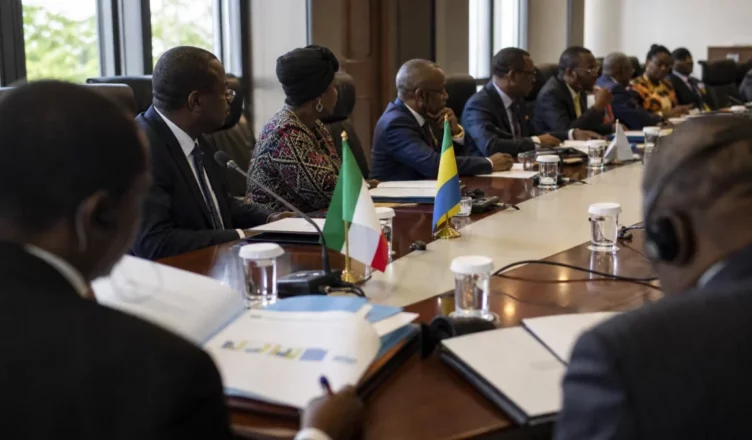
Gabonese President Brice Oligui Nguema has unveiled a significant overhaul of the criteria governing public scholarships for students aspiring to pursue higher education in specific European nations. This strategic shift is primarily driven by the escalating tuition fees and a noticeable reduction in financial aid provisions for students within these countries.
The announcement came on August 17, 2026, during a pivotal national address delivered just ahead of the celebrations marking Gabon’s 66th year of independence. While the head of state refrained from explicitly naming the affected countries, France is widely anticipated to be particularly impacted, given the substantial number of Gabonese students who have historically pursued their studies there with scholarship support.
Concurrently, President Oligui Nguema urged Gabon’s youth to increasingly consider the premier universities and training institutions across the African continent. He emphasized that Africa now presents considerable opportunities for advanced learning, innovation, and professional development.
From the Gabonese president’s perspective, this reorientation addresses the imperative to better manage expenditures associated with international studies, simultaneously bolstering the nation’s domestic training capabilities. He also advocated for academic programs that are more closely aligned with Gabon’s economic priorities and its evolving skill requirements.
Through these measures, authorities aim to foster a training policy that resonates more effectively with the country’s development aspirations, especially as the costs of higher education abroad continue their upward trajectory.
Gabon commemorated its independence on August 17 in Libreville with a series of official events, including a military parade attended by Congolese President Félix Tshisekedi and General Horta Ntam, representing Guinea-Bissau.