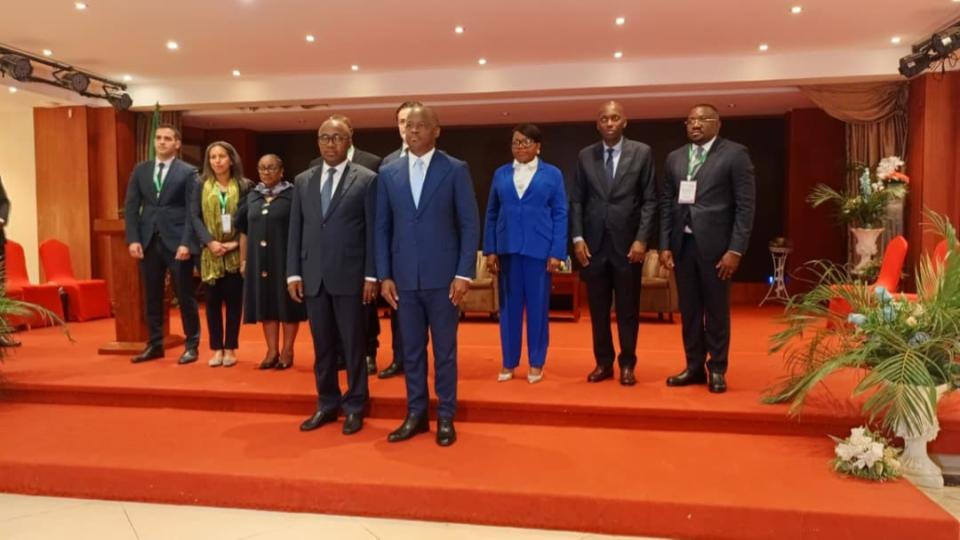
In a significant move to bolster its institutional integrity, Gabon began hosting an international evaluation mission in Libreville this June 29. The three-day session focuses on the second cycle of the United Nations Convention Against Corruption (UNCAC) implementation review mechanism. International specialists, Gabonese officials, and national institutions are currently scrutinizing the country’s frameworks for preventing graft and recovering illicitly acquired assets. Key figures, including Vice President Hermann Immongault, CNLCEI President Nestor Mbou, and UNODC national focal point Séraphin Ondoumba, view this assessment as a pivotal moment for the Fifth Republic’s governance agenda.
This international exercise is designed to gauge Gabon’s advancements in the fight against financial malpractice. The mission brings together representatives from the United Nations Office on Drugs and Crime (UNODC), alongside experts from Chad and Libya, to collaborate with various Gabonese administrative sectors. During the opening ceremony, Vice President Hermann Immongault emphasized that the caliber of national governance is now a primary driver of development, institutional stability, and public confidence, making this review essential for Gabon’s global standing.
Anti-corruption efforts at the heart of Fifth Republic reforms
Vice President Immongault highlighted that the battle against corruption is a cornerstone of the systemic changes initiated since the birth of the Fifth Republic. The government’s objective is to fundamentally transform public action by restoring a lasting bond of trust between the state and its people through more transparent and results-oriented institutions. He argued that corruption does more than just drain public funds; it erodes the social contract, discourages foreign investment, and exacerbates social inequalities. In his view, integrity is no longer just a democratic ideal but a strategic asset for nations seeking sustainable economic growth.
Nestor Mbou on Gabon’s institutional evolution
Nestor Mbou, President of the National Commission Against Corruption and Illicit Enrichment (CNLCEI), framed this evaluation within the broader context of reforms led by the highest levels of the state. He noted that the mission arrives during a period of intense institutional renewal focused on increasing accountability in public management. Mbou referenced the vision shared by President Brice Clotaire Oligui Nguema during his June 15 address to Parliament, where the Head of State acknowledged that prior to the transition of August 30, 2023, the country suffered from systemic corruption and poor governance that fueled widespread poverty.
According to the CNLCEI President, the current political will is geared toward addressing the root causes of the failures that previously weakened the state. The goal is to build robust, credible institutions that align with international standards regarding human rights, democracy, and the rule of law. These principles now serve as the foundation for all public bodies involved in detecting and preventing corrupt practices.
A call for transparency and international cooperation
Séraphin Ondoumba, acting as the national focal point for the UNODC, welcomed the visiting experts and praised the spirit of partnership driving the mission. He stated that this exercise reflects Gabon’s ongoing commitment to its international obligations under the UNCAC. The focus remains on two critical areas: preventive measures and the recovery of stolen assets, both of which are vital for protecting public resources and upholding the rule of law. Ondoumba urged all participating administrations to treat the dialogue as a moment of truth to advance the general interest.
Evaluating progress and identifying future challenges
Beyond reviewing legal texts, Gabonese authorities intend to use this mission to refine public policy. Nestor Mbou explained that the objective is not only to assess the current legal framework but to pinpoint successful practices, acknowledge progress, and identify remaining hurdles. The goal is to receive actionable recommendations that can speed up the implementation of national anti-corruption strategies.
Over the course of three days, international experts will meet with various stakeholders, including the judiciary, independent administrative authorities, oversight bodies, and civil society representatives. Through this comprehensive review, Gabon aims to prove that its anti-corruption drive is a strategic pillar of state modernization, designed to increase the country’s appeal to international partners and investors.