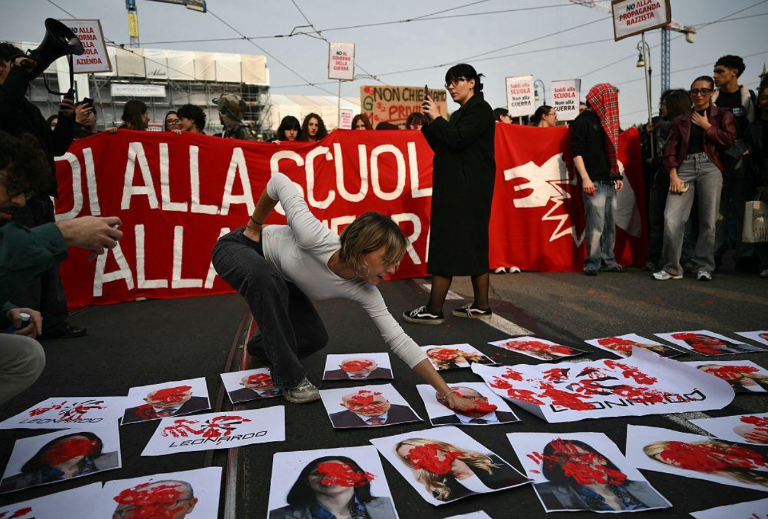
From classrooms to crises: the rising tide of youth unrest in 2026
In 2026, student protests erupted across continents, exposing deep cracks in education systems and their ripple effects on economies. From European university corridors to African lecture halls, young people are sounding the alarm—not just about textbooks and tuition fees, but about their very future in an increasingly unstable world.
Their message is clear: when education fails, so does prosperity. Governments now face a critical choice: address the root causes of youth discontent or risk deeper social and economic fractures.
France’s education crisis spills into streets
In France, what began as isolated grievances over teacher shortages and crumbling school buildings metastasized by October into nationwide unrest. Over a thousand secondary schools joined strikes, blockades, and marches, with demands stretching from classroom conditions to post-graduation job security.
Civil unrest followed. While most marches remained peaceful, clashes with police turned heads in Marseille and Lyon. Authorities responded with a mix of police presence and promises—funding pledges, teacher recruitment, and facility upgrades—yet skepticism lingers. For many students, these measures feel like stopgaps, not long-term solutions.
Students push beyond education demands
What started as academic frustrations quickly became a referendum on governance. Young demonstrators now ask: if a diploma no longer guarantees a foothold in the labor market, what does education even serve? The question echoes far beyond France’s borders.
Europe’s protest wave: Italy, Albania, Greece and Belgium in focus
Across the continent, frustration brewed into action. In Italy, thousands marched on October 16, targeting a decree limiting foreign student enrollment and calling for greater public education funding. Violent episodes marred peaceful demonstrations in Milan when police clashed with protesters using fireworks.
In Albania, student anger over unaffordable tuition and unpaid scholarships led to riots in Tirana. Banks and government buildings were set ablaze, leading to mass arrests. Authorities condemned the violence but struggled to reconcile it with the legitimate demands driving it: corruption, poverty, and broken promises to the next generation.
Greece saw a convergence of teachers, students, and public workers on October 21. The protestors’ agenda was sweeping: affordable student housing, free textbooks, and expanded housing subsidies. With rents skyrocketing in Athens and Thessaloniki, many students report spending more on living costs than on classes—a paradox that underscores a broken social contract.
Belgium’s quiet revolt
Belgium’s francophone schools took to the streets on October 1, rejecting budget cuts and reforms framed as efficiency drives. Though less violent than its neighbors, the movement reveals a generational divide: students refuse to be seen as mere extensions of French unrest. They demand recognition of their own pressures—crowded classrooms, rising transport costs, and dwindling job prospects in a post-industrial economy.
Africa’s universities in turmoil: bursaries, strikes, and shattered futures
In Senegal, delays in scholarship disbursements at Cheikh Anta Diop University spiraled into a national crisis. Protests flared in December 2025, intensified in February 2026, and reached a tragic climax with the death of student Abdoulaye Ba. The university closed indefinitely as authorities launched investigations and scrambled to restore financial aid—a lifeline for countless students who rely on bursaries to eat and live.
Kenya’s academic gridlock
At the University of Nairobi, students marched on October 21 after months of disrupted classes due to a teacher salary dispute. While the teachers’ strike was a labor issue, the brunt fell on students facing delayed exams and lost semesters. Their protest was not just about pay gaps—it was about stolen time, wasted potential, and a broken pipeline to employment.
South Africa’s debt trap
At Rhodes University, students resisted proposed changes to fee payment deadlines, fearing exclusion in 2027. Thirteen were arrested during a sit-in before charges were dropped, a move critics called too little, too late. The episode highlights a harsher reality: in an era of rising tuition, debt isn’t just a financial burden—it’s a threat to access itself.
Argentina and Indonesia: when education protests turn economic
In Argentina, October’s National University March united students, faculty, and staff against austerity. They demanded full compliance with the University Financing Law, better pay, and more resources for public institutions. The rally wasn’t just symbolic—it was a direct challenge to the government’s fiscal priorities in a country where hyperinflation erodes savings and hope alike.
Indonesia’s student movement on June 12 expanded beyond campus walls. Fuel and food price hikes collided with concerns over military influence in civilian governance. What began as a cost-of-living protest evolved into a broader indictment of state priorities—where public welfare is sidelined in favor of other expenditures.
Between repression and reform: the state’s balancing act
Governments responded with a toolkit of mixed strategies: public funding announcements, police crackdowns, school closures, and legal proceedings. Heavy-handed tactics risk escalating tensions, especially when minors are involved. Yet, unchecked protest also risks violence and destruction that further destabilize communities.
Striking a balance is not just a matter of order—it’s a matter of legitimacy. When students feel their voices are ignored, they turn to streets and barricades. When authorities answer only with force, dissent hardens into resentment. The middle path requires more than rhetoric: regular bursary disbursements, teacher hiring, campus renovations, and housing support must be implemented, monitored, and sustained.
The unspoken cost of ignoring youth voices
These protests are not uniform. They vary in scale, focus, and intensity. Yet they share one truth: young people are no longer waiting for institutions to act. They are demanding a seat at the table in decisions that will shape their careers, communities, and countries.
Education is no longer just an academic issue—it’s an economic one. A generation priced out of opportunity, burdened by debt, or trapped in broken systems will not fuel innovation or growth. Their disillusionment becomes a drag on national progress, a liability for future competitiveness.
Beyond slogans: what real change looks like
Real progress begins with accountability. Governments must move from promises to performance: publish bursary payment calendars, publish teacher recruitment plans, publish renovation timelines, and publish housing support budgets. Transparency builds trust. Verifiable action builds hope.
Universities, too, must adapt. They can no longer operate as ivory towers isolated from society’s pressures. They must partner with governments, employers, and communities to co-design curricula that lead to jobs, not debt—and support systems that make learning possible, not a privilege.
A warning for 2027 and beyond
The unrest of 2026 is not an anomaly—it’s a symptom. The speed of change, climate anxiety, and economic uncertainty are converging. Governments that fail to repair the broken link between education and opportunity will face more protests, more instability, and a frayed social fabric.
The choice is stark: invest in the future today or pay the price in unrest tomorrow.