Why the Algeria-Niger military agreement could reshape Sahel security dynamics
In a move closely watched across the Sahel, Algeria and Niger signed a military cooperation framework on October 21, 2026, in Algiers. While the pact is framed as a strategic milestone for bilateral security ties, critical questions linger about its operational substance and real consequences for both nations and the wider region. Without access to key operational details, assessing its true impact remains a challenge.
What we know—and what we still don’t
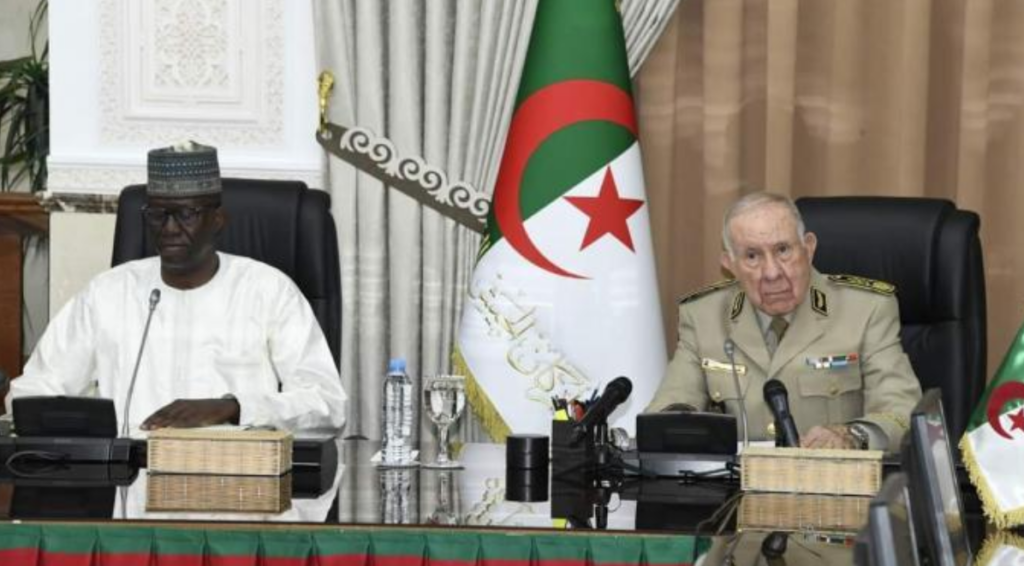
The announcement follows high-level talks between Algerian Chief of Staff General Said Chanegriha and Niger’s State Minister of Defense, Salifou Modi, culminating in a joint protocol aimed at strengthening military collaboration. Public statements emphasize enhanced coordination, intelligence-sharing, and joint training initiatives—yet none of these elements have been specified in detail.
This gap raises concerns: Does the accord include provisions for cross-border reconnaissance missions along the Mali-Burkina Faso frontier? Are Algerian military advisors being deployed to Niger, or is the pact limited to framework discussions? Without clear operational parameters, the distinction between symbolic cooperation and actionable defense policy remains unclear.
Silent on execution: the missing operational roadmap
Contrary to declarations of urgency, officials have not disclosed:
- Funding allocations for proposed defense initiatives
- Timelines for implementing joint training programs
- Criteria or benchmarks to measure progress
- Creation of a bilateral oversight committee to track compliance
Such omissions prevent observers from determining whether the pact is a symbolic gesture or a stepping stone toward deeper military integration. In an era of shifting alliances in the Sahel, such ambiguity invites skepticism about long-term viability.
Strategic implications in a fractured Sahel
The timing of this agreement coincides with heightened regional instability. Niger, a member of the Alliance of Sahel States (AES), continues to face armed insurgencies in its western regions and around Lake Chad. Algeria, meanwhile, prioritizes securing its southern borders and curbing transnational threats emanating from the Sahel.
Could this pact serve as the nucleus of a broader anti-jihadist alliance? Or is it merely facilitating discreet military exchanges without altering regional power balances? The absence of public clarity makes it difficult to assess whether this marks a tectonic shift in Sahel security architecture—or a cautious rapprochement with limited practical consequences.
The diplomatic chessboard: how Algeria and Niger position themselves
Algeria’s engagement with Niger stands in contrast to its cautious stance toward other AES members, particularly Mali and Burkina Faso. By deepening ties with Niamey, Algiers may be seeking to reinforce its role as a neutral mediator while hedging against the expansion of Islamist militant networks.
Yet, official statements have stopped short of framing this accord as a counter-alliance to external actors such as France or the ECOWAS bloc. Still, unspoken strategic calculations may be at play, given the geopolitical stakes during a period when global powers are reassessing their involvement in the Sahel.
Budget, accountability, and the transparency dilemma
Even if the accord avoids overtly sensitive operational details, public disclosure of financial commitments and governance mechanisms could clarify its scope. Are both nations pooling resources for joint patrols? Will Algeria provide logistical support, or is this limited to intelligence sharing?
The lack of a publicly defined accountability framework raises concerns about implementation effectiveness. Without measurable deliverables or scheduled assessments, the pact risks remaining a high-level declaration rather than a transformative security initiative.
The burden of proof: what must be revealed to assess impact
For this military framework to transcend symbolic value, Algeria and Niger must release clarifications on at least the following fronts:
- Definitive scope of cooperation (e.g., joint exercises, advisory roles, equipment transfers)
- Financial commitments and resource allocation per initiative
- A stipulated timeline for initial deployment of personnel or initiatives
- Establishment of a joint monitoring body with periodic progress reports
Only with such transparency can external observers gauge whether this pact will translate into tangible improvements in regional stability—or remain a diplomatic gesture.
Conclusion: from promise to practice
The Algeria-Niger military accord represents a formal acknowledgment of shared security interests, but its practical consequences remain uncertain. In a region rife with insurgent violence and shifting alliances, rhetoric alone will not stabilize borders or empower governments.
True progress hinges not on the signing ceremony in Algiers, but on the clarity of the commitments made—and their execution in the coming months. Until then, skepticism about the accord’s real-world impact remains justified.