Radical action targets environmental damage and economic sabotage linked to clandestine gold operations
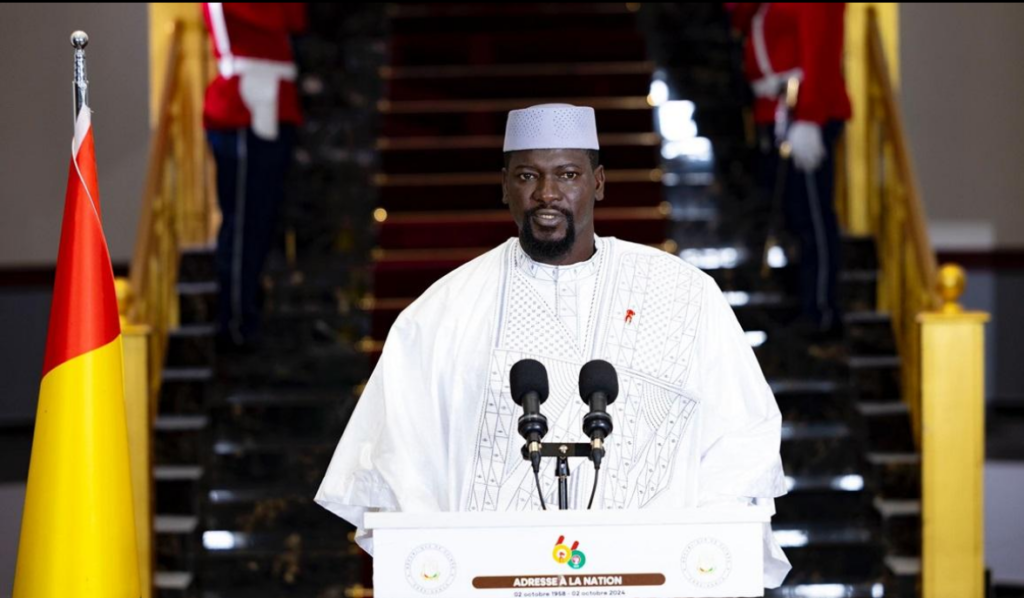
Conakry has taken a firm stance against the scourge of illegal gold mining and its devastating consequences on both the environment and the national economy. President Mamadi Doumbouya signed an executive decree on November 3, 2026, removing 22 territorial and security officials from their posts, citing their alleged involvement in illegal gold extraction and environmental degradation.
The crackdown centers on the Siguiri region, a major gold-producing area in Upper Guinea, where traditional and artisanal mining dominate the local economy but have increasingly become a breeding ground for unregulated and environmentally harmful practices. Among those dismissed is Colonel Fayimba Mara, former prefect of Siguiri, alongside other high-ranking administrators and security personnel accused of turning a blind eye—or worse—facilitating illicit mining activities.
The decision arrives just days after Guinea inaugurated its first-ever gold refinery, the Nimba Gold Refinery, marking a strategic pivot toward local value addition and reduced dependence on raw material exports. This dual approach—sanctions against malfeasance and investment in industrial infrastructure—sends a clear signal: Guinea is determined to reclaim control over its mineral wealth while safeguarding its natural heritage.
Siguiri bears the brunt: a region caught in the crossfire of greed and degradation
The list of dismissed officials reads like a who’s who of local governance in Siguiri, with names spanning prefects, deputy prefects, army officers, and police commanders. Key figures include:
- Mohamed Lamine Keita, Captain of Police and acting Prefect of Kintinian
- Sory Camara, Captain of Police and acting Prefect of Siguirini
- Fodé Isaac Camara, Commander and Sub-Prefect of Niagassola
- Naman Kourouma, Sub-Prefect of Kiniébakoura
- Abou Kanté, Sub-Prefect of Norassoba
- Richard Yaradouno, Sub-Prefect of Naboun
These individuals, who once held positions of authority, now face scrutiny over their alleged complicity in activities that have severely damaged local ecosystems. The unregulated use of mercury and cyanide in mining operations has poisoned water sources, eroded fertile land, and threatened the livelihoods of farming and fishing communities along the Niger River basin. The environmental toll extends beyond immediate pollution: soil erosion and deforestation have disrupted wildlife habitats and increased the risk of landslides and flooding during the rainy season.
For residents of Siguiri, these consequences are not abstract. Many have seen rivers that once provided fish and irrigation turn murky and lifeless. Farmers report declining yields as mercury leaches into the soil. Children in nearby villages bear the scars of exposure to toxic fumes. The scale of environmental and human damage has drawn sharp criticism from civil society groups, which see the presidential decree as a long-overdue response to years of inaction.
Government gears up for inter-ministerial enforcement
The crackdown isn’t just symbolic—it is backed by a robust administrative and legal apparatus. The decree empowers several ministries to enforce the removals and ensure accountability:
- Ministry of Territorial Administration and Decentralisation: overseeing reassignments and replacements
- Ministry of National Defence: investigating military personnel implicated in collusion
- Ministry of Security and Civil Protection: addressing violations by police and gendarmerie
- Ministry of Justice and Human Rights: initiating disciplinary and judicial proceedings
- Ministry of Labour and Social Protection: supporting affected communities and displaced workers
- Ministry of Public Administration Reform: modernising oversight mechanisms
This coordinated effort reflects the multi-faceted nature of the crisis. Illegal gold mining is not just an environmental issue; it is a security threat, an economic drain, and a governance failure. Officials found to have facilitated or profited from such operations are now subject to immediate removal, but the real test will come in the weeks and months ahead: Can the government prevent their replacements from being co-opted by the same networks? Can judicial follow-through ensure that sanctions lead to genuine accountability? And can enforcement agencies operate with the independence needed to resist corruption?
Nimba Gold Refinery: a milestone in Guinea’s industrialisation drive
The timing of this purge aligns with a historic milestone: the inauguration of the Nimba Gold Refinery on November 1, 2026. Located in the Cité de l’Air district of Conakry, the refinery is a strategic project aimed at increasing the value of Guinea’s gold before export. President Doumbouya formally launched the facility in a ceremony attended by senior officials, diplomats, and partners, signalling a new chapter in mineral resource governance.
The refinery’s establishment is not merely symbolic. It represents a concrete step toward breaking the cycle of dependence on raw mineral exports, a long-standing issue in Guinea’s economy. By processing gold locally, the country can capture more of the value chain, create downstream jobs in metalwork and jewellery, and boost state revenue through higher taxes and royalties on refined products.
This infrastructure also dovetails with the broader Simandou 2040 Programme, a national industrialisation initiative that seeks to transform Guinea from a supplier of raw materials into a diversified, value-added economy. Over the next two decades, Simandou 2040 aims to attract investment, build technical expertise, and generate sustainable employment—especially in the mining and manufacturing sectors.
Yet the success of both the refinery and the governance reform hinges on one critical factor: trust. Trust that the government can enforce its own rules. Trust that local communities will benefit from industrial growth. Trust that the clean-up of illegal mining will not just shift power from one corrupt network to another.
Balancing environmental protection with economic development
The dual announcements—sanctions against illegal miners and the launch of a gold refinery—highlight a fundamental tension in Guinea’s resource governance. On one hand, there is an urgent need to curb environmental destruction and criminal networks that undermine the rule of law. On the other, there is a strategic imperative to maximise economic benefits from the country’s mineral wealth.
Siguiri’s challenges are emblematic of this dilemma. The region’s gold wealth could lift thousands out of poverty—if managed responsibly. Instead, it has become synonymous with ecological ruin and institutional failure. The removal of 22 officials is a strong first step, but it is only a step. The real work lies in rebuilding trust, restoring environmental integrity, and ensuring that every gram of gold extracted contributes to national development—not to private fortunes hidden offshore.
The road ahead is fraught with challenges. Effective monitoring of mines, rigorous environmental assessments, and transparent licensing will be essential. Equally important is the protection of artisanal miners who operate legally but are often swept up in indiscriminate enforcement or forced into the black market by predatory officials.
Guinea stands at a crossroads. With the right measures, the country can turn its gold from a curse into a blessing. But this transformation demands more than decrees and refineries—it requires a commitment to justice, transparency, and sustainable development that puts people and the planet first.
What’s next? rebuilding trust and reclaiming the gold sector
The coming months will reveal whether this crackdown marks a turning point or remains a headline without follow-through. For the government, the priorities are clear:
- Accelerating the replacement of dismissed officials with vetted, competent leaders
- Deploying joint patrols between the army, police, and environment agencies to dismantle illegal mining networks
- Launching a public awareness campaign to educate local populations on legal mining practices and environmental risks
- Fast-tracking the integration of artisanal miners into formal cooperatives with access to finance and training
- Implementing third-party audits of mining sites to ensure compliance with environmental laws
The Nimba Gold Refinery offers a tangible alternative to the shadow economy of illegal gold. But without a functioning legal framework and credible enforcement, even the most modern infrastructure risks becoming a monument to missed opportunities. Guinea’s gold can fuel progress—or fuel corruption. The choice rests with its leaders.