The Sahel is no longer just a battleground for armed groups—it’s now the stage for a high-stakes competition over trade, energy, and political dominance. At the heart of this shifting landscape lies Niger, a country whose strategic position has turned it into a critical player in regional power struggles that extend far beyond its borders.
Niamey’s diplomatic chess moves: building new security partnerships
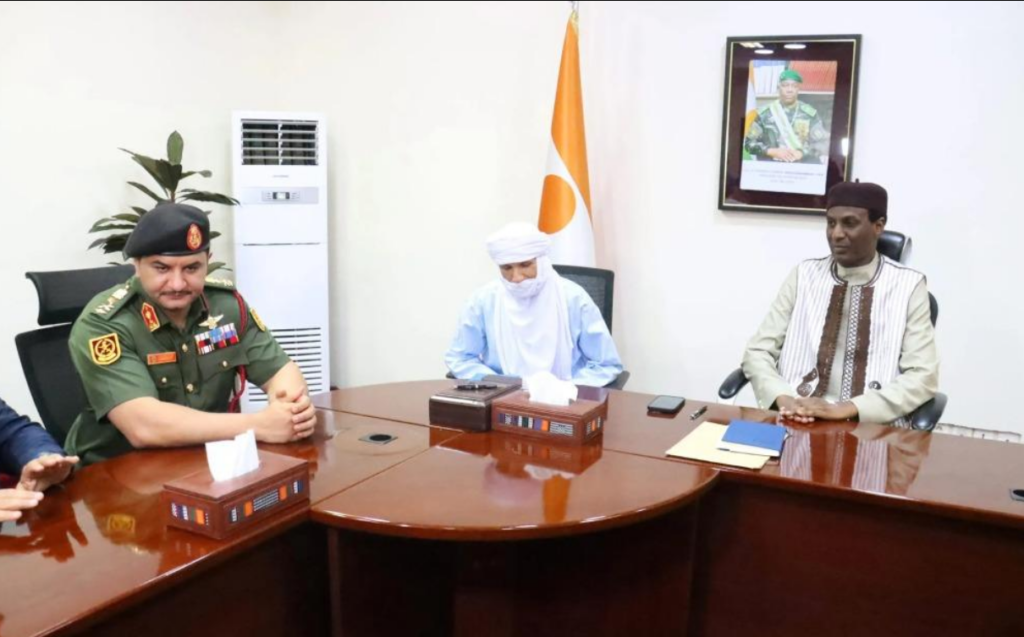
On November 1, 2026, Niger’s Prime Minister, Ali Mahaman Lamine Zeine, met with Libyan Vice-Commander Saddam Haftar in Benghazi, finalizing a strategic cooperation agreement that signals Niamey’s intent to diversify its alliances. While the full details of the accord remain undisclosed, the timing and context suggest a deliberate effort by Niger to secure new security and political partnerships in an increasingly volatile region.
Two days later, Libyan Chief of Staff Khaled Haftar traveled to Paris for talks with his French counterpart, General Fabien Mandon. Though neither side has detailed the outcomes, the meeting underscores France’s ongoing efforts to maintain influence in the Sahel despite its reduced military presence.
The rapid succession of these diplomatic exchanges reveals a larger trend: the Sahel is no longer being shaped by unilateral decisions but by intersecting alliances and rivalries that demand constant adaptation from regional governments and global powers alike.
Algeria’s counterplay: securing its backyard with N’Djamena
As these shifts unfold, Algeria has intensified its diplomatic offensive in the Sahel. On November 3, Algerian Foreign Minister Ahmed Attaf carried a presidential message to Chad’s President Mahamat Idriss Déby Itno in N’Djamena. While the visit followed diplomatic protocol, the discussions centered on security threats in the Sahara-Sahel belt and the implementation of 27 bilateral agreements aimed at strengthening coordination.
This engagement comes at a time of strained relations between Niger and Chad, with Niamey accusing N’Djamena—without public evidence—of collaborating with France to destabilize its government. Meanwhile, France and Chad have been quietly rebuilding their military and diplomatic ties after a 2024 defense pact breakdown. For Algeria, aligning with Chad isn’t just about bilateral cooperation—it’s about preserving its influence in a region where every move could alter the power balance.
Why Abu Dhabi’s ties with Libya worry Algiers
The United Arab Emirates has long supported Libyan strongman Khalifa Haftar’s eastern faction, a relationship that has raised red flags in Algiers. The UAE’s political and military backing of Haftar’s forces—particularly in southern Libya’s Fezzan region—has created a corridor of influence that could extend into Niger, threatening Algeria’s southern flank. As Haftar’s troops advance toward key trade and energy hubs connecting Libya to the Sahel, Algeria finds itself in a delicate position: balancing its own ambitions in Niger with the need to prevent foreign military encroachment near its borders.
Morocco’s growing footprint sparks Algerian tensions
The rivalry between Algeria and Morocco, which has intensified since diplomatic ties were severed in 2021, is now spilling into the Sahel. Morocco’s expanding partnerships with Sahelian states—including Libya’s eastern authorities—have not gone unnoticed in Algiers. The October 2026 visit by Khaled Haftar to Morocco, where he met with Royal Armed Forces Inspector General Mohammed Berrid, further fueled Algeria’s concerns. Though not a formal alliance, these converging interests among Morocco, the UAE, and Libya’s Haftar faction present Algeria with a challenge it cannot ignore.
Niger: the ultimate prize in a resource-rich tug-of-war
Geography, energy reserves, and its role as a crossroads between North and Sub-Saharan Africa make Niger a magnet for regional powers. Algeria has taken a bold step by securing parliamentary approval to deploy troops in Niger, signaling a shift in its security posture. Meanwhile, the burgeoning ties between Niamey and Benghazi suggest Niger is deliberately avoiding dependence on a single partner. Yet the question lingers: can Niger navigate this web of competing interests without becoming a pawn in a larger conflict?
Paris’s fading shadow: seeking relevance in the new Sahel
France’s once-dominant military footprint in the Sahel has significantly diminished, but Paris is far from irrelevant. The meeting between Khaled Haftar and French military leaders in November underscores continued efforts to engage regional actors, even if France no longer holds the reins it once did. Whether this represents a coordinated strategy or merely tactical outreach remains unclear—but in a region where alliances are fluid, every connection matters.
What’s at stake: resources, routes, and regional control
The events of the past weeks paint a clear picture: the Sahel is no longer just a frontline in the fight against insurgency—it’s a chessboard for control over trade routes, energy corridors, and political loyalty. For Niger, the price of playing in this high-stakes game could be its sovereignty. For the powers vying for influence, the reward is nothing less than shaping the future of a region where stability and instability are equally consequential for millions of citizens.