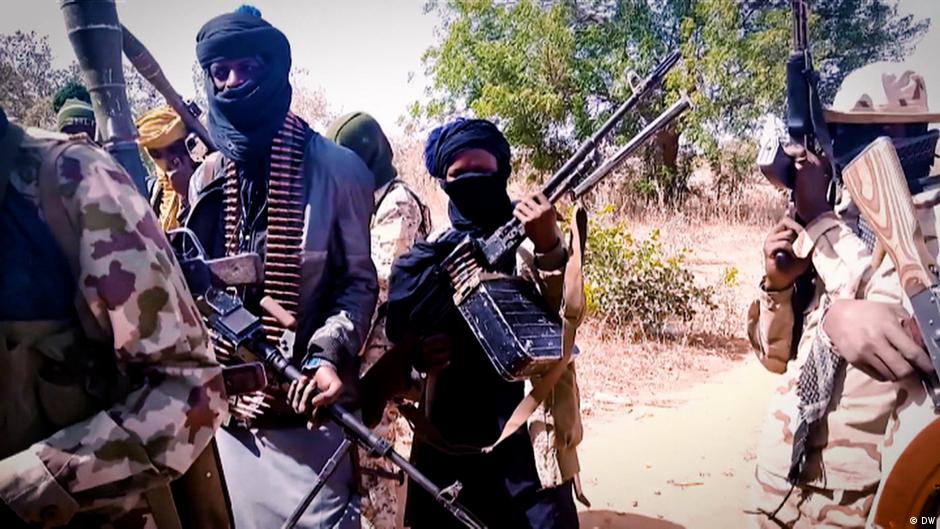
the kidnapping industry: Boko Haram’s financial lifeline
In Nigeria—by far the hardest-hit country—kidnapping has evolved into a structured, profit-driven industry. According to risk assessment firm SBM Intelligence, between July 2024 and June 2025 alone, nearly 1,000 incidents resulted in over 4,700 abductions, with hundreds of fatalities. Many of these attacks specifically target schools, particularly in northern and central Nigeria. While Boko Haram remains the most notorious group, the Islamic State’s West Africa Province (ISWAP)—designated a terrorist organization by the United Nations in 2014—also plays a significant role.
This wave of kidnappings is not confined to Nigeria. In Cameroon’s Far North region, Boko Haram abducted passengers from a bus in Ziguinchor last year. In March, the group seized seven Chadian nationals near the Chad border in Niger, killing one hostage while the others remain in captivity.
the dual purpose behind mass abductions
According to Remadji Hoinathy, a researcher at the Institute for Security Studies, these kidnappings serve two key objectives. First, they facilitate forced recruitment—enlisting young men, women, and even entire communities as fighters, laborers, or sex slaves. Second, they generate substantial financial revenue through ransom payments, often demanded in millions of naira or CFA francs from families, communities, and occasionally governments.
For example, Boko Haram demanded 50 million CFA francs for five Chadian hostages in Niger, while a physician among them fetched a staggering 500 million CFA francs—a sum condemned by the Chadian Human Rights League in the Lac Province.
the hidden cost of ransom payments
Despite official denials, ransom transactions frequently occur. A 2024 report by SB Morgen Intelligence estimates that Nigerian abductors demanded $35 million in ransoms over the past year, with nearly 5% ($1.8 million) reportedly paid by state authorities or victims’ families.
Nigeria’s government claims it does not pay ransoms, citing a 2022 law that criminalizes such payments with potential 15-year prison sentences. Yet, enforcement appears lax, as both private citizens and officials continue to negotiate with abductors. Suspicions arose in late 2025 when Abuja allegedly paid a substantial ransom to secure the release of 230 Catholic schoolchildren and staff abducted in Niger State. While the government denies these claims, citing intelligence-led military operations, experts warn that acknowledging ransom payments could embolden insurgents.
Boko Haram’s expansion into the Lake Chad Basin
Founded in 2002 in Maiduguri, Borno State, Boko Haram—whose name means “Western education is sin” in Hausa—initially rejected all Western cultural and political influence. Under the leadership of Mohammed Yusuf, the group sought to establish a radical Islamic state but later evolved into a regional threat.
Its activities now span the Lake Chad Basin, encompassing parts of Nigeria, Niger, Chad, and Cameroon. This region is strategically vital for several reasons:
- Transnational mobility: The basin borders the Sahel, where Islamic State affiliates like EIGS operate, and serves as a smuggling route for weapons and fighters moving between Libya and West Africa.
- Weak state presence: Remote, sparsely governed areas provide safe havens for insurgents.
- Economic potential: The region supports agriculture, pastoralism, and cross-border trade, offering both resources and cover.
- Geographic isolation: Marshes, islands, and dense forests create natural hiding spots during military crackdowns.
Remadji Hoinathy emphasizes these factors, noting that the basin’s ecological and socioeconomic conditions make it an ideal operational base for jihadist groups.
ISWAP: Boko Haram’s breakaway faction
In 2016, ISWAP emerged following a schism within Boko Haram. Disillusioned by the brutal tactics of late leader Abubakar Shekau—who indiscriminately targeted civilians, including Muslims—ISWAP aligned with the Islamic State and adopted a more pragmatic approach.
While Boko Haram relied on terror, ISWAP focused on building local alliances, offering governance and services to win support. Today, the two groups are locked in a violent rivalry, competing for control of territory and resources in the Lake Chad Basin.
regional military response and ongoing challenges
The four affected countries—Nigeria, Niger, Chad, and Cameroon—have formed the Multinational Joint Task Force (MNJTF) to coordinate counterinsurgency efforts. While military action remains the primary strategy, the Lake Chad Basin Commission also promotes stabilization initiatives, including development projects and state presence-building in conflict zones.
However, after more than a decade of conflict, Boko Haram and ISWAP continue to demonstrate remarkable resilience and adaptability. Despite sustained military pressure, they frequently regroup and launch new attacks, underscoring the limitations of current approaches.
Since 2009, this insurgency has claimed over 40,000 lives and displaced two million people in northeastern Nigeria alone. In response, the United States has deployed 200 military advisors to train and support Nigerian forces, highlighting the international stakes of this crisis.