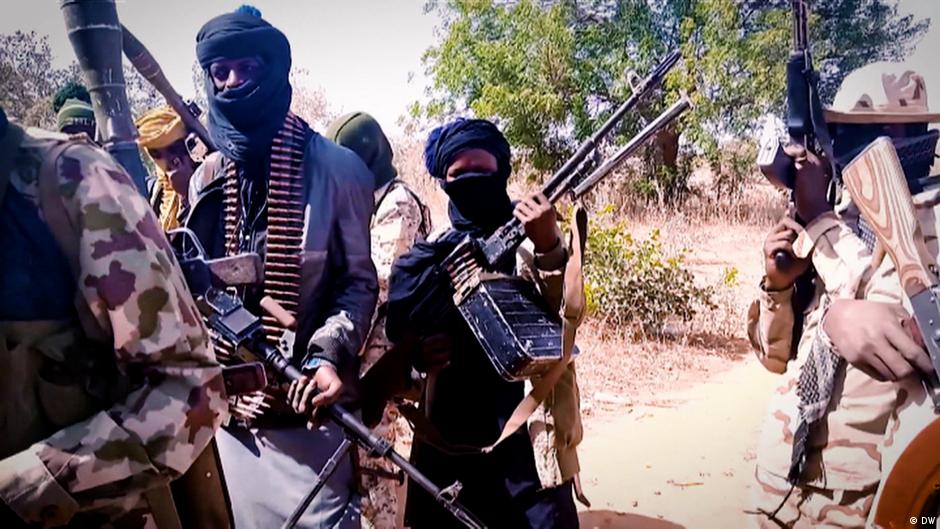
The kidnapping industry has evolved into a lucrative financial engine for Boko Haram, enabling the group to sustain its insurgency across Nigeria, Chad, Niger, and Cameroon. Over the past year, more than 4,700 individuals were abducted in nearly a thousand incidents, with schools frequently targeted—particularly in northern Nigeria’s Borno State. These acts of terror have spilled beyond Nigeria’s borders, with high-profile cases reported in Cameroon, Niger, and Chad.
a multi-million-dollar industry fueled by ransom demands
Analysts describe this phenomenon as a structured and highly profitable racket, where kidnapping serves dual purposes: forced recruitment and financial gain. Families, communities, and even governments have paid staggering ransoms to secure releases. In one recent case, Boko Haram demanded 50 million West African CFA francs (approximately $83,000) for five Chadian hostages—escalating to 500 million CFA francs (nearly $830,000) for a sixth hostage, a physician.
The Nigerian government officially prohibits ransom payments, imposing prison sentences of up to 15 years for violators. Yet, despite these legal deterrents, evidence suggests both private individuals and state authorities have circumvented the ban. In November 2025, reports emerged of a substantial payment—allegedly between €1.3 million and €6 million—made to secure the release of 230 schoolchildren and staff from a Catholic institution in Niger State. Authorities deny the claims, attributing the rescue to military intelligence and precision operations, though experts warn such acknowledgments could embolden extremist propaganda.
The financial toll of this kidnapping economy is staggering. In Nigeria alone, ransom demands over a 12-month period reached $35 million, with at least $1.8 million paid—comprising nearly 5% of the total sought. This cycle of extortion has turned abduction into a self-sustaining revenue stream, funding further attacks and recruitment.
Boko Haram’s expansion across the Lake Chad basin
Boko Haram originated in 2002 in Maiduguri, Borno State, under the leadership of Mohammed Yusuf, who advocated for a rigid Islamic state rejecting Western influence—coined from the Hausa phrase meaning “Western education is sinful.” The group’s ideology, rooted in anti-colonial and anti-globalization grievances, initially focused on local enforcement of Sharia law. However, its ambitions soon transcended Nigeria’s borders, spreading into neighboring Chad, Niger, and Cameroon—regions now collectively referred to as the Lake Chad basin.
Why has the Lake Chad basin become the epicenter of Boko Haram’s operations? The area’s geographical and socio-economic vulnerabilities make it an ideal haven for insurgent activity. As a transnational zone, it bridges the Sahel and North Africa, facilitating the movement of arms and fighters from Libya. The region’s vast wetlands, dense forests, and remote islands provide natural camouflage, allowing militants to evade military pressure. Additionally, its marginalized status—historically under-served by weak state presence—has fostered robust informal economies, including cross-border trade and agriculture, which extremists exploit for logistical and financial support.
the role of the lake’s geography in insurgent strategy
- Transnational corridors: The basin connects Sahelian hotspots to Libya, a key transit route for weapons and foreign fighters.
- Weak state control: Remote villages and porous borders limit government oversight, enabling militant cells to operate undetected.
- Resource-rich terrain: Fertile lands and livestock routes sustain local economies that fund insurgent networks through extortion and taxation.
- Natural fortification: Swamps and islands offer tactical retreat points during military offensives.
the rise of ISWAP and internal fragmentation
In 2016, Boko Haram fractured when a faction led by Abubakar Shekau’s hardline leadership clashed with dissidents advocating a more pragmatic approach. The splinter group, pledging allegiance to the Islamic State, rebranded as the Islamic State’s West Africa Province (ISWAP). Unlike its predecessor, ISWAP prioritized community engagement and tactical discipline, aiming to establish governance models that blend coercion with service provision.
This ideological and strategic divergence has plunged the once-unified movement into a violent rivalry. Boko Haram and ISWAP now compete for influence, resources, and territorial dominance across the Lake Chad basin, further destabilizing an already fragile region. Their internecine conflict has intensified attacks on civilians, military outposts, and economic infrastructure, prolonging the humanitarian crisis.
regional military efforts and persistent challenges
Governments in Nigeria, Cameroon, Chad, and Niger have attempted to counter the threat through coordinated military initiatives, including the Multinational Joint Task Force (MNJTF), established under the Lake Chad Basin Commission. While these efforts have yielded localized successes, the insurgency’s resilience persists. Analysts point to systemic failures in addressing root causes: poverty, weak governance, and porous borders remain unaddressed, allowing militant groups to regroup and adapt.
According to the United Nations, the decade-long insurgency has claimed over 40,000 lives and displaced two million people in Nigeria’s northeast alone. International partners, including the United States, have responded by deploying advisory troops to train and assist Nigerian forces—yet the conflict continues to defy easy resolution. As Boko Haram and ISWAP evolve, their adaptability underscores the urgent need for a holistic strategy that combines security measures with sustainable development and community resilience.