Navigating diplomatic deadlock through faith-based channels
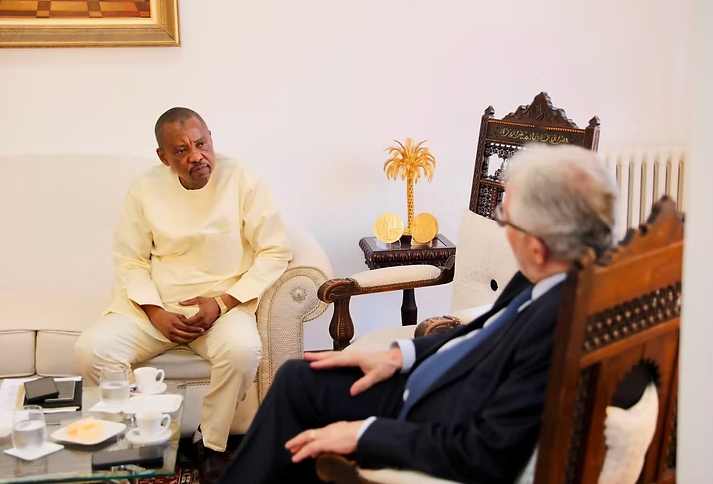
The recent meeting between Hamadou Saley, Niger’s chargé d’affaires in France, and Chems-eddine Hafiz, rector of the Great Mosque of Paris, has sparked intense speculation. While framed as a cultural or religious collaboration, this encounter reveals a calculated move by Niamey’s leadership to sidestep France’s foreign ministry after diplomatic ties collapsed.
Bypassing the Quai d’Orsay through unconventional routes
The Nigerien regime, facing isolation from Paris following political upheaval and severed bilateral agreements, is turning to non-traditional channels to revive dialogue. With official relations frozen—diplomats expelled, cooperation treaties abandoned, and sovereignty rhetoric escalating—the government in Niamey has little choice but to seek alternative paths. Yet the need for continued engagement with France, whether for economic stability, migration management, or geopolitical leverage, remains pressing.
Enter the mosque. By leveraging France’s Muslim community infrastructure, Niger is attempting to reinsert itself into the French public sphere. The Great Mosque of Paris, a historic and politically influential institution, serves as a backdoor to Parisian corridors of power—one that remains open even when the front gates are shut.
The risks of blending faith with foreign policy
This strategy is not merely symbolic. It reflects a deliberate effort to use religious institutions as conduits for political messaging and soft power. The Great Mosque of Paris maintains deep institutional ties with the French state, making it a strategic ally for Niamey’s outreach. Yet the approach raises ethical and diplomatic contradictions: while Niger’s official narrative condemns foreign interference and demands complete sovereignty, its diplomats are quietly exploiting France’s religious landscape to regain influence.
The danger lies in reducing intercultural exchanges to mere instruments of political maneuvering. True reconciliation with France cannot be achieved through backdoor religious diplomacy. If Niger seeks to rebuild a stable, transparent partnership, it must do so through legitimate state channels and international protocols—not by infiltrating faith-based organizations.