Fada N’Gourma – While poliomyelitis remains a formidable threat, it is entirely preventable through immunization. In Burkina Faso, a growing movement of mothers is taking a stand, dedicated to shielding their children from diseases that can be stopped with a simple vaccine.
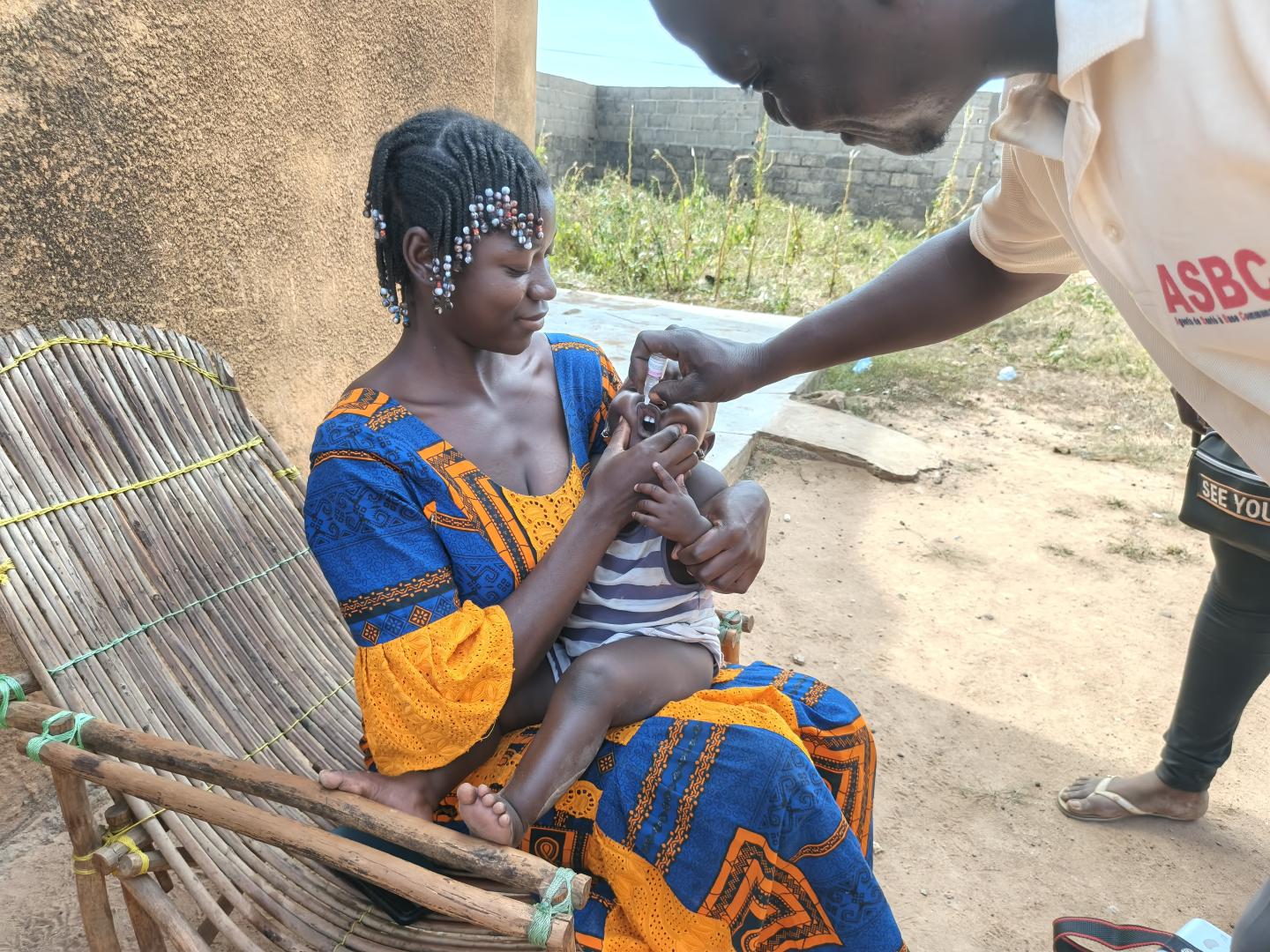
Among them is Nadège Thiombiano, a resident of Fada N’Gourma. As a mother to 13-month-old Mouzaratou, she monitors her daughter’s health with unwavering precision. When the latest polio immunization drive was announced at the Sector 9 Health and Social Promotion Center (CSPS), Nadège was among the first to arrive. For her, ensuring her child is vaccinated is more than a routine; it is a sacred vow. “I have witnessed the devastating impact of polio firsthand,” she explains. “As long as I am here, my children will never miss a dose.”
This personal conviction stems from seeing the physical toll the virus takes on those unprotected. Nadège views the vaccine as a gateway to a healthy life. Consequently, Mouzaratou has successfully completed her full immunization schedule, including the essential drops against polio.
Exceeding expectations in Fada N’Gourma
The dedication of parents is matched by the tireless work of health professionals. Starting at dawn on November 7, 2025, medical teams at the Sector 09 CSPS launched a four-day intensive campaign. By the end of the initiative on November 10, they had immunized 5,290 children under the age of five. This achievement represents a remarkable 104% coverage rate, significantly surpassing the initial target of 5,060 children.
André Yonli, the head nurse at the facility, attributes these impressive figures to a synergy between families, vaccinators, and social mobilizers. “This success is the result of meticulous planning and community trust,” Yonli notes. He highlighted that mobile teams successfully navigated difficult terrain to reach informal settlements and sites housing internally displaced persons, ensuring no child was left behind.
Overcoming vaccine hesitancy through dialogue
A critical component of this success was a robust communication strategy. Health centers focused on interpersonal skills and data management to better address the concerns of local families. By partnering with traditional leaders, religious figures, and women’s associations, health workers were able to dismantle myths surrounding immunization.
Talato Lompo, a mother of four, admits she was once skeptical. “Rumors made me fear that vaccines would make my children sick,” she recalls. “However, through consistent education from health workers, I realized the truth. My children are rarely ill now that they are vaccinated, and I am committed to continuing their medical follow-ups.”
Adjaratou Ouoba, a community health volunteer, has observed this shift in mindset. She notes that mothers are increasingly proactive, recognizing that preventing paralysis is far better than dealing with its lifelong consequences.
A collaborative effort for public health
The Medical Chief of the Fada N’Gourma district, Dr. Sandrine Bienvenue Sam, emphasized the importance of international cooperation. The Organisation mondiale de la Santé (OMS) provided vital technical and logistical support throughout the campaign. From transporting vaccines to deploying over twenty experts—including epidemiologists and communication specialists—the partnership ensured high-quality operations and reliable data collection.
Across the entire district, the results were equally stellar: more than 134,000 children received the vaccine, marking a 103% success rate. These efforts are vital for Burkina Faso to maintain the polio-free status it has held since 2015 and to block any potential return of the virus.
For parents like Nadège, the statistics represent a simple, powerful reality: healthy children with bright futures. “A vaccine is a small gesture,” she says while holding her daughter, “but it provides a lifetime of protection.”
As Burkina Faso continues its vigilance, the role of every parent remains central. By participating in these campaigns, families are not just protecting their own; they are safeguarding the health of the entire nation, working toward a future where polio is a thing of the past.
Click on the image to enlarge