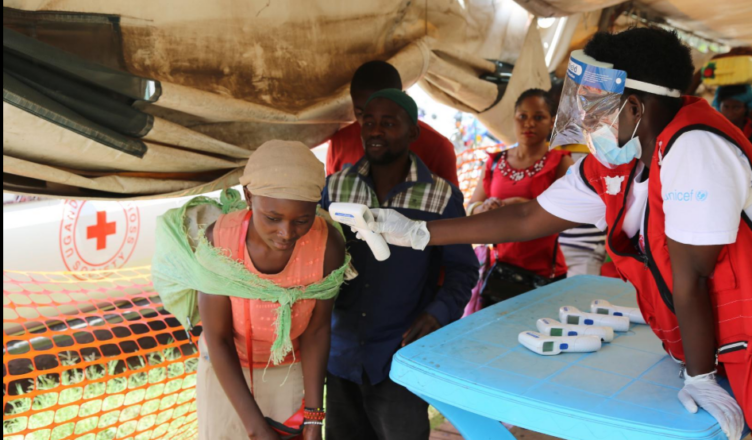
Health crisis deepens as Ebola cases rise across the Democratic Republic of Congo
The Ebola epidemic continues its worrying expansion across the République démocratique du Congo (RDC). Since the outbreak was officially declared in mid-May, the latest health data reveals 1,203 confirmed cases and 321 deaths. While 148 patients have successfully recovered, 419 individuals are currently receiving treatment in hospitals or remain in isolation units.
The current outbreak, identified as the Bundibugyo strain, has now spread to 34 health zones. The province of Ituri remains the primary epicenter, though significant transmission has also been recorded in Nord-Kivu and Sud-Kivu.
Obstacles to containing the virus
Several critical challenges are hindering the effectiveness of the health response. Local health authorities report that some communities are resisting post-mortem testing, which is essential for tracking the virus. Additionally, the medical infrastructure in Ituri is struggling with limited capacity, and contact tracing efforts have yet to reach the mandatory 95% monitoring target. There is a pressing call for the public to remain vigilant, report any suspicious symptoms immediately, and strictly follow hygiene protocols, particularly regarding the handling of deceased individuals.
The international community is actively engaged in the fight. Jean Kaseya, Director General of the Africa CDC, confirmed that a coordinated strategy is being implemented alongside the World Health Organization (WHO), the European Centre for Disease Prevention and Control (ECDC), and authorities from both the RDC and France to stabilize the situation.
Impact of insecurity on medical operations
The security situation remains a major concern for health workers. Tedros Adhanom Ghebreyesus, Director General of the WHO, noted that ongoing armed conflict is severely disrupting medical interventions. Violence in the region limits access to affected villages, causes potential contacts to flee to other areas, and contributes to a climate of mistrust among the local population.
In response to these complexities, the Africa CDC has launched a new initiative in collaboration with the WHO Regional Office for Africa and the government of Ouganda. This Joint Incident Management Support Team (IMST) is based at Makerere University in Ouganda. The platform is designed to improve coordination, provide technical expertise, and facilitate cross-border cooperation between the RDC, Ouganda, and other neighboring countries at risk.
This strategic move highlights a growing commitment to African-led emergency health management, ensuring that responses to such crises are unified and driven by regional expertise.