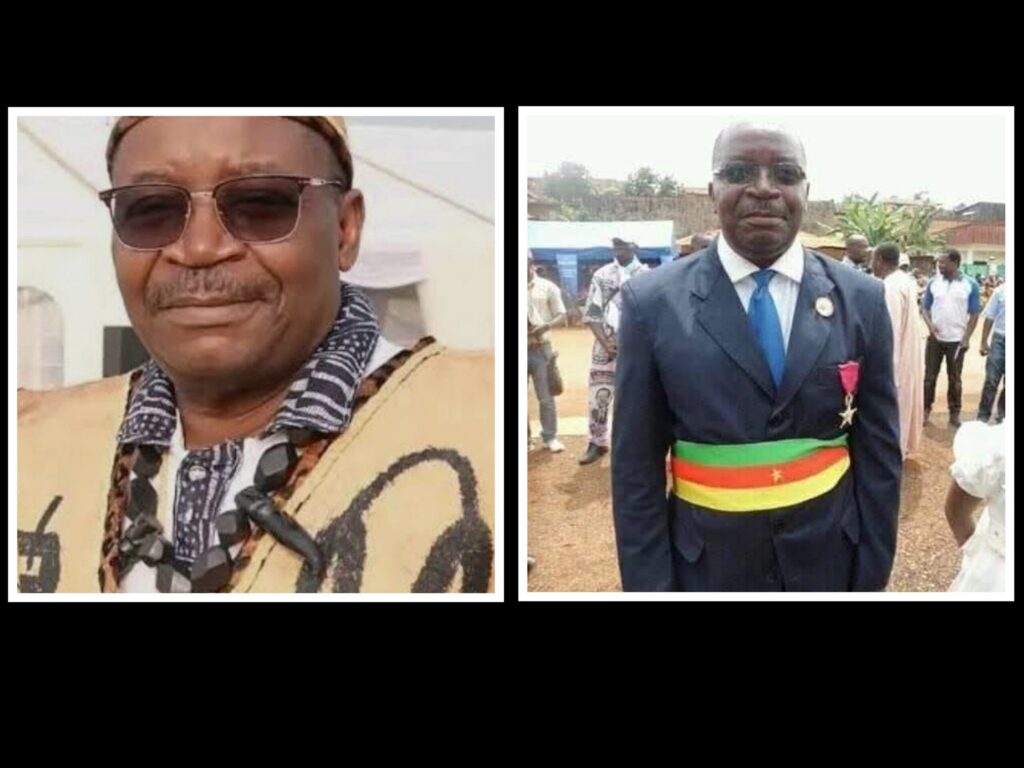
In a landscape often clouded by identity politics, Jacob Nguini stands as a beacon of unity, demonstrating that the concept of “living together” is a tangible reality in our nation. His journey serves as a powerful rebuttal to those who advocate for tribalism.
Jacob Nguini represents one of the most striking illustrations of national integration and republican values in Cameroun. Originally from Abong-Mbang in the East region, specifically the Haut-Nyong department, this professionally trained journalist and communicator successfully navigated the political waters of the West region. Between 2013 and 2020, he held the position of 5th deputy mayor for the Bafoussam 1er municipality.
His election was a profound statement of political inclusion by the local electorate. Despite being in a region where the population is predominantly Bamiléké, Jacob Nguini was embraced and elected to his post. The citizens of the commune affectionately referred to him as “Monsieur le Maire,” a clear sign of his full acceptance into the local community.
Political observers frequently highlight his career as evidence that the integration of those living outside their ancestral lands is a peaceful and concrete reality in certain areas, particularly in the West. This graduate of the École Supérieure des Sciences et Techniques de l’Information et de la Communication (ESSTIC, class of 1989-1990) has maintained deep roots in the West region even after his municipal term. He later served as the head of communication for the West Regional Council, continuing his commitment to the development of his adopted home. His political legacy in Bafoussam 1er remains a civic benchmark, proving that competence and republican merit can overcome ethnic divides in Cameroun.
Insights on the right to local representation
Those who promote tribalism and ethnic seclusion often dismiss examples like this because they contradict their divisive narratives.
Jacob Nguini hails from Abong-Mbang in the Haut-Nyong department. However, he made the deliberate choice to settle in Bafoussam, where he owns a home and resides with his family. His children attend school in Bafoussam, which they consider their second home. It is entirely natural for Jacob Nguini to be elected in Bafoussam, given his deep ties to this major city.
Furthermore, his involvement continues as he serves within the West Regional Council as the Communication Secretary. While some controversial figures might suggest that a citizen should only seek election in their place of origin to avoid competition elsewhere, the reality is different. Every citizen living on land other than their ancestral home has the fundamental and inalienable right to run for elective office in their place of residence. If one truly cares for the nation, they have both the right and the responsibility to contribute to its growth wherever they live.