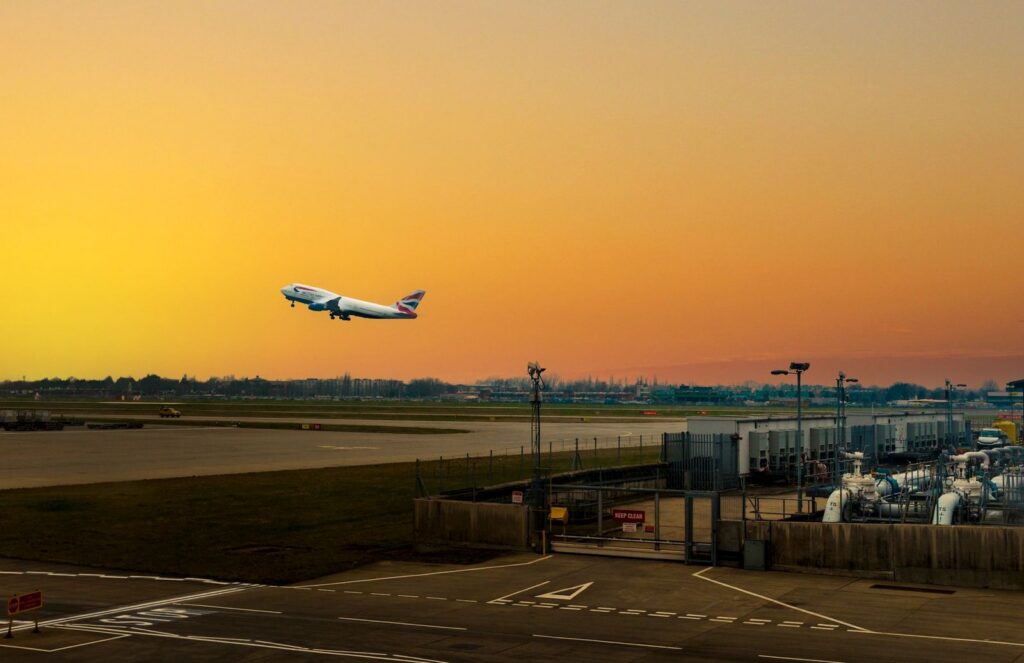
Britain has suddenly tightened its entry rules, placing Senegal alongside eight other West African nations under the mandatory Airside Transit Visa regime. Even passengers merely changing planes in London’s Heathrow or Gatwick, without stepping outside the international transit zone, must now secure this consular pass in advance. The change, rolled out without a grace period, has sent shockwaves through air travel networks linking Dakar to North America, East Asia and beyond.
Nine countries suddenly bound by stricter rules
The UK Home Office has expanded its list of countries whose citizens require the transit document, regardless of whether their journey is a direct connection or a prolonged layover. Besides Senegal, the roster includes Benin, Burkina Faso, Côte d’Ivoire, Gambia, Ghana, Guinea, Nigeria and Togo. Travellers must book appointments, pay fees, submit biometric data and wait for processing times that can derail tight business schedules or family reunions.
Officials in London cite heightened border security as the rationale, pointing to risks of asylum claims filed during transit or clandestine attempts to enter Britain. While London has not disclosed detailed statistics for Senegal specifically, the move aligns with a broader pattern of tightening controls on travellers from sub-Saharan Africa observed over the past year.
Dakar’s new diplomatic hurdle
The timing could hardly be worse for Senegal. Under President Bassirou Diomaye Faye’s administration, Dakar is aggressively courting foreign investment and positioning itself as a gateway to West Africa. Frequent air connections through London—operated by carriers like British Airways and Virgin Atlantic—have been a lifeline for bankers, students and entrepreneurs heading to Washington, Toronto, Ottawa or Seoul. The new transit barrier now forces a costly and time-consuming detour for anyone routing through the United Kingdom.
London’s gesture contrasts sharply with its own diplomatic charm offensive across the continent. Since Brexit, the UK has hosted high-profile summits aimed at making the City a preferred financial partner over Paris, Beijing and Gulf capitals. Yet the abrupt consular restriction risks sending mixed signals to the Economic Community of West African States (ECOWAS), some of whose members may now review reciprocal travel policies for British passport holders.
What this means for business travellers and the diaspora
Diaspora communities in Canada and the United States are among the hardest hit. Many families have long relied on budget tickets routed via London to reach Dakar, Abidjan, Accra or Lagos. The new transit visa requirement inflates total travel costs, adds weeks of paperwork and pushes frustrated passengers toward alternative hubs—Paris, Amsterdam, Brussels or Istanbul—where transit rules remain more lenient for West African passports.
The repercussions extend to British airlines, whose lucrative Africa–North America corridor could be diverted. Emirates, Turkish Airlines and Ethiopian Airlines already serve this route; they stand to capture travellers deterred by London’s bureaucratic maze. The shift could weaken London’s position as a key transit nexus between West Africa and the Americas.
On the diplomatic front, London took the step unilaterally, without formal consultations with affected governments. Dakar and its counterparts across the sub-region are now weighing responses—from public statements to retaliatory measures targeting British business visitors. Reports indicate the policy is already in force, leaving little room for immediate reversal.
Key takeaways for travellers and investors
- The new transit visa applies even when passengers never leave the airport transit zone.
- Processing delays and fees can disrupt tight business itineraries and family travel plans.
- London’s move may unintentionally redirect traffic toward rival European and Middle Eastern hubs.
- Senegal and ECOWAS may explore countermeasures, including visa adjustments for British citizens.
More Stories
Will Togo’s Faure Gnassingbé broker the breakthrough east DRC needs?
Can Nigeria’s military campaign end the kidnapping economy in the north?
Can Algeria’s expertise truly reshape Benin’s defense strategy?