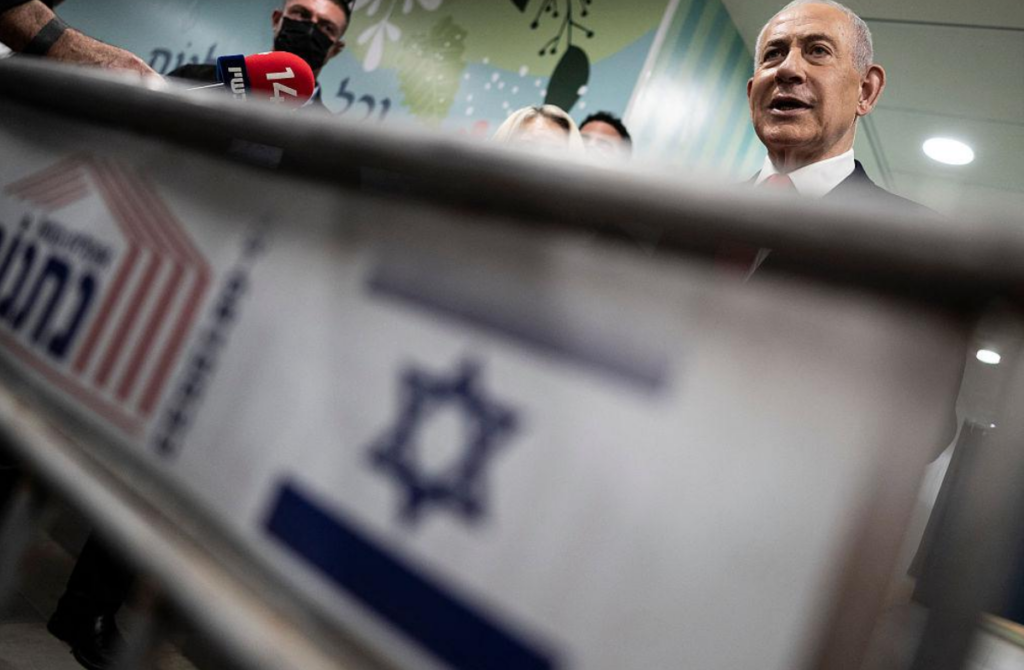
How a narrow victory without a mandate could reshape Israel’s political landscape
Prime Minister Benjamin Netanyahu emerged from Israel’s October 27, 2026 elections as the clear victor, yet the 53 seats his bloc secured in the 120-seat Knesset fall far short of the 61 needed to form a majority. With the opposition holding 48 seats and Arab-majority parties claiming 19, the fragmented parliament signals weeks of political uncertainty that could ripple across the Middle East from Gaza to Tehran.
The results mark a dramatic shift from the previous Knesset, where Netanyahu’s coalition commanded 68 seats. His Likud Party remains the single largest faction with 27 seats, but the erosion of support reflects deep societal divides over security policy, governance, and national identity that have intensified amid prolonged conflict and public dissent.
Parliamentary deadlock raises high-stakes questions for governance and regional relations
The absence of a clear majority forces both Netanyahu and his opponents into uncharted negotiations. Opposition leader Gadi Eisenkot heads a 48-seat bloc rejecting continued rule under Netanyahu’s banner. Meanwhile, Arab parties—including the Joint List and Ra’am—hold unprecedented decision-making power. While their support could theoretically propel an opposition coalition, ideological divides with Zionist factions complicate any partnership.
Possible outcomes include a unity government, a minority coalition relying on external confidence-and-supply agreements, or—if negotiations collapse—another round of elections. Each path carries distinct risks for Israel’s domestic coherence and its international standing.
Gaza remains at the heart of Israel’s policy dilemma
The humanitarian crisis in Gaza, ongoing reconstruction efforts, and Israel’s security imperatives continue to dominate the agenda for the next government. A Netanyahu-led coalition would likely maintain a hardline stance on Palestinian governance and security demands, given the influence of nationalist and religious allies. An alternative government might introduce subtle shifts in approach, but fundamental disagreements over Hamas, territorial claims, and Palestinian statehood persist across Israel’s political spectrum.
For Palestinians, today’s vote does not immediately translate into tangible improvements. Rather, it underscores that future policies toward Gaza and the West Bank will be dictated by whatever alliances ultimately determine who governs Jerusalem.
Regional flashpoints demand cohesive leadership amid growing instability
Israel’s fragile political moment coincides with escalating tensions in Lebanon, Syria, and the broader Iran-Israel confrontation. Hezbollah’s military posturing in Lebanon increases the risk of a devastating cross-border escalation with severe humanitarian and economic consequences. Meanwhile, Iran’s advancing nuclear program, ballistic missile capabilities, and regional militant alliances remain top concerns for Israeli security planners. Across party lines, there is broad consensus on countering these threats, yet a weakened government could struggle to coordinate coherent, long-term strategy.
Syria remains a critical monitoring zone, where shifting power dynamics along Israel’s northern frontier could alter security calculations at a moment when Jerusalem lacks a stable domestic mandate.
Global powers and Arab capitals brace for policy delays and diplomatic uncertainty
The United States sees Israel as a key strategic ally in the Middle East, but divergent views on Gaza operations, military escalation, and regional de-escalation efforts risk straining relations. Washington’s support for Israel’s security remains firm, yet the absence of a strong Israeli government could delay joint strategic initiatives and complicate crisis coordination.
Arab neighbors—including Egypt, Jordan, Saudi Arabia, and the UAE—are watching closely. For Riyadh and others, normalization with Israel remains contingent on progress toward Palestinian statehood and regional stability. A government unable to assert a clear vision may slow diplomatic momentum, even as some Arab states view continued engagement as strategically necessary to curb Iranian influence.
A verdict that echoes beyond Israel’s borders
The October 27 vote reflects more than Netanyahu’s waning authority; it reveals a deeply divided society wrestling with identity, security, and national purpose. With Arab representation at historic highs and the ruling bloc weakened, Israel stands at a crossroads. The outcome of coalition talks will shape not only domestic governance but also the trajectory of Gaza, Iran policy, and normalization efforts across the Middle East.
Until a government is formed, policy paralysis in Jerusalem could prolong instability across the region—affecting aid flows to Gaza, ceasefire prospects, and regional security dialogues. In a geopolitical environment where every policy decision reverberates beyond Israel’s borders, a victory without power may prove as consequential as the absence of elections altogether.