
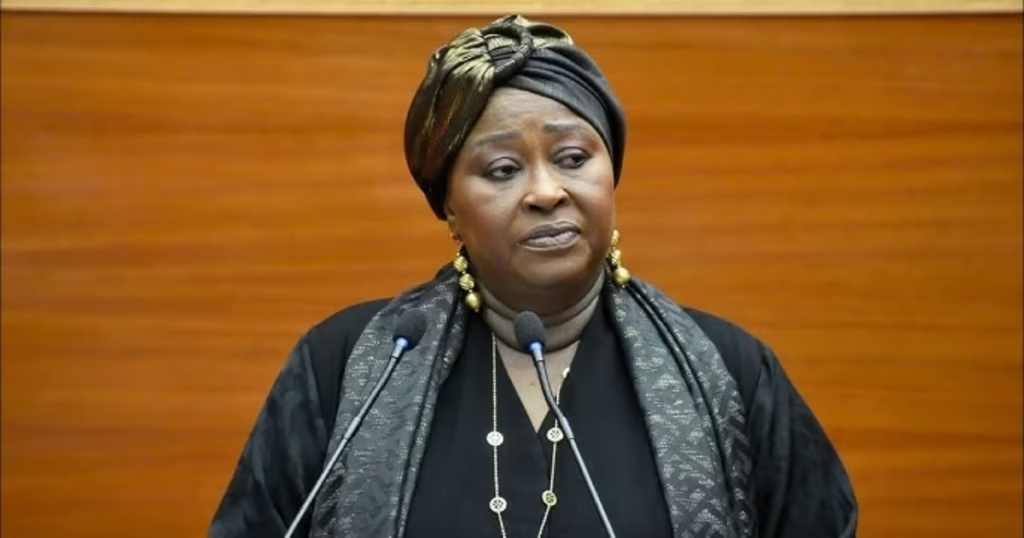
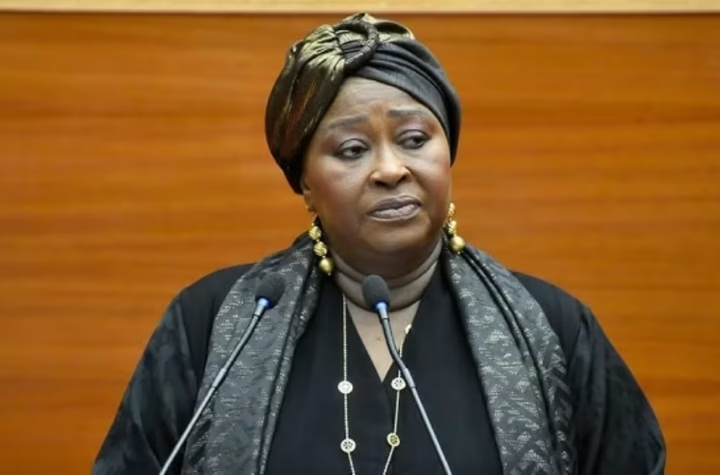
During a gathering in Khombole, Maïmouna Dièye’s choice of words when addressing Ousmane Sonko raised eyebrows and triggered a heated debate about the boundaries between political admiration and religious reverence in Senegal.
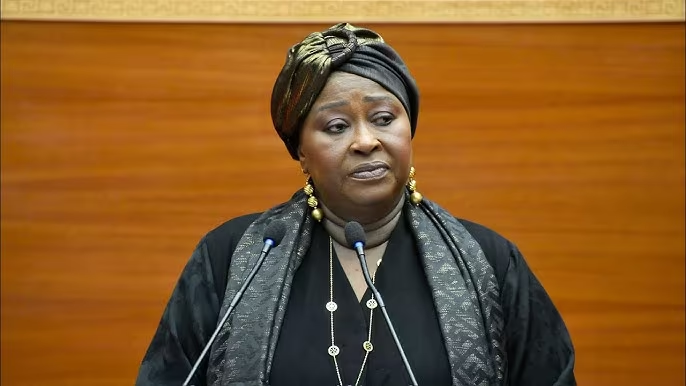
Maïmouna Dièye’s statement, delivered with the phrase “under the presence of Seyidina Ousmane Sonko Salalahou Aleyhi Wa Salam”, crossed a red line in Senegal’s religious and political discourse. The invocation, typically reserved for the Prophet Mohammad (peace and blessings upon him) and, in some traditions, other prophets, was applied to a political figure. This blurring of lines between secular leadership and sacred reverence struck a discordant note, particularly in a country where religious sensitivities run deep.
Why the invocation sparked outrage
The phrase Salalahou Aleyhi Wa Salam—a hallmark of Islamic piety—was used in a context that many deemed inappropriate. In Islamic practice, such invocations are strictly reserved for the Prophet Mohammad and, in select interpretations, for other prophets. Associating them with a political leader, no matter how influential, risks elevating that individual to a spiritual status they do not claim nor deserve. This misstep has reignited discussions about the dangers of over-glorifying public figures, a concern frequently highlighted by religious leaders who emphasize the distinction between respect for authority and veneration of the divine.
The incident also underscores the delicate balance politicians must maintain in Senegal, where religious discourse is both a powerful tool and a potential minefield. Any perceived encroachment on sacred ground can quickly escalate into controversy, as seen in the immediate reaction from Ousmane Sonko himself.
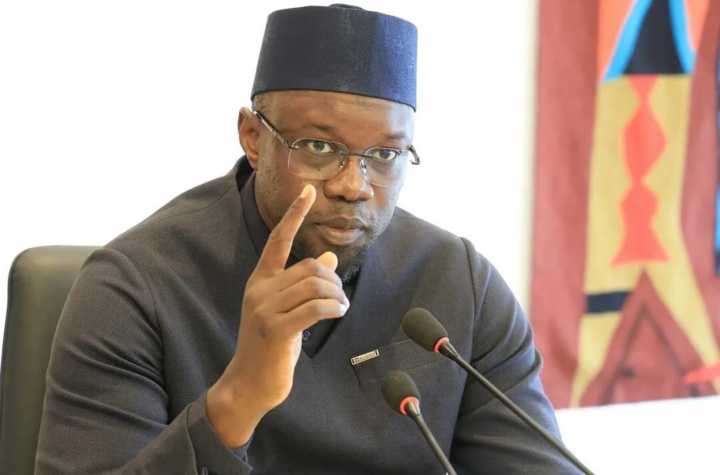
Ousmane Sonko’s swift response
Recognizing the gravity of the situation, Ousmane Sonko moved quickly to clarify the remarks. He acknowledged the affection of his supporters but firmly rejected any attempt to place him on a pedestal reserved for the Prophet Mohammad. In a public statement, he emphasized that he has never claimed nor sought such a status, distancing himself from the implication while respecting the religious sentiments of his followers.
By addressing the issue head-on, Sonko aimed to prevent the controversy from spiraling further, particularly in a political climate where religious rhetoric can be weaponized. His response reflects the caution with which Senegalese leaders often navigate such terrain, where a single misstep can have far-reaching consequences.
More Stories
Controversial remarks by maïmouna dièye spark debate in Senegal
Maïmouna dièye’s remarks on ousmane sonko spark debate in Senegal
Ousmane Sonko warns PASTEF supporters of escalation tactics in Senegal