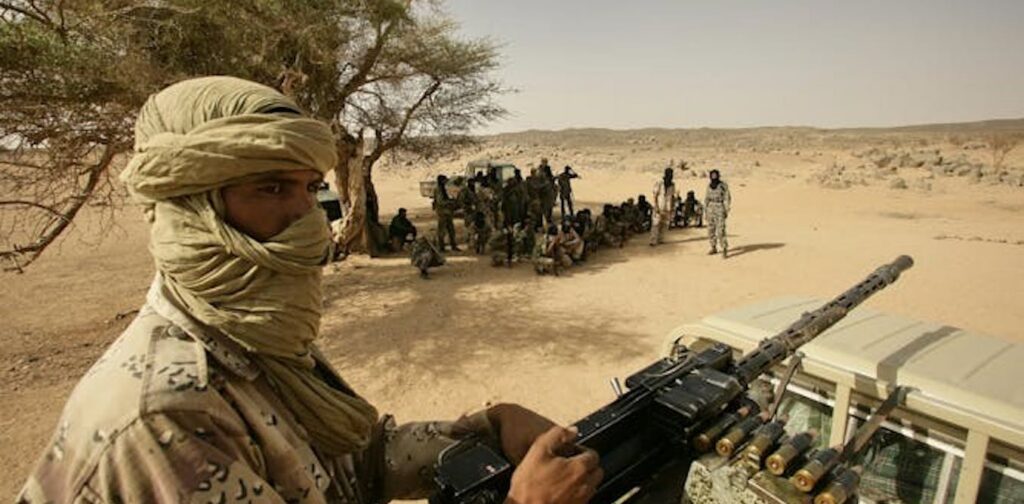
The already fragile security situation in Mali took a dramatic turn in late April 2026 following a series of highly coordinated armed assaults on multiple cities. These attacks resulted in the deaths of the country’s Defense Minister, Sadio Camara, and several Malian soldiers, escalating the nation’s crisis.
These incidents are part of a broader escalation in violence against the military and state institutions across Mali, a trend that has intensified over recent years. Our extensive research on insecurity and politics in West Africa and the Sahel—spanning over a decade—reveals that these attacks stem from unaddressed grievances among the Touareg people, a nomadic Berber community in northern Mali.
Understanding the root causes of conflict
The Touareg community has long voiced concerns over political marginalization, cultural neglect, unequal resource distribution, and perceived state neglect. Three critical factors fuel their discontent:
-
Political exclusion and unmet demands: The current military regime has failed to address key Touareg demands for greater autonomy, cultural recognition, and political inclusion. These grievances have persisted for decades, rooted in the perception that the Malian state does not represent their interests.
-
Militarization and collateral damage: The Malian military’s heavy-handed approach in the north, including airstrikes and ground operations, has exacerbated tensions. Touareg communities argue that these tactics disproportionately harm civilians and ignore their security concerns.
-
Economic inequality and resource control: Northern Mali is rich in gold deposits, salt mines, grazing lands, and strategic trade routes, yet its people see little benefit. Wealth generated in the region is often redirected to the southern-centric state, reinforcing economic disparities.
Addressing these structural inequalities could help ease Touareg grievances, rebuild trust in the state, and shift the conflict’s focus from rebellion toward inclusive governance, stability, and sustainable peace in northern Mali.
Recent escalations and historical parallels
In April 2026, the Group for the Support of Islam and Muslims (JNIM), an Islamist militant group, joined forces with the Touareg rebel faction Front de libération de l’Azawad (FLA) to launch coordinated attacks on several Malian cities. This mirrors a similar surge in 2012, when Touareg separatists and militants linked to Al-Qaeda launched an offensive against the state.
The National Movement for the Liberation of Azawad (MNLA), a predominantly Touareg separatist group founded in 2011, played a key role in the 2012 rebellion. Composed largely of former fighters returning from Libya and Touareg communities in northern Mali, the MNLA once counted around 10,000 combatants at its peak. However, lacking the military strength to hold territory, it later allied with Islamist groups such as Ansar Dine, Al-Qaeda in the Islamic Maghreb (AQMI), and the Movement for Oneness and Jihad in West Africa (MUJAO).
After briefly pushing back Malian forces in late 2012, the alliance collapsed as Islamist groups, better armed and financed, seized control of major cities like Gao, Tombouctou, and Kidal. A 2013 intervention by French forces helped the Malian government regain most of the lost territory. AQMI and its allies subsequently retreated into mountainous and desert regions, adopting guerrilla tactics such as suicide bombings and landmines.
The withdrawal of French troops in 2022 reduced counterterrorism pressure, weakened intelligence networks, and created a security vacuum. With the Malian state struggling to fill this void, Islamist groups have regained influence, expanded operations, and bolstered local recruitment.
Why past solutions have failed
Under the leadership of Assimi Goïta, Mali’s military regime has not adequately addressed Touareg demands. Since independence in 1960, Touareg leaders have argued that the Malian state does not reflect their political identity, economic interests, or traditional governance systems. Calls for autonomy or self-rule have often been met with repression.
The situation has worsened due to environmental challenges such as drought, desertification, and climate variability, which have devastated the livelihoods of Touareg pastoralists. These long-standing grievances predate the rise of Islamist insurgencies and remain central to the group’s approach to conflict.
Another critical issue is the reliance on military force by counterterrorism operations, which has led to significant civilian harm. Reports highlight widespread human rights abuses, including arbitrary arrests, massacres, and mass displacements. These actions have fueled resentment and provided Islamist groups with opportunities to recruit, expand territorial control, and legitimize their presence.
Critics also point to the failures of previous French interventions and successive Malian governments in addressing the underlying causes of instability. A lack of decentralization, delayed implementation of peace agreements, and unequal resource allocation have further entrenched grievances in the north.
Pathways to peace: lessons from Niger
To reduce tensions, Mali must address the Touareg question through inclusive governance and equitable policies. While Touareg leaders have twice aligned with jihadist groups—an approach that proved counterproductive—the structural inequalities driving their grievances must still be resolved.
Niger, under former President Mahamadou Issoufou, offers a model for reconciliation. Before his presidency, Touareg communities in Niger faced similar marginalization. Upon taking office in 2011, Issoufou implemented several reforms:
-
Institutional integration: Touareg elites and former rebels were incorporated into state institutions, ensuring representation and participation in governance.
-
Decentralization: Regional authorities were granted greater administrative and budgetary control, empowering local communities.
-
Disarmament and reintegration: Programs were launched to demobilize fighters, collect weapons, and reintegrate former combatants into civilian life.
Issoufou also invested in infrastructure and development projects tailored to Touareg needs, including pastoralism, education, and livelihood support. Initiatives improved access to water in arid zones, enhanced road connectivity, and strengthened security in pastoral areas. These measures helped reduce tensions and foster long-term stability.
By learning from such models, Mali can take meaningful steps toward addressing Touareg grievances, restoring national cohesion, and paving the way for sustainable peace in the north.