
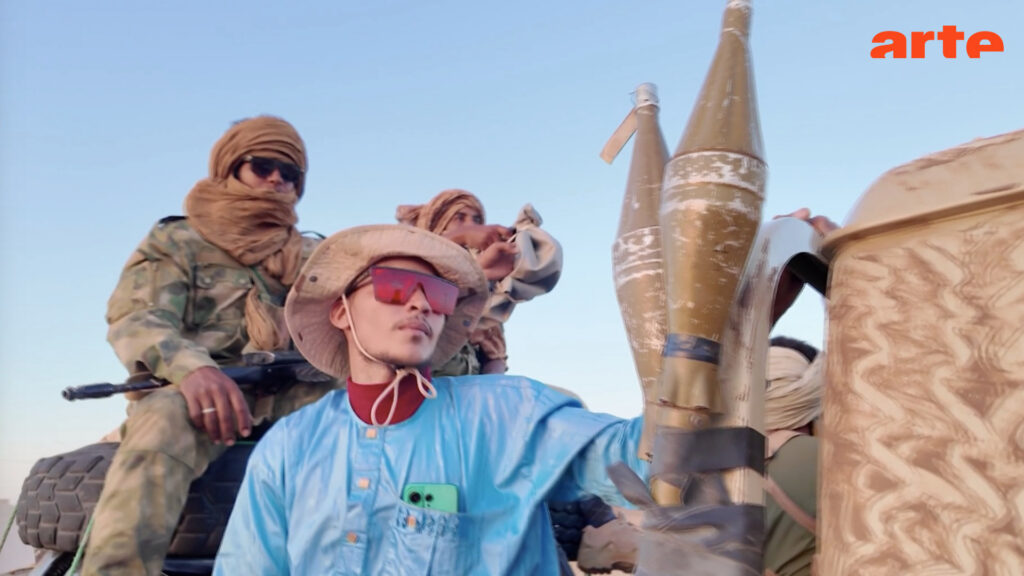
Mali conflict: Tuareg rebels and jihadists take control of Kidal
In late April, coordinated attacks by the Group for the Support of Islam and Muslims (JNIM)—a militant faction linked to Al-Qaeda—and the Azauad Liberation Front (FLA), a Tuareg rebel group, overwhelmed Malian forces and their Russian allies, the Africa Corps. The offensive led to the capture of several cities, including Kidal, a strategic stronghold in northern Mali that had been retaken by Malian authorities in late 2023.
Following the clashes, the local population fled the area en masse. The FLA, now allied with JNIM, is reportedly preparing for a potential counteroffensive by the Malian government. Our team was granted rare access to FLA members in Kidal, documenting the shifting dynamics of this complex conflict.
Background: A shifting alliance in the Sahel
The sudden alliance between the JNIM and the FLA signals a new phase in the Sahel’s security crisis. While the JNIM has been a dominant force in Mali’s insurgency, the FLA represents a long-standing Tuareg separatist movement that has alternately fought alongside and against the Malian state.
The temporary cooperation between these two groups has raised concerns among regional observers. Their combined strength has exposed vulnerabilities in the military positions held by the Malian government and its foreign allies, particularly the Russian mercenary forces operating under the Africa Corps banner.
What’s next for northern Mali?
With Kidal now under rebel control, the Malian junta faces a critical challenge. The loss of the city not only weakens its territorial grip but also emboldens opposition factions. Military analysts suggest that the government may respond with a large-scale operation to reclaim the region, potentially escalating the conflict further.
The humanitarian fallout is already severe. Thousands of residents have abandoned their homes, joining a growing wave of internally displaced persons in a country already struggling with food insecurity and political instability.
The situation remains fluid, with both sides preparing for what could be a prolonged confrontation. For now, the future of northern Mali—and the broader Sahel—hangs in the balance.


More Stories
Niger: Tiani faces fallout from special forces anger after Russian intervention
Mali : 17 morts dans les rangs des dozos, le JNIM accentue sa pression
Sahel : le pari des juntes tourne-t-il à l’échec sécuritaire ?