
Mali’s escalating clampdown on civil society amid rising dissent
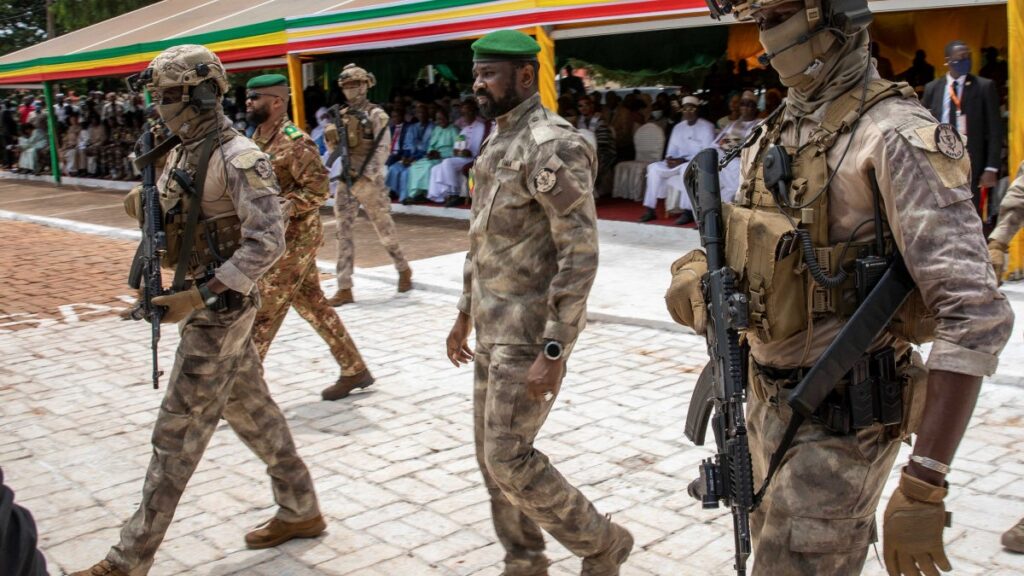
In Mali, the recent decision by the Minister of Territorial Administration to dissolve a student association is the latest in a series of government actions targeting civil society organizations. The move reflects a broader crackdown on dissent, raising concerns about the shrinking civic space in the country.
The Association of Students and Pupils of Mali (AEEM) was accused of inciting violence and unrest in schools and universities. The government claimed that in 2017 and 2018, security forces arrested some members found with weapons, drugs, and unexplained large sums of money. This decision follows the dissolution of three other organizations in just four months, signaling an intensifying pattern of repression.
Recent dissolutions of civil society groups in Mali
On March 6, authorities dissolved the Coordination of Movements, Associations and Supporters of Imam Mahmoud Dicko (CMAS), which had advocated for presidential elections to restore civilian rule. The group was labeled a destabilizing force and a public security threat. Earlier, on February 28, the political organization Kaoural Renouveau was dissolved for allegedly making defamatory and subversive statements against the military junta. In December, the Observatory for Elections and Good Governance, a civil society group monitoring electoral conduct, was also shut down under accusations of inciting public disorder.
Since the 2021 military coup, the Malian junta has increasingly targeted peaceful dissent, political opposition, and media outlets, severely restricting civic freedoms. The forced disappearance of Colonel Alpha Yaya Sangaré, a gendarmerie officer who published a book detailing alleged abuses by the Malian armed forces, underscores the regime’s tightening grip on criticism.
The National Human Rights Commission of Mali (CNDH) recently issued a statement warning of serious threats to civil and political rights, particularly freedom of association. It condemned the systematic dissolution of political parties and associations. Similarly, Seif Magango, spokesperson for the UN High Commissioner for Human Rights, expressed grave concerns about the closures of civil society organizations in Mali this week.
With Mali approaching three years under unelected leadership, the need for a free and secure civic space—where individuals can organize, voice opinions, and protest—has never been greater. Authorities must urgently reinstate dissolved organizations and commit to upholding fundamental freedoms and rights.


More Stories
Waly Diouf Bodian responds to Mary Teuw Niang: ‘we do not respect those who do not respect Ousmane Sonko’
Ousmane Sonko’s firm stance on Senegal’s FMI agreement demands full transparency
Senegal’s institutional crossroads: the unfolding dynamic between Ousmane Sonko and Bassirou Diomaye Faye