
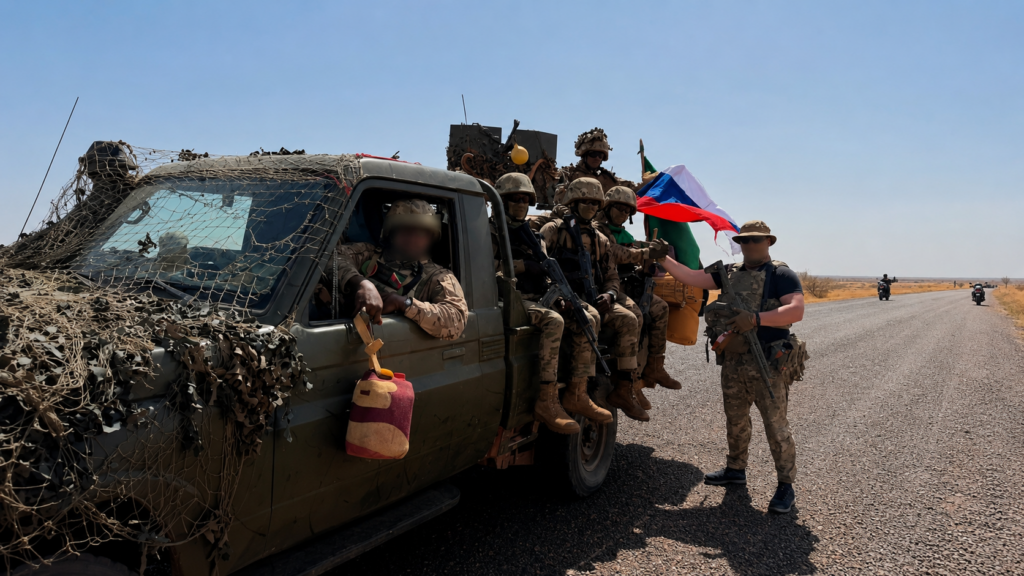
The Republic of Mali stands at a pivotal crossroads, its future hanging in the balance. Since seizing power in 2020 and consolidating control through a further coup in 2021, Assimi Goïta—self-proclaimed leader of the interim military government—had pledged to restore national security and reclaim state sovereignty. Yet, six years on, his administration faces an unprecedented crisis of confidence.
Military setbacks expose systemic vulnerabilities
On April 25, coordinated assaults by the Group for the Support of Islam and Muslims (JNIM)—an Al-Qaeda affiliate—and the Azauad Liberation Front (FLA) targeted critical military installations, including positions near Bamako. The death of Defense Minister Sadio Camara during the clashes sent shockwaves through the capital. In the north, strategic strongholds like Kidal fell out of government control, underscoring the fragility of Mali’s armed forces.
These reversals have laid bare the hollowness of a regime that staked its legitimacy on territorial reclamation. The military’s inability to safeguard key regions has shattered public trust, leaving citizens to question the junta’s competence.
Sovereignty rhetoric masks deepening insecurity
The transitional authorities gambled on severing ties with former partners, expelling United Nations peacekeepers, and enlisting Russian Africa Corps mercenaries. The stated goal: achieving full national autonomy. Yet, the outcome has been starkly different. Djihadist factions and Tuareg separatists from the FLA continue to expand their influence, while Bamako braces for further attacks. Civilian populations pay the heaviest price through displacement, violence, and economic hardship.
Behind the veneer of sovereign defiance lies an authoritarian consolidation. Opposition parties have been silenced, independent media muzzled, and dissent branded as treason. The junta’s heavy-handed tactics have stifled debate and eroded democratic norms, further isolating Mali on the regional stage.
A regime besieged on all fronts
Assimi Goïta’s administration now faces a perfect storm. Externally, militant groups demonstrate relentless operational capacity, launching audacious strikes with minimal resistance. Domestically, the wear and tear of prolonged military rule has fueled internal fractures, with rival factions vying for influence.
Once hailed as the savior of Malian sovereignty, Goïta risks being remembered as the leader who presided over the country’s unraveling. The promise of stability has given way to a spiral of instability, leaving Mali trapped between collapsing institutions and escalating threats.

More Stories
Niger: Tiani faces fallout from special forces anger after Russian intervention
Crisis in Niger, IMF agreement in Sénégal, and Moroccan elections: Five essential stories
RDC-Israël : un rapprochement aux enjeux multiples