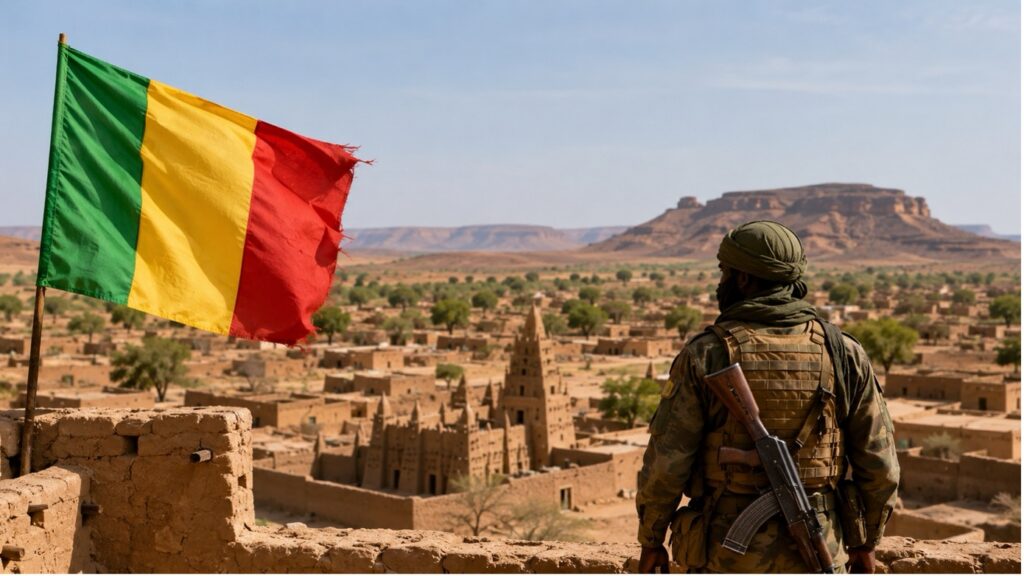
Mali crisis: regional impact of shifting alliances and security failures
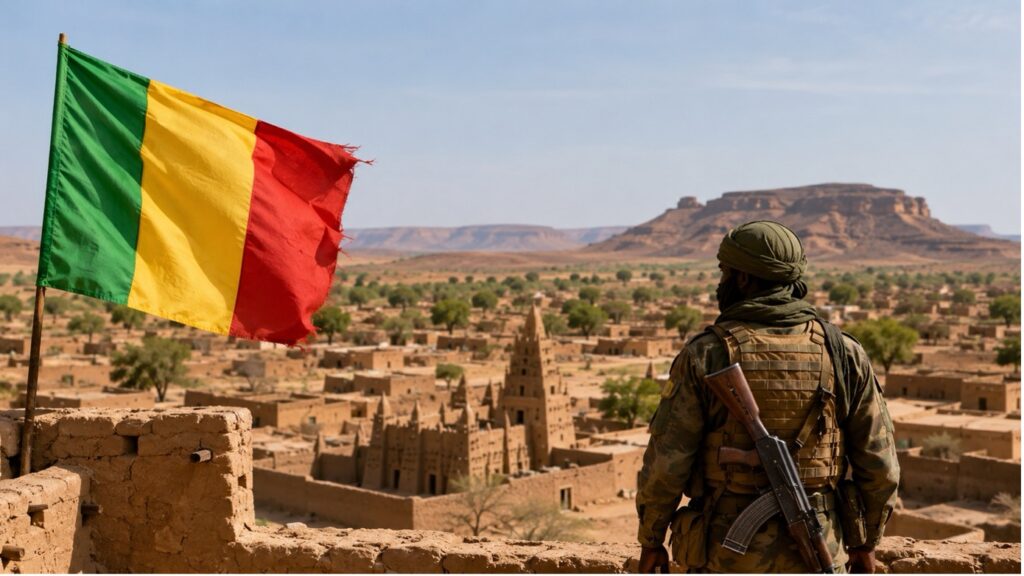
The Mali crisis, unfolding since 2012, has reshaped the geopolitical landscape of the Sahel, transforming a once-central partner in Western counterterrorism efforts into a battleground for competing regional and international influences. Following the historic 2022 withdrawal of French forces, Mali’s military leadership pivoted toward Russia, positioning itself as a champion of sovereignist ideals. Yet, this strategic shift has failed to stabilize the country, revealing deep vulnerabilities in governance, military command, and regional alliances.
From strategic ambition to operational collapse: the fragility of Mali’s sovereignist project
The creation of the Alliance of Sahel States (AES) in September 2023—joining Mali with Burkina Faso and Niger—was meant to symbolize a new era of regional autonomy, free from Western influence. However, the alliance’s political ambition far outpaces its operational capacity. The military and diplomatic realities on the ground tell a different story: a collapsing command structure, escalating violence from armed groups, and a widening power vacuum in Bamako.
The April 2026 offensive, which simultaneously targeted key locations such as Mopti, Konna, Sévaré, Bourem, Gao, and Bamako’s Senou Air Base, exposed the fragility of Mali’s leadership. The assassination of Defense Minister Sadio Camara, the severe injury of Generals Modibo Koné and Oumar Diarra, and the reported exfiltration of President Assimi Goïta marked a catastrophic failure of the state’s command structure. The subsequent withdrawal of Russia’s Africa Corps from Kidal under negotiated terms underscored the limits of external support in the face of persistent insurgency.
FLA–JNIM alliance: a new power dynamic in the Sahel
The growing cooperation between the Front for the Liberation of Azawad (FLA) and the Group for the Support of Islam and Muslims (JNIM) represents a critical turning point in the conflict. These groups, once divided by distinct ideological and historical trajectories, have now formed a tactical alliance aimed at challenging Mali’s central authority and controlling strategic corridors across the country’s north and center.
The FLA, rooted in decades of Tuareg rebellion, seeks greater autonomy for the Azawad region, while the JNIM—an offshoot of Al-Qaeda in the Islamic Maghreb (AQIM)—pursues a broader agenda of imposing Islamic law. Together, they have demonstrated a sophisticated mastery of asymmetric warfare, deploying coordinated attacks using vehicle-borne improvised explosive devices (VBIEDs), drones, and rapid infiltration tactics. Their combined efforts have not only disrupted military operations but also undermined public trust in the state’s ability to ensure security.
Their alliance is reinforced by control over key economic zones, including routes used for smuggling gold, fuel, and illicit drugs. By dominating critical transit corridors, the FLA–JNIM coalition has transformed local governance into a transactional system, where access and passage are bartered for revenue and survival. This economic leverage further entrenches their influence and weakens the state’s authority.
Isolated and exposed: the failure of Africa Corps and the rise of alternative actors
Russia’s Africa Corps, deployed under the banner of the Africa Corps program, was intended to serve as Bamako’s primary security partner. However, the contingent’s performance has fallen short of expectations. Despite a structured presence in Bamako, Mopti, Gao, and Kidal, Africa Corps has struggled to counter the insurgency effectively. The withdrawal from Kidal in late April 2026, negotiated under pressure, highlighted the vulnerability of Russia’s strategy and its inability to secure Mali’s sovereignty.
In contrast, Turkey has emerged as a rising alternative, supplying drones, guided munitions, and armored vehicles to Mali’s military. This partnership, seen as more flexible and cost-effective, has gained traction among certain factions within the junta, creating internal divisions and further weakening the command structure. The competition between Russian and Turkish influence is symptomatic of Bamako’s broader isolation and the fragmentation of its strategic alliances.
Algeria’s strategic pivot: the silent architect of Sahelian realignment
Algeria has long played a pivotal role in Mali’s crisis, serving as both mediator and regional balancer. Its strategy hinges on maintaining a stable yet dependent Mali, preventing the rise of hostile groups at its southern border while avoiding direct military engagement. Algeria’s historical ties to Tuareg communities and its doctrine of limiting foreign military presence have positioned it as a key arbiter in the current conflict.
As the crisis deepens, Algeria’s influence grows. It has facilitated the withdrawal of Africa Corps from Kidal, aligning with its strategic doctrine of excluding foreign armed groups from its periphery. Meanwhile, Algeria’s growing partnership with Mauritania and its vigilance against Moroccan influence in the Sahel reflect a broader geopolitical struggle for regional dominance. The outcome of these dynamics will shape the future of the Sahel.
The Sahel at a crossroads: four possible futures
The current instability in Mali and the Sahel leaves the region at a critical juncture. Four potential scenarios could unfold:
- Prolonged stagnation: The conflict persists, with the AES remaining a political framework lacking operational capacity. The state continues to fragment, and public suffering intensifies.
- Relative stabilization: A negotiated peace initiative, possibly brokered by Algeria, reduces large-scale attacks and restores a fragile calm.
- Rapid deterioration: A major terrorist attack or coup d’état triggers a systemic collapse, leading to widespread violence and regional spillover.
- Sudden rupture: An unforeseen event, such as a coup or social explosion, abruptly changes the political landscape, reshaping the region’s power dynamics.
The human cost: a sovereignty lost
The crisis in Mali is not merely a military or political struggle—it is a humanitarian catastrophe. The civilian population bears the brunt of insecurity, economic collapse, and diplomatic isolation. Sovereignty, once a rallying cry for the junta, has been replaced by a reality of fragmented control: military factions, armed groups, and foreign actors each pursue their own agendas. The prospect of democratic governance has receded, and the future of Mali as a unified state hangs in the balance.
As the crisis in Mali deepens, its impact will ripple across West Africa. Burkina Faso and Niger, both members of the AES, face similar challenges—porous borders, weakened institutions, and growing dependence on external partners. The Sahel may be on the brink of a profound realignment, one that could redefine regional security, migration flows, and economic stability for years to come.