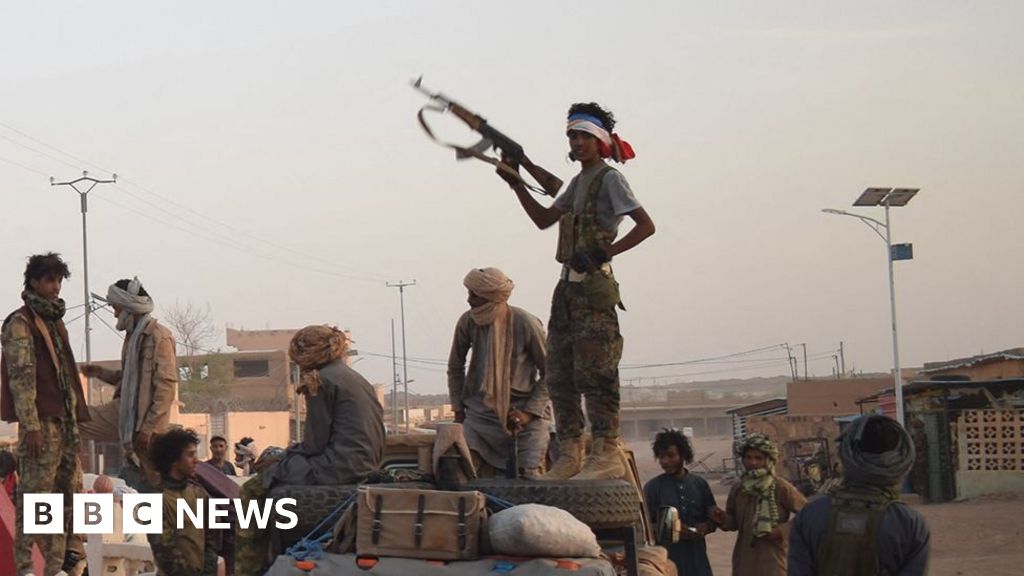
Across West Africa, a wave of shock is sweeping through capitals and remote villages alike, after coordinated rebel offensives finally breached Mali’s defences.
The capital Bamako, long considered secure, witnessed the assassination of Mali’s Defence Minister alongside the sudden seizure of key northern cities like Kidal. Residents in multiple regions reported explosions and sustained gunfire during the weekend offensive, which separatist groups and al-Qaeda-linked militants claimed responsibility for.
what happened to Mali’s defences?
The sudden withdrawal of Malian and Russian-backed forces from Kidal, now under separatist control, has raised serious questions about the operational strength of Col Assimi Goïta’s military government. The junta, which seized power in Bamako in August 2020, still controls most urban centres and state institutions, but analysts say the coming days will be pivotal in determining whether the military can launch an effective counter-offensive.
death of defence minister weakens military co-ordination
Defence Minister Sadio Camara—a central figure in the junta and key interlocutor for Moscow—was killed during the offensive. His death not only disrupts internal military command but could also weaken the alliance with Russia, according to regional security experts.
Camara was instrumental in deploying Russian mercenaries (often referred to as the Africa Corps) across the Sahel region. His absence could hamper both Malian military operations and ongoing security partnerships with Moscow.
three possible scenarios for Mali’s future
scenario 1: junta fights back and stays in power
Analysts at Control Risks believe this remains the most probable short-term outcome, as the military still holds the majority of strategic locations and government buildings.
The junta’s ability to neutralise rebel forces and regain control of cities like Gao and Timbuktu will determine the longevity of military rule, they argue.
- Col Goïta addressed the nation on state television three days after the attacks, vowing to pursue and eliminate those responsible while assuring citizens the situation was under control.
- The presidency’s social media accounts released images of the coup leader visiting wounded victims in a Bamako hospital and meeting Russia’s ambassador to Mali, Igor Gromyko.
scenario 2: junta keeps Russia as partner but seeks new military alliances
The offensive has significantly damaged Russia’s reputation as a reliable security partner in the Sahel, according to senior analysts at Konrad Adenauer Foundation.
With JNIM and FLA rebels now advancing toward Gao and Timbuktu respectively, the failure of Russian-backed forces to protect major Malian cities has fuelled regional doubts about Moscow’s military strategy in Africa.
which countries could Mali turn to?
Analysts suggest Mali could diversify its security partnerships while maintaining Russian support. Potential new allies include:
- Turkey: Already supplying Mali with armed drones, which reportedly played a decisive role in retaking Kidal from rebel control in 2024. Recent reports indicate Ankara may be expanding its influence by training Mali’s presidential guard.
- United States: After years of strained relations, US State Department officials visited Bamako earlier this year to express respect for Mali’s sovereignty and outline a “new course” in bilateral relations.
- Alliance of Sahel States (AES): A bloc of military-led governments in Mali, Niger and Burkina Faso, which has pledged support for Bamako but has yet to act as a major joint fighting force.
scenario 3: pressure forces junta out — but who takes over?
The rebel offensive marks the most severe challenge to military rule in Mali in nearly six years. Further attacks could intensify public discontent and undermine confidence in the current leadership.
Possible future outcomes include:
- A second military coup, with a different faction of officers seizing power.
- An FLA-JNIM alliance replacing the junta, though analysts foresee serious internal tensions due to differing objectives and historical conflicts.
- A Syria-style situation where a once al-Qaeda-affiliated group takes control of the government, facing criticism from hard-line Islamists for being too secular.
key questions facing Mali’s junta
can the military launch a successful counter-offensive?
Analysts argue that Col Goïta’s next moves—including potential visits to frontline cities and coordination meetings with allied forces—will signal whether the junta can regain initiative or if it will remain on the defensive.
However, the death of Defence Minister Sadio Camara—a powerful figure in the junta and main interlocutor for Moscow—has already weakened military coordination and could further disrupt relations with Russia.
how will Russia react if Mali seeks new partners?
With the fall of Kidal and the failure of Russian-backed forces to protect major cities, Moscow’s influence in the Sahel could be at risk.
Analysts say the junta’s decision to diversify security partnerships—such as closer ties with Turkey or renewed engagement with the US—will test the “wider strategy” Moscow has employed across Africa in recent years.
“If Moscow is seen as unable to protect key allies, other governments in the region may reconsider how much they rely on Russia.” — Ulf Laessing, Sahel Programme Head, Konrad Adenauer Foundation
what internal tensions could emerge in a rebel-led government?
Analysts monitoring jihadist media channels have reported that JNIM’s alliance with the separatist FLA is already attracting criticism from hard-line Islamists, who view the collaboration as a “betrayal” of global jihadist objectives.
Differences in ideology between JNIM—an armed Islamist group—and the FLA—a political nationalist movement—could become a major source of future conflict, unless the separatists secure full control of northern Mali and distance themselves from developments elsewhere in the country.
what will happen next in Mali?
the junta’s next steps
The military government led by Col Assimi Goïta still controls most major cities and state institutions. However, the junta’s delayed response—taking several days to appear publicly—and the assassination of a key figure have fuelled public doubts about its ability to manage the crisis.
the role of russian forces in the Sahel
Russian fighters, deployed in Mali and neighbouring countries after the 2020 coup, have faced mounting criticism following the rebel offensive and the fall of Kidal.
Analysts argue that the junta’s decision to maintain or reduce its reliance on Russian security support will “determine” Moscow’s future influence in West Africa and whether other governments reconsider partnerships with the Kremlin.
experts weigh in on Mali’s security crisis
regional reactions from west africa
Neighbouring countries like Niger and Burkina Faso—both under military rule—have expressed solidarity with Bamako through the Alliance of Sahel States (AES). However, the bloc has yet to act as a co-ordinated fighting force.
The crisis has also prompted the US to re-engage with the region, aiming to work more closely with Mali’s neighbours on shared security and economic priorities.
analyst predictions for Mali’s future
Global security firms like Control Risks predict that the junta’s ability to “neutralise” rebel forces and regain control of northern cities will shape public perception and determine whether the current leadership can survive the crisis.
However, analysts foresee that prolonged conflict in northern Mali could “weaken” the junta’s position and potentially lead to a change in leadership if public discontent grows.
understanding the rebel groups behind Mali’s attacks
the separatist front for azawad liberation (fla)
The FLA has historically presented itself as a political and nationalist movement, seeking to regain control of northern Mali from foreign-backed forces.
Spokesperson Mohamed Elmaouloud Ramadane stated that the group aims to take control of key cities like Gao and Timbuktu, signalling its ambitions to expand beyond the current rebel-held territories in northern Mali.
the al-qaeda linked group for the defence of islam and mujahideen (jnim)
Analysts describe JNIM as one of Africa’s deadliest militant groups, with a history of co-ordinating attacks with separatist movements in the Sahel.
- JNIM’s spokesman referred to FLA fighters as their “cousins”, stating that “we share the same enemy, so we have to be under the same umbrella.”
- However, FLA leader Sayed Bin Bella later clarified that there is “no merger” between the groups, and any future collaboration would require JNIM to withdraw from the global al-Qaeda organisation.
Mali’s security crisis: what’s next for the junta?
the junta’s ability to regain control
Analysts argue that the junta’s next moves will “signal” whether military rule can survive the crisis or if it will face increasing pressure to step down.
However, the fall of key cities and the assassination of Defence Minister Sadio Camara have already “weakened” the junta’s position and could further disrupt its alliances with key security partners.
the impact of rebel advances on Mali’s future
The rebel offensive has created the most serious challenge to military rule in Mali since the 2020 coup. Further advances could intensify public discontent and “undermine” confidence in the current leadership.
Possible future outcomes include:
- A second military coup, with a different faction of officers seizing power.
- An FLA-JNIM alliance replacing the junta, though analysts expect serious internal tensions due to differing goals and historical conflicts.
“The crisis in Mali could become a test of Russia’s wider strategy in Africa, where Moscow has expanded influence through military partnerships. If Russian-backed forces are seen as unable to protect key allies, other governments in the region may reconsider how much they rely on Moscow.” — Ulf Laessing, Sahel Programme Head, Konrad Adenauer Foundation