
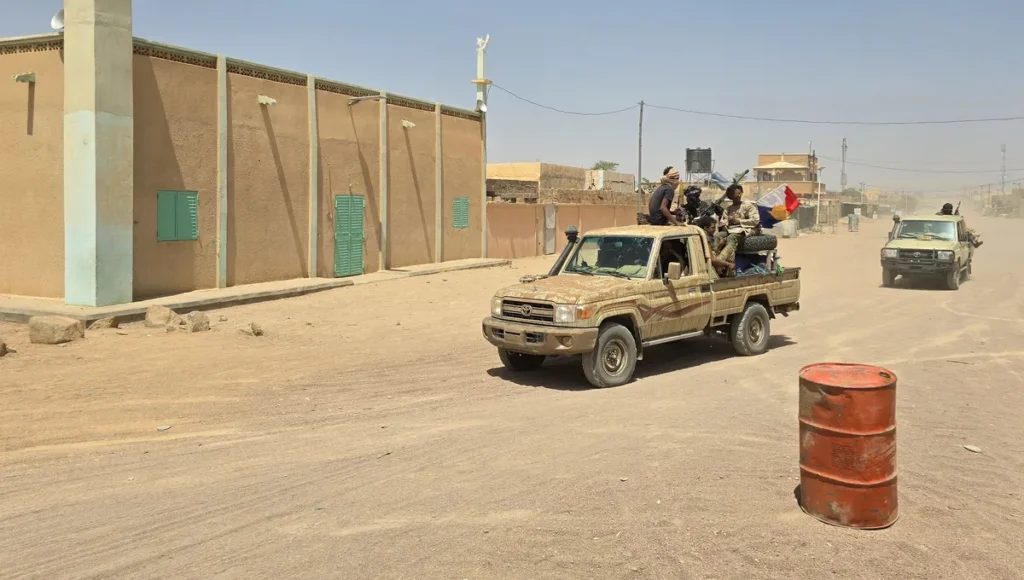
In a striking turn of events, Russian military forces stationed in the Mali have withdrawn from the northern city of Kidal without engaging in combat. This retreat occurred as Tuareg rebels, allied with jihadist factions, launched coordinated attacks across multiple regions, including the capital, Bamako. The move underscores the fragility of the military junta’s alliances and the escalating security challenges facing the country.
Footage captured the withdrawal of Russian vehicles from Kidal, a strategic stronghold that had been retaken by Malian forces—backed by Russian troops—just last year. The city’s fall to rebel groups marks a significant setback for the regime led by Colonel Assimi Goïta, who came to power in a coup five years ago. The withdrawal, described as a “defeat without a single shot fired”, highlights the ineffectiveness of the junta’s security strategies and the limitations of external support.
djihadist groups exploit power vacuum
On the eve of the Russian retreat, the Group for the Support of Islam and Muslims (JNIM), an Al-Qaeda-affiliated faction, claimed responsibility for simultaneous attacks targeting Bamako and other key areas. In a bold statement, the group urged Russian forces not to intervene, signaling potential future cooperation if left unchallenged. This development raises questions about the motivations behind Moscow’s passive response.
The presence of 2,500 Russian soldiers, operating under the Africa Corps banner (successor to the Wagner Group), was expected to bolster Mali’s defenses. However, their inaction amid the worst security crisis since the 2020 coup has left the junta vulnerable. The failure to secure the country has left many questioning whether the regime’s decision to replace French forces with Russian support was a miscalculation.
Mali’s leadership faces growing unrest
The Malian government has suffered severe blows in recent weeks. The assassination of the Defense Minister during an attack on his residence, alongside coordinated assaults on multiple regions, suggests rebel groups are operating with impunity. The siege of Bamako, which cut off fuel supplies from neighboring countries, further demonstrates the regime’s weakened grip on power.
Analysts warn that the situation could deteriorate further, with Mali risking fragmentation between Tuareg separatists in the north and jihadist factions vying for territorial control. The potential collapse of the junta in Bamako could have dire regional consequences, as JNIM’s ambitions extend beyond Mali’s borders. Neighboring countries like Niger and Burkina Faso—both members of the Alliance of Sahel States—are already on high alert, as are coastal nations already grappling with jihadist incursions.
a decade of failed interventions
The current crisis is the culmination of over a decade of instability. After France’s 2014 intervention helped reclaim northern Mali from jihadist control, the subsequent withdrawal of international forces left a void that both local and external actors have struggled to fill. The junta’s 2022 coup, which ousted the French, was followed by a Russian military partnership intended to stabilize the country. Yet four years later, the strategy has clearly failed, leaving Mali’s population to bear the brunt of the consequences.
As the situation in Mali continues to unravel, the implications for the broader Sahel region grow increasingly dire. The passivity of foreign allies, coupled with the resilience of militant groups, paints a grim picture for the future of one of Africa’s most volatile regions.


More Stories
Niger: Tiani faces fallout from special forces anger after Russian intervention
Mali : 17 morts dans les rangs des dozos, le JNIM accentue sa pression
Sahel : le pari des juntes tourne-t-il à l’échec sécuritaire ?