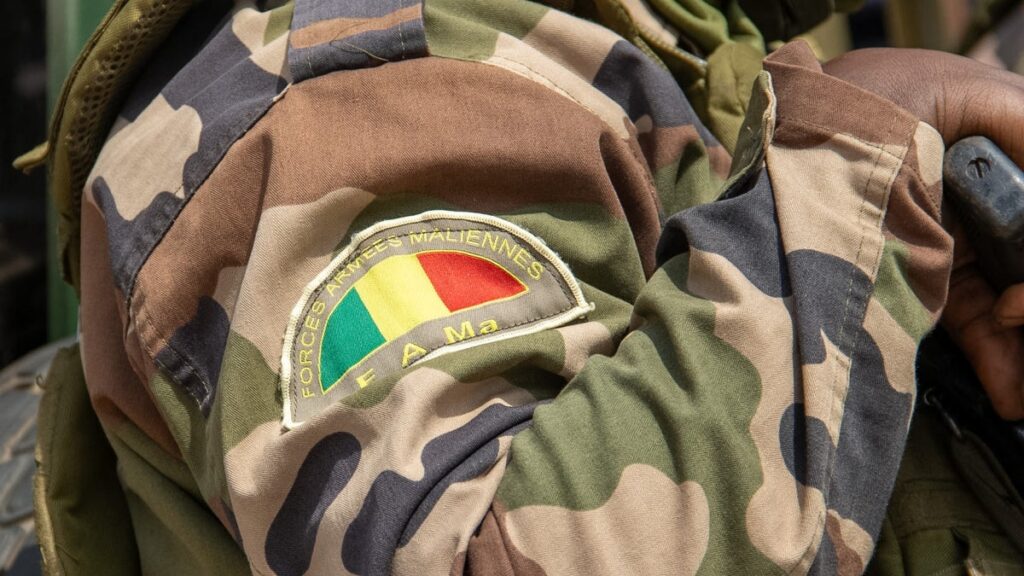
Alleged atrocities in Ségou: army and dozos implicated in deadly raids
Nairobi – Mali’s armed forces, alongside allied militias, stand accused of killing at least 31 civilians and burning homes during coordinated attacks in two villages within the conflict-ridden Ségou region, Human Rights Watch reported today.
On October 2, soldiers from the Malian Armed Forces (FAMa) and dozos—traditional hunters predominantly from the Bambara ethnic group who have supported counterinsurgency efforts for over a decade—allegedly executed at least 21 men and torched at least 10 homes in the village of Kamona. A second attack on October 13 in the nearby village of Balle, roughly 55 kilometers away, resulted in the deaths of nine men and one woman, according to witnesses. Both villages fall under the influence of the Group for the Support of Islam and Muslims (JNIM), an Al-Qaeda-linked faction operating in central Mali.
Survivors and community leaders recounted that soldiers and dozos summarily executed civilians after accusing them of collaborating with JNIM. « The October massacres in Ségou are the latest in a string of atrocities linked to Mali’s military and allied militias », said Ilaria Allegrozzi, Senior Sahel Researcher at Human Rights Watch. « The Malian government must launch a credible, impartial investigation into these killings and hold those responsible accountable through fair trials. »
Attack patterns and civilian testimonies
Witness accounts from Kamona: On October 2 around 10 a.m., soldiers arrived in at least seven pickup trucks and three armored vehicles, accompanied by dozos on motorcycles. They reportedly targeted men in the village, prompting many residents—warned by JNIM fighters of the incoming forces—to flee. Those unable to escape were allegedly rounded up and executed.
A 40-year-old shepherd, who hid in an abandoned house with his 9-year-old daughter, described finding 17 bodies under a tree after the attackers departed around 4 p.m. « The victims had been riddled with bullets », he told Human Rights Watch. « One had his head completely crushed. Spent bullet casings littered the ground near the bodies. »
Locals provided a list of 21 male victims aged 20 to 65, though they suspect additional deaths occurred in nearby bushland. « We heard at least 15 more men were killed that day, but we didn’t check—we were too afraid the army would return », said a villager.
Balle massacre details: On October 13 around 1 p.m., Malian troops in five pickup trucks and dozos on at least 30 motorcycles descended on Balle, triggering panic among residents. A 24-year-old man recounted, « I didn’t flee immediately, but when I saw soldiers going door-to-door and assaulting men, I ran. From my hiding place, I heard gunfire. »
Ten civilians—nine men (aged 22 to 67) and a 55-year-old woman—were killed, and over 100 cattle were stolen. A 33-year-old man found the bodies clustered in the village center, « their limbs broken, bodies riddled with bullets ». The victim’s 21-year-old daughter described her mother’s final moments: « She confronted the soldiers, accusing them of abusing villagers. They dragged her to where the men were gathered and shot her. »
Military response and conflicting narratives
In a statement dated October 14, Mali’s Chief of Staff claimed a « defensive reconnaissance operation » near Balle had « neutralized around 20 terrorists » and seized military equipment. However, residents countered that Balle has been under JNIM control for years, where locals pay Islamic taxes (zakat) and settle disputes through jihadist-administered justice systems. « The army doesn’t distinguish between us and them », said a villager. « They assume anyone here supports JNIM. »
Broader context: a decade of conflict and impunity
Since 2012, Mali has grappled with armed Islamist groups, leading to thousands of civilian deaths and displacing over 402,000 people, per UNICEF data. Human Rights Watch has documented widespread abuses by both state forces and armed groups, including summary executions, torture, and destruction of property.
The recent attacks followed JNIM’s siege of Bamako in early September, which severed fuel supplies to the capital and forced the military junta to shutter schools and universities temporarily. Under international humanitarian law, all conflict parties—including Mali’s armed forces—are prohibited from targeting civilians, committing war crimes, or using disproportionate force.
While Mali withdrew from the International Criminal Court (ICC) in September, it remains bound by the Rome Statute until September 2026. The ICC opened an investigation into alleged war crimes in Mali in 2013, focusing on abuses since 2012. However, the African Union (AU) has faced criticism for its limited response to the escalating crisis. « The AU Peace and Security Council must prioritize Mali », Allegrozzi urged. « It should convene regular briefings, strengthen diplomatic efforts, and coordinate regional and international action to ensure accountability for abuses by all parties. »