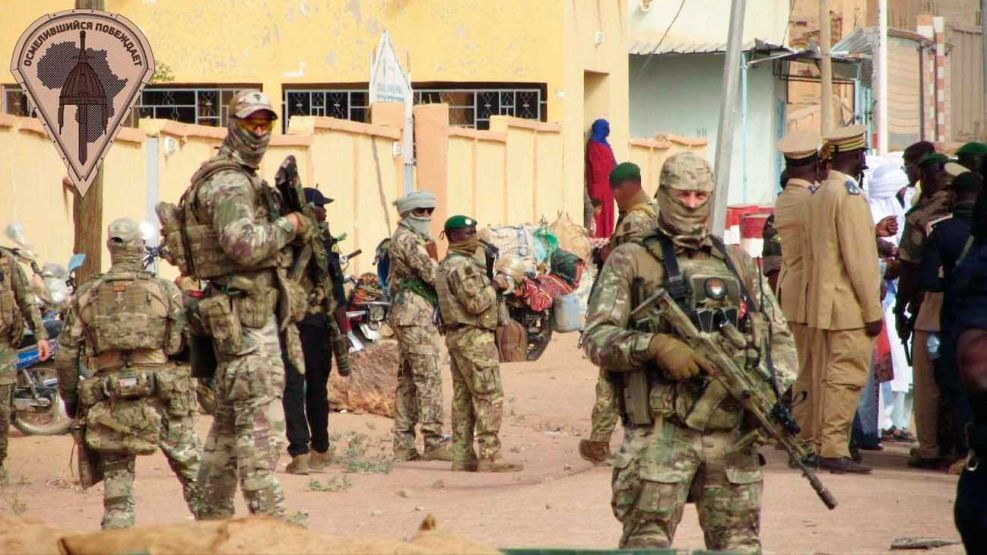
Mali’s strategic pivot from Western partners to Moscow following the withdrawal of French forces and the end of the UN mission MINUSMA has materialized in the form of the Africa Corps, a Kremlin-aligned paramilitary structure under the direct command of Russia’s Defense Ministry. Yet, after years of engagement, the security landscape in the country remains fraught with uncertainty, raising questions about the viability of this mercenary-based approach amid a deepening crisis.
Security gains elusive despite symbolic advances
The stated goal of Mali’s military leadership was unambiguous: reclaim territory from armed factions such as the Group for the Support of Islam and Muslims (JNIM) and the Islamic State in the Greater Sahara (EIGS). While Africa Corps has staged high-profile operations—most notably the recapture of Kidal in late 2023—the broader security situation continues to deteriorate.
On the ground, the cycle of violence persists. Not only have attacks not abated, but they are now encroaching closer to Bamako, Mali’s capital. The myth of Russian military invincibility shattered in July 2024 during a devastating ambush near Tinzawatène, near the Algerian border. In a coordinated assault by the Coordination of Azawad Movements (CSP) and jihadist militants, Russian paramilitaries suffered one of their heaviest losses in the Sahel, exposing the fragility of their operational model.
Sustainment remains a critical weakness. Africa Corps demonstrates proficiency in rapid, high-impact raids but struggles to hold territory long-term. Once convoys depart, civilians are frequently left exposed to retaliatory violence by armed groups, rendering short-term gains unsustainable.
Legal opacity fuels civilian suffering and impunity
The Africa Corps operates in a legal gray zone, a hybrid force neither fully integrated into the Malian state nor governed by international humanitarian law. This ambiguity creates two pressing concerns:
- Unaccountability for civilian harm: Human rights organizations have documented repeated allegations of indiscriminate violence during sweep operations. Without a formal state affiliation, Africa Corps evades legal accountability, leaving victims with no pathway to justice.
- Resource-driven priorities: Reports indicate that Africa Corps deployments often align with commercial interests, particularly around mining sites for gold and lithium. This suggests a focus on protecting extractive assets rather than securing vital infrastructure or rural communities. Security, in this model, appears less a public good and more a tradable commodity.
As one analyst noted, “A nation’s security cannot be outsourced to actors whose primary motives are financial gain and geopolitical influence.”
Bamako’s strategic autonomy undermined by mounting dependence
Mali’s decision to sever ties with its former Western allies without achieving decisive security gains has deepened its reliance on Moscow. The Kremlin now exerts significant influence over Mali’s national security agenda, reshaping the country’s strategic alignment in West Africa.
This realignment has strained relations with regional blocs such as ECOWAS and neighboring governments, complicating cross-border cooperation essential to combating transnational threats. Moreover, the Malian Armed Forces (FAMA) risk marginalization, with local troops potentially reduced to supporting roles or even cannon fodder in operations led by foreign commanders whose objectives may not align with national peacebuilding imperatives.
The root of the crisis remains unaddressed
The persistent failure to stabilize Mali underscores a fundamental truth: without robust political solutions and accountable governance, external military interventions—whether Western or Russian—are doomed to fail. The conflict is rooted in systemic governance failures, a challenge no mercenary force, regardless of firepower, can resolve.