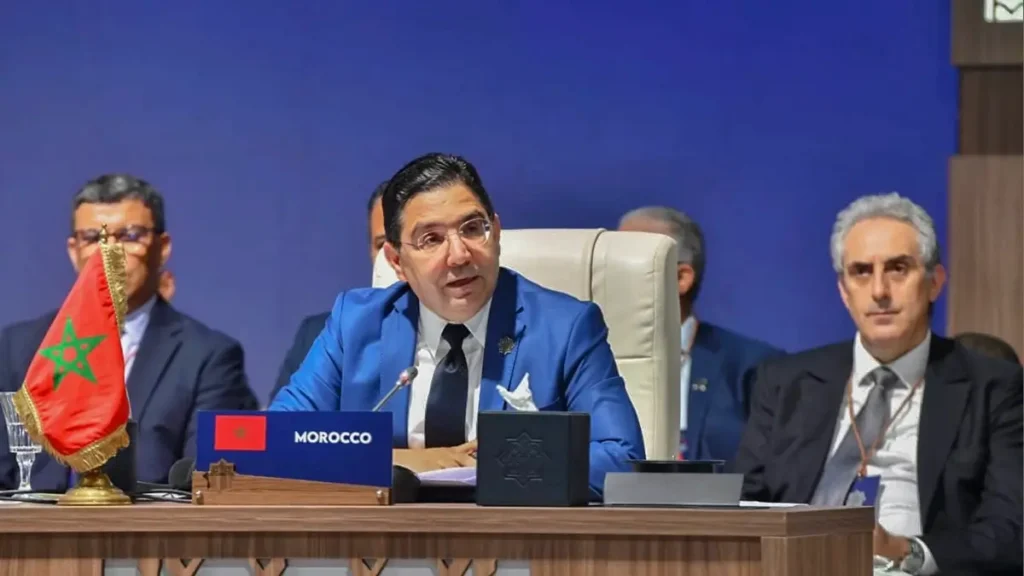
The Marrakech Platform: a bold step toward continental security and unified African action
The Marrakech Platform embodies Morocco’s comprehensive vision for African security, addressing every dimension of the continent’s stability challenges.
There is an unshakable belief that Africa’s security and stability are inseparably linked to those of Morocco.
This principle transcends conventional security frameworks, evolving into a comprehensive strategy that merges institutional strengthening with advanced intelligence cooperation. It positions Rabat as a regional leader capable of bridging critical security gaps where transnational threats take root.
Geopolitical challenges and the asymmetric warfare threat
Alongside this pioneering role, asymmetric warfare presents a complex reality demanding constant vigilance. Extremist organizations exploit political divisions and fragile borders across the Sahel and Sahara to fund operations and recruit members.
Effective counter-terrorism coordination between agencies has become essential. A unified African vision is no longer optional—it’s an urgent necessity to counter the dangerous alliance between armed groups and organized crime networks. This urgency intensifies as these threats infiltrate the digital space, leveraging advanced technologies to undermine regional peace.
Current geopolitical challenges require deeper analysis beyond surface-level descriptions. The risks facing certain African nations demand a Moroccan response grounded in history, geography, and political dynamics. Through this approach, Morocco helps strengthen African nations by providing pathways to both development and security, presenting a strategic model that combines sustainable growth with robust security oversight.
The Moroccan strategic model: a sovereign and integrated doctrine
The strategic strength of Morocco’s approach lies in its ability to integrate security, scientific, spiritual, and developmental dimensions to dismantle threat structures before they take root. This transforms the Marrakech Platform into a strategic laboratory for formulating an independent African security doctrine.
Rabat rejects imported security solutions that have repeatedly failed in complex African terrains. Instead, it champions a continental model built on the integration of field intelligence, spiritual resilience, and holistic human development. Morocco’s involvement stems from the firm conviction that Africa is a continent to which the country belongs geographically, identity-wise, politically, and historically.
Diplomatic and institutional momentum
In this dynamic context, diplomatic action flows from the highest royal directives. Nasser Bourita, Minister of Foreign Affairs, African Cooperation, and Moroccans Abroad, plays a pivotal role in translating this vision into concrete partnerships. His relentless efforts transform the Marrakech Platform from a dialogue framework into an executive tool that surpasses traditional protocols, ensuring that security pathways align with African states’ development and sovereignty agendas.
This solidifies Rabat’s position as Africa’s diplomatic hub, capable of handling the continent’s most complex security files with insight and rigor, free from external agendas that could destabilize the region.
Morocco’s African strategy represents a unique model combining rigorous law enforcement with crisis management efficiency. It leverages the accumulated expertise and techniques of Morocco’s sovereign bodies to counter cross-border terrorism and sabotage plans. This integrated approach involves the General Directorate for Territorial Surveillance (DGST), General Directorate for National Security (DGSN), Royal Gendarmerie, Royal Armed Forces, Central Bureau of Judicial Investigations (BCIJ), General Directorate for Studies and Documentation (DGED), and the diplomatic corps.
Socioeconomic development and spiritual diplomacy
The country’s strategic thinking recognizes that the sustainability of stability hinges on equipping African states with economic foundations offering real alternatives to their people. Major projects, such as gas pipelines and Atlantic initiatives facilitating Sahel countries’ access to the ocean, integrate with security efforts to create a solid bloc of strategic stability.
The spiritual and educational dimension stands out as a long-term tool to immunize African societies against extremist thought. The Imarat al-Mu’minin institution plays a crucial role in safeguarding religious spaces and promoting moderation. Morocco’s religious institutions, led by the Mohammed VI Foundation of African Ulema, train African cadres to dismantle radical discourse by anchoring it in a moderate Islamic reference—distinctively characteristic of the Moroccan experience.
Consolidating the Marrakech Platform and future projections
The success of the Marrakech Platform in establishing this doctrine’s foundations reduces the maneuvering space for external powers seeking to destabilize the continental balance. Morocco lays the cornerstone of an African security edifice where stability is a national and sovereign commitment assumed by African states themselves.
Since its launch in 2022, the Platform has convened heads of African counter-terrorism agencies, confirming the continuity of this approach through sessions in Marrakech (2022), Tangier (2023), Fez (2024), and Agadir (2025). These meetings have become fundamental forums for sharing experiences and strengthening regional cooperation.
Thus, Morocco remains the continent’s compass toward a secure, prosperous, and independent future. It translates Moroccan initiatives into tangible achievements that protect African states’ sovereignty and supreme interests against growing asymmetric threats, integrating the Atlantic dimension as a safe corridor for economic integration and a bulwark against destabilization.