
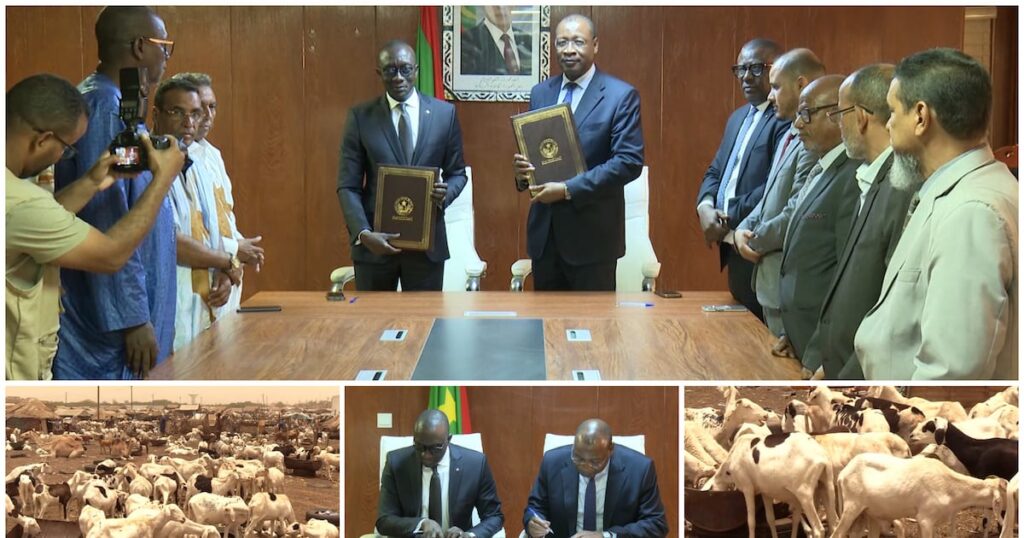
In a strategic move to bolster supply for one of its most significant cultural events, Mauritania has committed to delivering over 450,000 sheep to Senegal ahead of Tabaski celebrations. This agreement comes as traditional livestock suppliers in the region face disruptions due to escalating security challenges in Mali, a key transit route for Mauritanian herders.
Mauritania steps in to meet Senegal’s Tabaski sheep demand
Nouakchott’s pledge addresses a critical shortage in Senegal’s sheep supply, exacerbated by reduced imports from neighboring countries. According to Alioune Kane, a livestock expert with the National Association of Pastoral Groups (GNAP), Mauritania typically exports between 460,000 and 500,000 sheep to Senegal annually. However, this year’s shipment is expected to exceed that range as herders reroute their livestock to avoid the instability in Mali.
Kane noted that many Mauritanian herders have already crossed into Senegal, preparing to converge on Dakar and major urban centers. «Dakar has pledged comprehensive measures covering security, customs, and sanitary protocols to ensure the smooth transportation and delivery of livestock», he explained.
Shift in trade routes amid regional instability
Baba Hassan Sidi, a GNAP representative in the Néma region, highlighted the historical trade pathways that once connected Mauritania, Mali, and Senegal. «Previously, herders from Néma and Aïoun could safely transit through Mali to reach Senegal», he said. «Today, they must navigate an alternative route, crossing the Senegal River from the Trarza region to avoid the risks in Mali».
This detour significantly extends the journey for livestock transporters, adding logistical challenges. Despite the added complexity, Sidi emphasized the enduring partnership between Mauritanian and Senegalese herders. «Many herders are already in Senegal, adhering to a longstanding agreement that reflects the deep ties between our peoples».
Expanding supply to Côte d’Ivoire as well
Beyond Senegal, Mauritania is also fulfilling part of Côte d’Ivoire’s sheep demand for Tabaski, further underscoring its role as a regional livestock supplier. The shift aligns with broader efforts to stabilize supply chains amid persistent security concerns in West Africa.




More Stories
Niger: Tiani faces fallout from special forces anger after Russian intervention
Crisis in Niger, IMF agreement in Sénégal, and Moroccan elections: Five essential stories
RDC-Israël : un rapprochement aux enjeux multiples