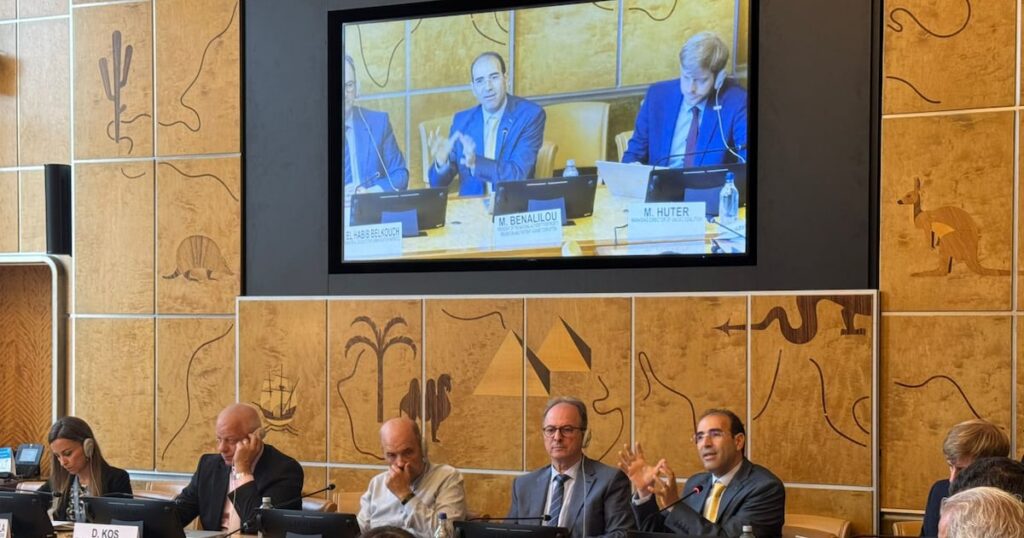
Held against a backdrop of growing global awareness of corruption’s harmful effects, this event built on the work of the Human Rights Council, particularly resolution 59/6 adopted in July 2025. That resolution enshrines the now widely shared view that fighting corruption and protecting fundamental rights are intrinsically linked and mutually reinforcing. International commitments—from the United Nations Convention against Corruption and the 2011 Marrakech Declaration to the UNGASS 2021 political declaration—all stress the need for a preventive approach grounded in the rule of law, democracy, and human rights.
Within this framework, Morocco highlighted its integrated approach, based on convergence between public policies, national institutions, and international commitments. Moderating the discussions, Ambassador Omar Zniber, the Kingdom’s permanent representative to the United Nations in Geneva, underscored the importance of this initiative, calling it “very significant” at the multilateral level. He emphasized “the contributions of high-ranking Moroccan officials” and “Morocco’s role as a leader in this process at the United Nations,” insisting on the coordinated mobilization of national institutions and alignment with the Kingdom’s strategic directions in transparency and governance.
For his part, the Interministerial Delegate for Human Rights, El Habib Belkouch, grounded the debate on a more fundamental level, stressing that “corruption also constitutes a major obstacle to the effective enjoyment of human rights.” Moving beyond traditional governance or repression-focused approaches, he highlighted its concrete effects: “When it affects access to justice, healthcare, education, or employment, it deprives individuals of legitimate rights.”
El Habib Belkouch recalled that “every resource embezzled or wasted due to corruption is a resource no longer available to fund a school, a hospital, or a public policy,” illustrating the direct impact of this phenomenon on citizens’ daily lives. He also drew attention to the fact that its effects “often weigh more heavily on the most vulnerable groups,” notably women and marginalized populations.
Insisting on the needed responses, he stated that “prevention today appears as one of the most effective levers,” highlighting key principles such as “transparency, the right to access information, citizen participation, and accountability,” which he described not only as fundamental rights but also as “essential tools for preventing corruption.” He finally called for stronger synergies between institutions, noting that their coordination is “a major priority to improve the effectiveness of public policies.”
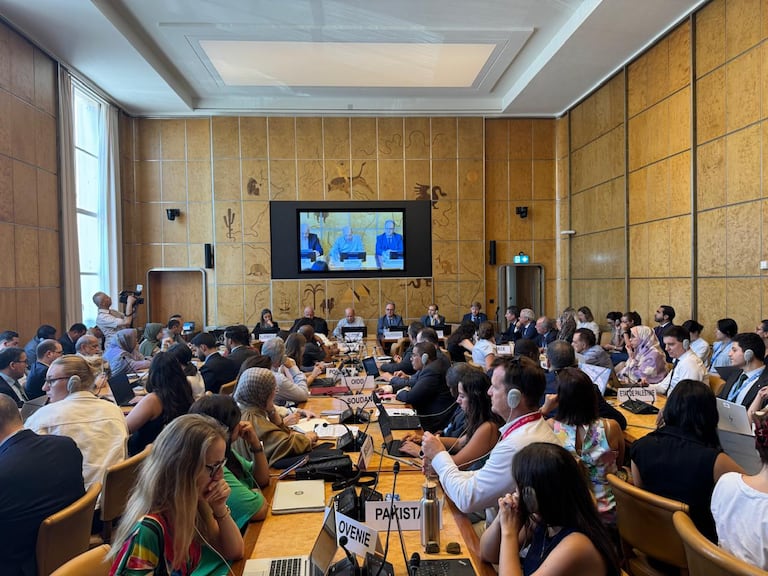
Mohamed Benalilou, president of the National Authority for Integrity, Prevention and Fight against Corruption, echoed the same sentiment, giving this linkage an even more structural scope. According to him, the relationship between these two fields “is gradually evolving toward structural interdependence,” reflecting a deep transformation of analytical and action frameworks.
Adopting a victim-centered approach, he stressed that “it is no longer just about embezzled funds, but about real victims of corruption deprived of their rights,” calling for moving beyond traditional paradigms. He also highlighted dimensions that are still insufficiently addressed, such as “gender-based corruption,” which he considers “an intrinsic obstacle to equality.”
Mohamed Benalilou further insisted on a major conceptual shift, asserting that “the prevention of corruption is evolving into a positive obligation for states to protect rights and freedoms.” In this logic, it becomes “an essential element of human rights due diligence.”
He also called for “preserving civic space” and “recognizing whistleblowers as human rights defenders,” while advocating a transition toward a model of “institutional integrity,” where institutions “do not limit themselves to the absence of corruption, but actively protect rights and guarantee equality.”
On the international front, he stressed the need to “ensure greater coherence between the Geneva, Vienna, and New York processes,” noting that obligations under the United Nations Convention against Corruption and those related to human rights “are two sides of the same commitment.” He thus called for establishing “structural bridges” between institutions and for the emergence of “preventive governance based on human rights.”
Throughout the discussions, a consensus emerged among participants on the urgency of strengthening synergies among different actors—states, international institutions, and civil society—to make corruption prevention a key lever for protecting human rights. Emphasis was placed on the role of education, capacity building, citizen participation, and digital technologies, considered indispensable tools for promoting good governance, enhancing transparency, and preventing abuses.
More Stories
Burkina Faso’s shrinking public payroll: a household burden as schools reopen
Simporé’s televised admission: can Burkina Faso’s army still hold the line?
Gabon’s ghost worker purge: can 11 billion CFA francs in savings really reach the people?