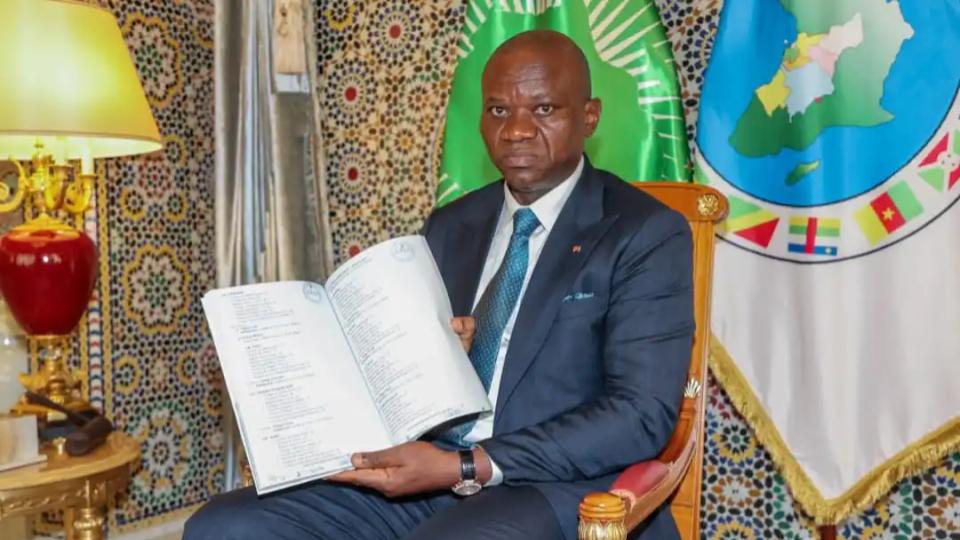
On Monday, August 10, 2026, President Brice Clotaire Oligui Nguema convened a high-level meeting with Vice-President of the Government Herman Immongault and Minister of Labour Jacqueline Ilogue, spouse Bignoumba. The gathering marked the official handover of the final report concluding the historic professional elections—a nationwide ballot initiated under direct presidential guidance.
The elections represent a watershed moment in Gabon’s labour relations. For the first time, voting spanned the public sector, state-owned enterprises and private businesses, reflecting a sweeping commitment to overhaul social dialogue on equitable foundations.
Across the country, the exercise unfolded with exceptional discipline. Success hinged on a tripartite framework that continuously brought together government representatives, employers and union delegates in dedicated working groups. Even targeted recounts in three provinces for a specific ministerial field were handled seamlessly, underscoring the robustness of the entire process.
Key figures shaping a new social landscape
The landmark vote produced a broad and legitimate representation: 254 delegates elected in the public sector, nearly 220 in the parapublic domain, and more than 1,250 staff representatives chosen in the private sphere, along with roughly 220 parapublic delegates. These numbers lay the groundwork for a more inclusive and responsive labour framework.
Building lasting and inclusive social dialogue
With the results now validated, the phase of electing union and staff delegates has concluded, opening a fresh chapter. The administration intends to leverage this renewed mandate to fortify consultation mechanisms and advance worker protections nationwide.
By spearheading this transformative initiative, the Head of State has reaffirmed his resolve to cultivate a calm and structured social climate. Such stability is vital to safeguarding peace, attracting investment and advancing the national full-employment agenda.

More Stories
Can a €544,042 pledge from Benin redefine Africa’s HIV response?
Can Benin’s port workforce transformation hinge on a €15 million Luxembourg gamble?
Burkina Faso’s shrinking public payroll: a household burden as schools reopen