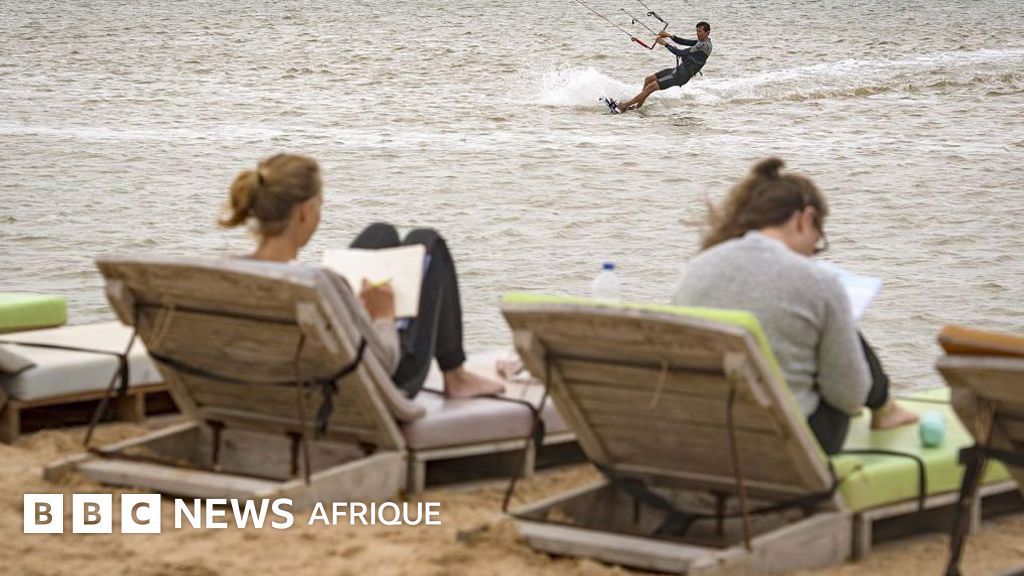
Tourism in Morocco’s Western Sahara is booming, with a surge in flights and accommodations drawing visitors to Dakhla’s windswept coastline. Yet beneath the glossy travel brochures lies a decades-old territorial dispute that continues to shape the region’s reality.
Dakhla, a coastal city where the Sahara meets the Atlantic, has become a magnet for budget-conscious travelers. Low-cost airlines like Ryanair now offer round-trip flights from Madrid for as little as €30, while a variety of lodgings—from hostels to luxury resorts—promote the area as a hidden gem of Morocco.
Western Sahara holds a unique status under international law. The United Nations classifies it as a non-self-governing territory, meaning its people lack the ability to govern themselves. Roughly 80% of the region is administered by Morocco, which considers it part of its sovereign territory, referring to it as its ‘southern provinces.’
a disputed legacy
For over half a century, the status of Western Sahara has remained unresolved. When Spain withdrew in 1976, Morocco laid claim to the land, sparking a conflict with the Polisario Front, a liberation movement demanding independence. A UN-brokered ceasefire in 1991 promised a referendum on self-determination—but the vote never took place.
Today, the Polisario Front controls a narrow strip in the east, while Morocco maintains control over the rest. The international community has long sought a political solution, though recent diplomatic shifts—including a 2020 U.S. decision to recognize Morocco’s claim in exchange for its normalization of ties with Israel—have complicated the path forward.
tourism as a tool of influence
Morocco has invested heavily in developing Western Sahara’s tourism sector, a strategy critics argue is designed to strengthen its grip on the territory. The number of visitors to Moroccan-administered areas has climbed by over 50% in seven years, rising from 490,297 in 2019 to 743,133 in 2025, according to government data.
Major airlines, including Ryanair, Transavia France, and Binter Canarias, now operate direct flights to Dakhla from cities like Madrid, Paris, and the Canary Islands. While some carriers label the destination as part of Morocco, others—like Binter Canarias—use the name Western Sahara, reflecting the territory’s contested status.
A British traveler who recently visited Dakhla noted the area’s rapid development but described it as still in its early stages. “Many resorts are under construction, and the place felt very empty,” he said. “There were a few families on holiday, but it still had that early-tourism vibe.”
legal and ethical concerns
Human rights advocates and legal experts warn that branding Western Sahara as part of Morocco risks legitimizing its occupation under international law. Erik Hagen of Western Sahara Resource Watch argues that such marketing distorts public understanding and could expose companies to legal challenges.
“When businesses present occupied territories as part of a sovereign state, they undermine the right to self-determination and blur the lines of international law,” he explains. “This isn’t just a moral issue—it could have serious legal and reputational consequences.”
Major booking platforms like Booking.com, Expedia, and Trivago have also faced criticism for listing hotels in Western Sahara under Morocco. Booking.com states it adds disclaimers when regions are disputed but directs travelers to consult official government travel advisories. Expedia declined to comment, while Trivago has not responded.
Dr. Andrea Maria Pelliconi, a human rights law expert at the University of Southampton, warns that companies failing to distinguish Western Sahara from Morocco may face lawsuits under international law, consumer protection regulations, and EU competition rules.
The pressure has forced some changes. Last year, Airbnb stopped labeling properties in Western Sahara as being in Morocco—a move activists hope others will follow.
the sahrawi perspective
The Polisario Front, which represents the indigenous Sahrawi people, views Morocco’s tourism strategy as an attempt to impose a fait accompli—a way to normalize its control without addressing the core issue of self-determination.
Sidi Breika, the Polisario Front’s representative in the UK and Ireland, accuses Morocco of violating international law by developing projects in the occupied territory. “Every investment, every tourist visit, is an attempt to erase our right to decide our own future,” he says. “The world needs to recognize that no amount of tourism can replace the will of the Sahrawi people.”
Breika also hinted at legal action against Ryanair, which he claims misrepresents the territory, and warned that the Polisario Front is monitoring the situation closely.
an unresolved path forward
Despite Morocco’s efforts to consolidate its claim—bolstered by recent diplomatic support, including from the U.S.—the conflict remains far from settled. The UN continues to emphasize the need for a mutually agreed political solution, while the Polisario Front rejects proposals for autonomy.
As tourism grows, so does the debate over whether travel to Western Sahara inadvertently supports Morocco’s sovereignty narrative—or if it could one day help bring international attention to the Sahrawi people’s struggle.