
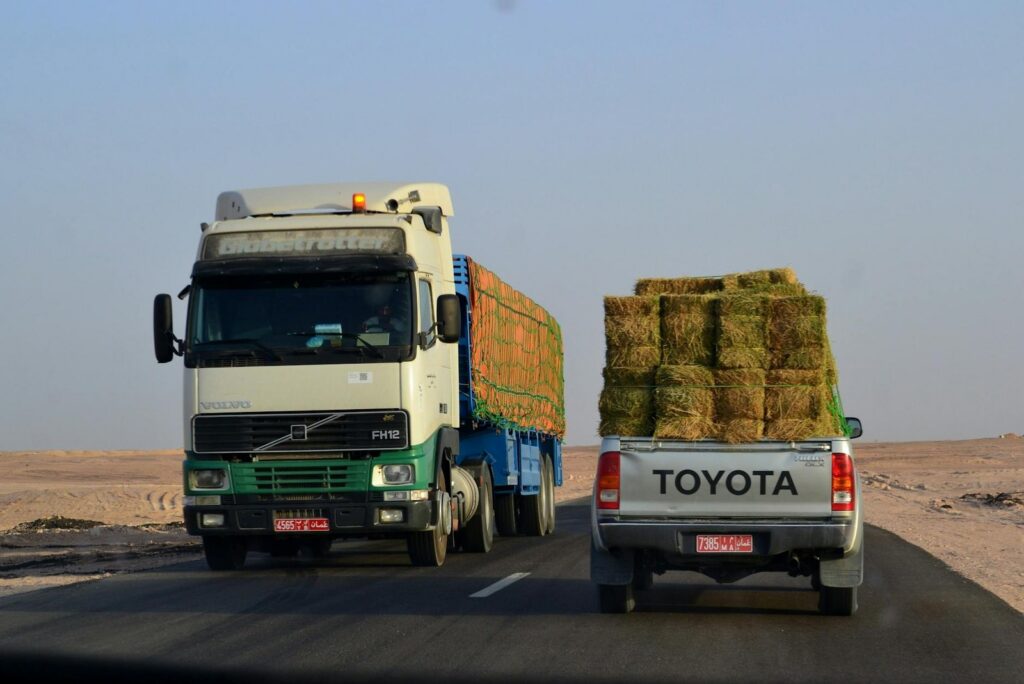
The Chad government is accelerating efforts to revitalize vital transit corridors connecting N’Djamena to Douala and Bangui. A new phase of logistical modernization has been launched to streamline trade flows between Cameroon, Chad, and the Central African Republic (CAR), countries that rely heavily on the Port of Douala for imports and exports. The initiative goes beyond mere road infrastructure—it addresses economic competitiveness, food security, and deeper regional integration within the Economic and Monetary Community of Central Africa (CEMAC).
Critical trade arteries for landlocked economies
For Chad and the Central African Republic, the Cameroonian corridor is the lifeline of their trade. Historically, nearly 90% of Chad’s imports pass through Douala, the subregion’s leading deep-water port. The 1,800-kilometer Douala-N’Djamena route underpins most of the country’s foreign trade. Any disruption along this corridor—whether due to poor road conditions, administrative bottlenecks, or security threats—directly drives up consumer prices in N’Djamena.
The Douala-Bangui corridor faces similar challenges, compounded by a decade of instability in northeastern CAR. Economic operators report delays of several weeks on certain sections, far exceeding theoretical transit times. These inefficiencies erode the competitiveness of goods and deter investment. While the World Bank and the Africa Development Bank (AfDB) have funded strategic segments, systemic issues remain unresolved.
Chad’s strategic economic diplomacy
By restarting this project, Chadian authorities are signaling a renewed political commitment. The move aligns with an active economic diplomacy strategy, where President Mahamat Idriss Déby Itno aims to strengthen Chad’s regional influence. N’Djamena seeks greater leverage in negotiations with Yaoundé over transit efficiency, port tariffs, and convoy security. Bilateral consultations have already begun to standardize customs procedures, reduce roadblocks, and accelerate the rollout of electronic cargo tracking systems.
The CAR dimension is also a priority. Bangui, which shares Chad’s dependence on the Port of Douala, views enhanced trilateral coordination favorably. Joint discussions could lead to shared investments and a unified approach when engaging technical and financial partners. However, turning political commitments into tangible outcomes remains challenging, particularly as all three countries face tight fiscal constraints.
Key hurdles to cross for meaningful integration
Beyond political will, corridor modernization requires deep structural reforms. Persistent roadblocks—excessive checkpoints, informal levies, and delays at border crossings—continue to inflate transport costs and fuel corruption. A long-planned joint border post at Kousséri-N’Djamena has yet to become fully operational despite years of discussion.
Security remains another critical concern. The Lake Chad region is still exposed to threats from Boko Haram-affiliated groups, while northern CAR’s instability disrupts transit. Without sustained security measures, logistical promises will remain fragile. Additionally, competition from Nigeria’s Port Harcourt and the growing capacity of Kribi’s deep-water port in Cameroon could reshape regional trade routes. Yaoundé is banking on Kribi to absorb some of the traffic currently routed through Douala, which may necessitate a broader reevaluation of supply chain strategies.
The Chadian-led initiative holds significant promise but is undeniably complex. Success hinges on the three states’ ability to convert pledges into bankable projects, backed by international donors and paired with governance reforms.



More Stories
Niger: Tiani faces fallout from special forces anger after Russian intervention
Crisis in Niger, IMF agreement in Sénégal, and Moroccan elections: Five essential stories
RDC-Israël : un rapprochement aux enjeux multiples