Niamey, July 15, 2026 — Economic sovereignty is no longer a matter of rhetoric alone. In Niger, it is now being forged within the heart of production lines. Minister of Commerce and Industry Abdoulaye Seydou is visiting local industries with increasing frequency, determined to turn the nation’s production ambitions into tangible outcomes.
On July 14, the minister continued his field assessment by touring Sahel Agro Ingénierie, followed by visits to the mineral water production facilities of Benie and Belvie. This initiative goes far beyond formal protocol. It reflects the government’s commitment to understanding the challenges faced by local industries and identifying the bottlenecks that still hinder their growth.
From groundnuts to bottled water: exploring Niger’s industrial backbone
At Sahel Agro Ingénierie, which specializes in processing locally sourced oils from groundnuts, sesame, and tiger nuts, discussions centered on current production capacity and future expansion plans. The company currently produces approximately 1,000 liters of oil daily, a figure the authorities aim to increase to gradually reduce the country’s reliance on imported cooking oils.
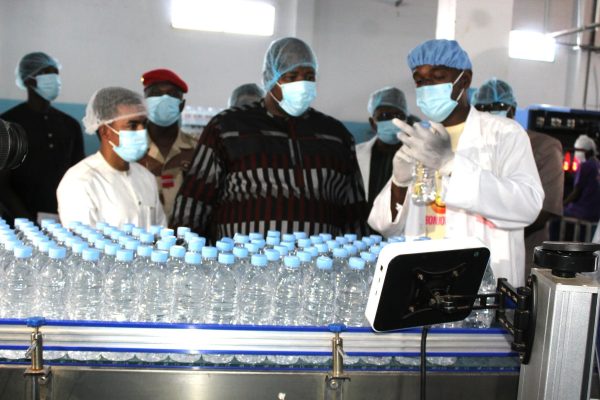
The minister’s itinerary then led to the mineral water plants of Benie and Belvie, where he observed the entire production process—from water treatment to bottling—with a strong emphasis on hygiene standards, industrial quality controls, and compliance with safety protocols.
Power shortages, logistics gaps, and funding hurdles: the real challenges facing local industry
Direct conversations with business leaders during the tour revealed recurring obstacles, including unreliable energy supply, logistical inefficiencies, and limited access to investment capital—all critical barriers to scaling up production.
Minister Abdoulaye Seydou reaffirmed the government’s priorities in response: ensuring that locally manufactured goods meet international quality benchmarks, maintaining fair and transparent pricing within the domestic market, and providing robust support to strengthen Niger’s industrial base—thereby reinforcing the country’s economic independence.
The path to economic resilience through local production
This latest round of on-site inspections follows closely on the heels of an earlier tour through other industrial hubs across Niger. The consistent pace underscores the government’s dedication to staying closely engaged with the private sector and monitoring real progress on the ground.
Local production is increasingly recognized as a key driver of value creation, a tool to curb import costs, and a foundation for strengthening national economic sovereignty. By maintaining this hands-on approach, authorities are positioning domestic industry not just as a sector of growth, but as a cornerstone of sustainable development and a bulwark of Niger’s long-term independence.