
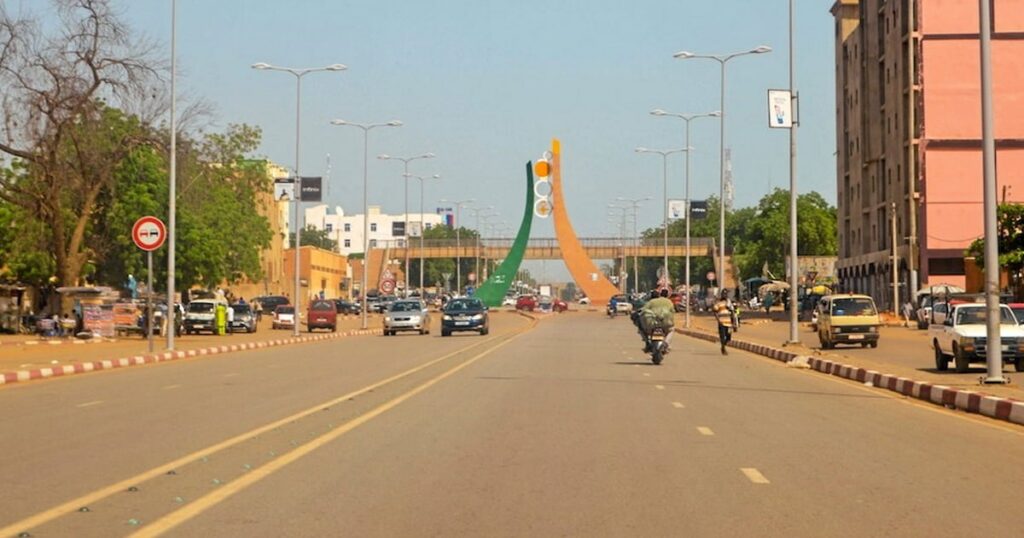
Niger’s military junta escalates repression 18 months after coup
The military regime in Niger, led by the National Council for the Safeguard of the Homeland (CNSP), has significantly tightened its grip on power eighteen months after overthrowing President Mohamed Bazoum in the July 26, 2023 coup. A new report by Amnesty International, published on March 18, documents widespread human rights violations, including forced arrests, arbitrary detentions, media crackdowns, and the suspension of political parties. The document, titled “Niger: Threatened and subdued – human rights and civic space under pressure since the July 26 coup”, highlights severe violations of civil and political rights between July 2023 and January 2025.
Critics and former government officials face systematic repression as the junta weakens civic and political freedoms, deepening societal divisions. Despite initially pledging to uphold the rule of law, the CNSP has since abandoned these commitments, citing a “sovereignist discourse” that condemns “security degradation” and “poor governance” as justification for its actions.
regional instability and the rise of the alliance of Sahel states
The Sahel region has experienced a wave of military takeovers, including in Mali (2020 and 2021), Burkina Faso (January and September 2022), and Niger (July 26, 2023). Facing economic sanctions and the threat of military intervention by ECOWAS, the juntas of Niger, Burkina Faso, and Mali formed the Alliance of Sahel States (AES) in September 2023. This alliance marked a strategic shift, leading to their withdrawal from regional organizations and a break in relations with France and the European Union.
On March 17, the three countries announced their withdrawal from the International Organisation of La Francophonie (OIF), joining ECOWAS in demanding Bazoum’s release. This move underscores a broader trend of distancing from former colonial powers and international bodies that criticize military governance.
erosion of the rule of law under general tchiani
General Abdourahamane Tiani, who seized power in July 2023, vowed to respect human rights and civil liberties in line with Niger’s international commitments. However, Amnesty International’s findings reveal a stark contrast to these promises. “Despite assurances from the new authorities, human rights have been systematically violated both in law and practice. Our report confirms that the Nigerien authorities have failed in their obligations,” states Marceau Sivieude, Amnesty International’s Acting Regional Director for West and Central Africa. The “regression of the legislative framework” is particularly alarming.
Upon assuming power, the junta suspended the 2010 Constitution and key institutions, including the National Human Rights Commission. Replacement structures have yet to materialize, allowing the CNSP to consolidate executive and legislative authority. Governance now relies heavily on restrictive decrees, further undermining democratic norms.
controversial legal reforms and their consequences
One of the most contentious measures is the reinstatement of the 2019 cybercrime law, which, since July 2024, criminalizes defamation, insults, and the dissemination of content deemed disruptive to public order. The vague wording of this law enables the targeting of political opponents. In August 2024, an additional decree expanded the definition of terrorism offenses and authorized the blacklisting of individuals and groups. Those listed risk asset freezes and even the revocation of their citizenship.
Since October 2024, 21 individuals—including former ministers from Bazoum’s government—have been stripped of their nationality. “I only have Nigerien citizenship, and this provisional revocation could render me stateless. I won’t challenge it because there is no rule of law left in Niger,” stated Hamid Ngadé, former communications advisor to the presidency. Amnesty International has condemned these measures, with researcher Ousmane Diallo warning, “This decree strips citizens of their rights based on dissenting opinions.”
The political landscape has been decimated, with all parties suspended since the coup, effectively eliminating institutional checks and balances.
civil society and media under siege
The military junta has intensified its repression of civil society and media outlets, using sovereignty and public order as pretexts to justify its actions. The National Directorate of Security (DGSE) has been implicated in forced disappearances, arbitrary arrests, and prolonged detentions, despite official denials. Civil society leader Moussa Tchangari experienced this firsthand when he was violently arrested at his home on December 3, 2024. Held in secret for days, he now faces charges of terrorism apology, endangering state security, and criminal association, risking up to ten years in prison.
The junta has fostered a dangerous divide in society, labeling critics as “stateless” and rewarding supporters as “patriots.” “We live under a state of exception that poses a grave threat to civil society organizations. People are afraid to speak out or organize activities critical of the authorities,” shared a Niamey-based activist. Once vibrant hubs for activism, civil society platforms are now fragmented and paralyzed by fear.
press freedom in freefall
The CNSP’s crackdown on media freedom has been relentless. The Press House, suspended in January 2024, was replaced by a provisional committee aligned with the regime. International outlets like RFI and France 24 were suspended in August 2023, followed by the BBC in December 2024 for three months.
Journalists are frequent targets. Ousmane Toudou, a former advisor to Mohamed Bazoum, and Soumana Maïga, a newspaper publisher, were arrested in April 2024 for social media posts. Tried in a military court despite their civilian status, Maïga was granted provisional release, while Toudou remains detained. Blogger and activist Samira Sabou was subjected to a forced disappearance before being prosecuted under the 2019 cybercrime law.
Self-censorship has become the norm. Sources refuse to speak on the record, and journalists carefully weigh every word. “Now, when you write, you have to think twice. There’s no one left to defend the press,” confided one journalist to Amnesty International.
“Freedom of expression, dissent, and press freedom are vital for holding governments accountable and ensuring the enjoyment of other rights. Niger stands at a critical juncture,” warns Ousmane Diallo. The political transition roadmap, proposed in late February, recommends a five-year, renewable transition period with the possibility for current leaders to run in future elections. This proposal solidifies the military’s grip on power and further delays the country’s return to democratic governance.


More Stories
Niger : ce que les remaniements militaires disent des tensions au sommet du pouvoir
Togo’s enduring power question: Faure Gnassingbé and the shifting architecture of rule
Educational decay overshadows symbolic cartography in Togo