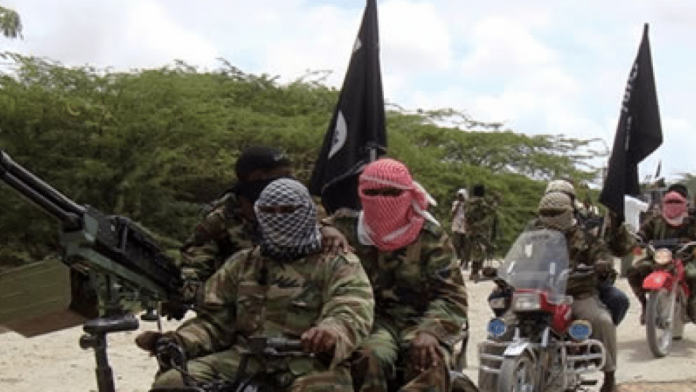
The Nigerian military has attributed the recent abduction of dozens of students and teachers in Oyo State, southern Nigeria, to fighters from the extremist group Boko Haram.
In an official statement, a military spokesperson confirmed that the perpetrators belonged to the jihadist faction Jama’at Ahl al-Sunnah li-l-Da’awah wa al-Jihad (JAS), commonly referred to as Boko Haram. Authorities believe the militants shifted their operations southward after facing heavy resistance from intensified military campaigns in the country’s northern regions.
The violent raids occurred last Friday in the towns of Yawota and Esiele, where heavily armed assailants stormed multiple educational institutions. Official figures remain inconsistent: the Christian Association of Nigeria (CAN) reported 39 children and seven teachers kidnapped, while Oyo State Governor Seyi Makinde cited 25 students and seven instructors abducted.
Security forces are actively searching for the victims, ranging in age from two to sixteen years, along with their educators. This incident marks an unusual escalation in kidnapping-for-ransom cases, as such attacks are typically concentrated in northern Nigeria, rather than in Oyo State, home to the country’s educational hub in Ibadan.
In response to the growing insurgency, Nigerian troops, alongside American allies, have escalated counterterrorism operations in the north. Military pressure is believed to have pushed some militants toward southern territories, where they have carried out brazen assaults on civilian targets.
Recent joint airstrikes in the northeast—historically Boko Haram’s stronghold—allegedly resulted in the deaths of 175 jihadists, according to military sources. Over the past few months, armed groups have broadened their attacks, targeting both civilians and security personnel. Independent security analysis indicates that at least 306 Nigerian soldiers were killed in the first quarter of the year alone.