The Failed Security Promise
On July 26, 2023, General Abdourahamane Tiani justified his coup against President Mohamed Bazoum by vowing to rescue Niger from an escalating security crisis. Yet three years later, the situation remains dire. Insurgencies persist, the economy is faltering, diplomatic ties have frayed, and the state’s financial leeway has dwindled. A closer look at key indicators reveals a nation trapped in a spiral of compounding crises.
The Terror Threat Spreads Unchecked
The general’s primary pledge—to restore security more effectively than civilian rule—has yet to materialize. Armed groups linked to the Jama’at Nusrat al-Islam wal Muslimin (JNIM) and the Islamic State in the Greater Sahara (ISGS) have expanded their reach across multiple regions, evolving their tactics beyond isolated military outposts.
Today, these factions target:
- Military supply convoys;
- Civilian villages and communities;
- Critical road networks;
- Economic infrastructure;
- Supply chains.
Certain areas now face near-constant threats, severely restricting movement for civilians and public services. The consequences are stark:
- Abandonment of arable land;
- Contraction of domestic trade;
- School closures in high-risk zones;
- Obstacles to healthcare access;
- Surge in internally displaced persons.
Military Spending Skyrockets, but Gains Remain Elusive
A significant portion of public funds has flowed into the defense sector since the regime change. Yet this influx has not translated into decisive battlefield advantages.
The armed forces grapple with:
- A vast, difficult-to-control territory;
- Multiple active fronts;
- Highly mobile terrorist cells;
- Chronic logistical bottlenecks.
Persistent pressure on troops has led to:
- Personnel fatigue;
- Accelerated equipment wear;
- Surging operational costs.
Each new attack underscores the limitations of a purely military approach to a crisis rooted in economic, social, and territorial grievances.
Economic Strangulation: A Growing Toll
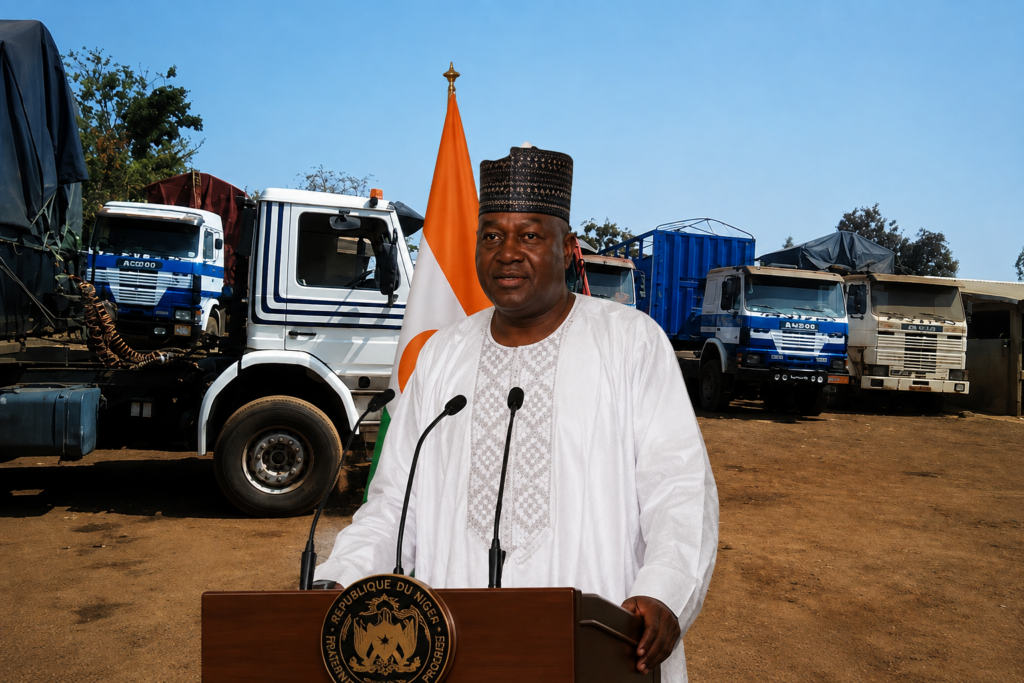
Niger’s prosperity has long depended on regional trade routes. The closure of the border with Bénin and the resulting diplomatic tensions have shattered these lifelines.
The historic Cotonou-Niamey corridor, once the country’s most efficient trade artery, now faces:
- Extended supply delays;
- Soaring transport costs;
- Frequent stock shortages;
- Widespread price inflation.
Families bear the brunt, struggling to afford staples, medicines, construction materials, and other essentials. Small businesses and logistics firms—particularly in border cities like Gaya—have seen revenues plummet, with transporters, freight forwarders, and hospitality services hit hardest.
Investment Stagnates Amid Uncertainty
Political instability and diplomatic friction have created an inhospitable climate for private capital. Investors typically seek:
- Stable institutions;
- Clear regulatory frameworks;
- Reliable commercial ties;
- Predictable economic policies.
Niger now presents a high-risk profile, marked by:
- Ongoing sanctions;
- Logistical bottlenecks;
- Elevated security risks;
- Fluctuating policies.
This environment deters new ventures and prompts existing operators to delay or cancel projects.
The Niger-Bénin Pipeline: A Project at Risk
The Agadem-Sèmè oil pipeline, touted as a potential engine of development, now hangs in the balance. Revenue from oil was meant to fund critical infrastructure and services. However, the diplomatic rift with Bénin has jeopardized the project’s viability.
Beyond geopolitics, the uncertainty surrounding this infrastructure sends a chilling signal to international investors, who favor stable environments for long-term commitments.
Diplomatic Isolation Deepens
The military regime has overhauled Niger’s foreign policy, severing ties with traditional Western partners while forging closer bonds with Russia and joining the Alliance of Sahel States (AES) alongside Mali and Burkina Faso.
Proclaimed as a quest for sovereignty, this pivot has yet to yield tangible benefits. The country now faces:
- Reduced international funding;
- Limited technical cooperation;
- Straightened regional dialogue;
- Restricted access to multilateral mechanisms.
The promised autonomy appears compromised by new dependencies—particularly in the security sector, where Russian involvement now supplements the withdrawal of French forces.
Public Services Crumble Under Fiscal Pressure
The redirection of funds toward military priorities has left social sectors underfunded. Schools, hospitals, and local services are struggling with:
- Inadequate infrastructure;
- Supply chain disruptions;
- Delayed public projects;
- Deteriorating community services.
This imbalance risks creating a vicious cycle: rising defense spending crowds out development investments, even as the latter are crucial to addressing the root causes of insecurity.
Daily Life Reflects the Crisis
Beyond statistics, Nigeriens confront a harsh reality:
- Relentless price increases;
- Shrinking job opportunities;
- Declining incomes in border regions;
- Uncertain economic prospects.
These pressures erode social cohesion and heighten vulnerability among marginalized communities.
A Governance Model Stuck in Neutral
Three years after seizing power, the junta’s narrative of restored security, renewed sovereignty, and improved living standards has failed to materialize. Insurgencies rage, the economy stagnates, public finances are strained, and diplomatic isolation widens. The reliance on military solutions, regional tensions, and structural economic flaws have woven a web of interlinked crises that grow harder to escape with each passing day.

More Stories
Benin road safety crackdown: will the fines really change driver behaviour?
Ivory Coast: can the World Bank’s $5.3 billion portfolio deliver the promised jobs?
Can Burkina Faso’s Nanga armored vehicles be trusted if the factory stays hidden?