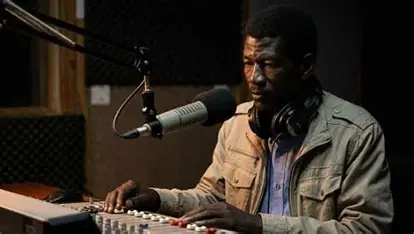
Sixty days after investigative journalist Moussa Kaka vanished in Niamey, the Nigerien military government led by General Abdourahamane Tiani is reeling from accusations of orchestrating a cover-up rather than revealing the truth. Despite a belated admission of detention, authorities have yet to disclose where he is held, the legal grounds for his arrest, or the conditions of his confinement leaving his family in a state of protracted uncertainty and undermining public trust in a regime that claims to champion transparency.
The final hours before disappearance
On the evening of August 31, 2026, Moussa Kaka, director-general of Radio Télévision Saraounia, left his office in Niamey just after 7:00 PM to return home. His car was last tracked within the city limits, and no signs of forced entry or struggle were reported at either the media outlet or his residence. For weeks, his relatives, colleagues, and friends found themselves navigating a maze of conflicting rumors and official evasions, with no verified information about his whereabouts or even whether he was still alive.
From denial to delayed acknowledgment: A pattern of opacity
The enforced disappearance occurred amid a tense climate in Niamey, where a military mutiny on August 29 had targeted strategic installations and triggered a wave of internal arrests. While officials initially refused to link the two events, the timing invited immediate suspicion. It took until September 25 coinciding with Niger’s Universal Periodic Review at the UN Human Rights Council in Geneva for Justice Minister Alio Daouda to acknowledge publicly that Kaka was in custody. A follow-up confirmation on October 6 confirmed that the journalist was alive, yet no details followed.
The admission did not resolve the crisis. Instead, it exposed glaring inconsistencies in the government’s narrative. Authorities have failed to address critical questions: the legal basis for detention, the specific charges, the identity of the detaining authority, the physical location of confinement, and whether Kaka has seen a judge or legal counsel. Families of detainees especially high-profile cases are routinely denied access, reinforcing a culture of intimidation beneath the regime’s claimed commitment to national restoration.
Military rule’s shadow over press freedom
The case of Moussa Kaka has evolved from a personal tragedy into a litmus test for freedom of expression under Niger’s military leadership. Kaka, a veteran journalist with decades of reporting on political and security issues including a stint as a correspondent for an international broadcaster has faced repression before. In 2007, under former President Mamadou Tandja, he was jailed for 379 days on politically motivated charges before being freed amid national and international pressure. His reappearance in state custody two decades later, under a new regime that pledges democratic restoration, raises urgent questions about whether the military’s vision of sovereignty prioritizes control over civil liberties.
The regime’s refusal to disclose Kaka’s detention site or charges violates the foundational principle of legal certainty. When a state detains a citizen, even under emergency laws, its obligation to provide clear, accessible information is not optional. Yet the Tiani administration continues to invoke administrative silence as a shield against accountability, turning opacity into a policy.
International obligations and international scrutiny
The enforced disappearance has drawn condemnation from global rights organizations. The UN Working Group on Enforced or Involuntary Disappearances has formally requested the Nigerien government to clarify Kaka’s fate and location. Human Rights Watch, in a statement issued October 28, demanded that Niamey reveal where he is being held, ensure his safety, and release him if no credible charges exist citing Niger’s 2015 ratification of the International Convention for the Protection of All Persons from Enforced Disappearance, whose Article 17 explicitly prohibits secret detention.
The convention obliges signatory states to maintain a public registry of detainees, allow independent monitoring, and permit family and legal access within 48 hours of custody. Niger’s failure to meet these standards despite endorsing them undermines its international standing and casts doubt on its commitment to rule-of-law values under military stewardship.
Two months of silence: why the regime can no longer hide
Sixty days after Kaka’s disappearance, one reality remains unchallenged: the government holds him, yet refuses to say where, why, or under what conditions. This is not only a human rights breach it is a sovereignty paradox. A state that cannot account for its own detention practices cannot credibly claim to restore order or national dignity.
The crisis has exposed a deeper fracture in the Tiani regime’s legitimacy. If sovereignty means the unchecked power to detain citizens without transparency, then it becomes indistinguishable from arbitrariness. Kaka’s plight is now a symbol not only of press freedom but of whether Niger’s return to civilian rule, repeatedly promised by the junta, includes the restoration of fundamental freedoms.
As international pressure mounts and domestic unease grows, one question lingers: after two months of stonewalling, what else is the regime hiding?
Key demands emerging in public and diplomatic circles:
Immediate disclosure of the detention facility and detaining authority
Presentation of Kaka before a magistrate within 48 hours of revelation
Guaranteed access for family and defense counsel
Public disclosure of any charges, supported by verifiable evidence
Protection against torture or ill-treatment during custody
The road ahead: accountability or impunity?
Moussa Kaka’s story is not just about a missing journalist. It is about a regime that has traded secrets for control, silence for compliance, and secrecy for sovereignty. In a nation still recovering from political turbulence, the unanswered questions surrounding his detention threaten to eclipse every claim of renewal. Without urgent action to reverse the culture of concealment, the credibility of Niger’s transition risks collapsing under the weight of its own contradictions.
By Emmanuel Mbarga — Journalist