Burkina Faso’s top diplomat calls for transformative african union reforms during high-level meeting
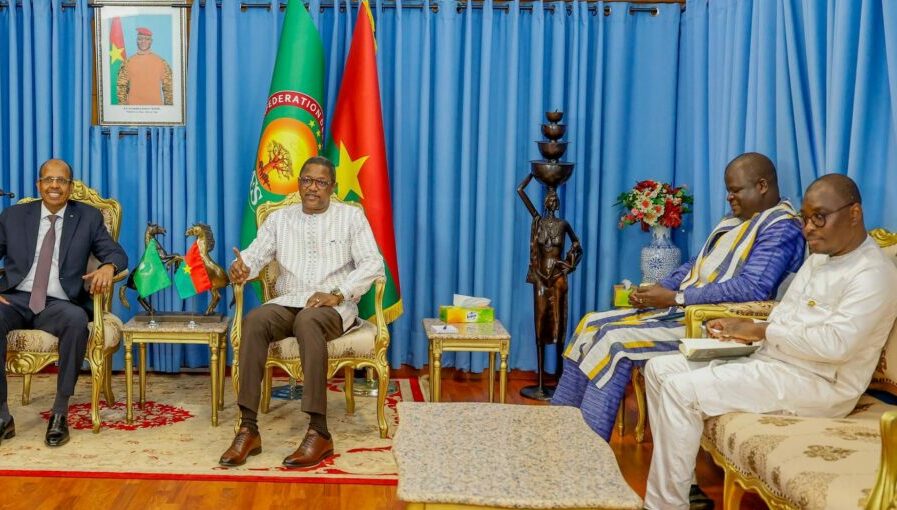
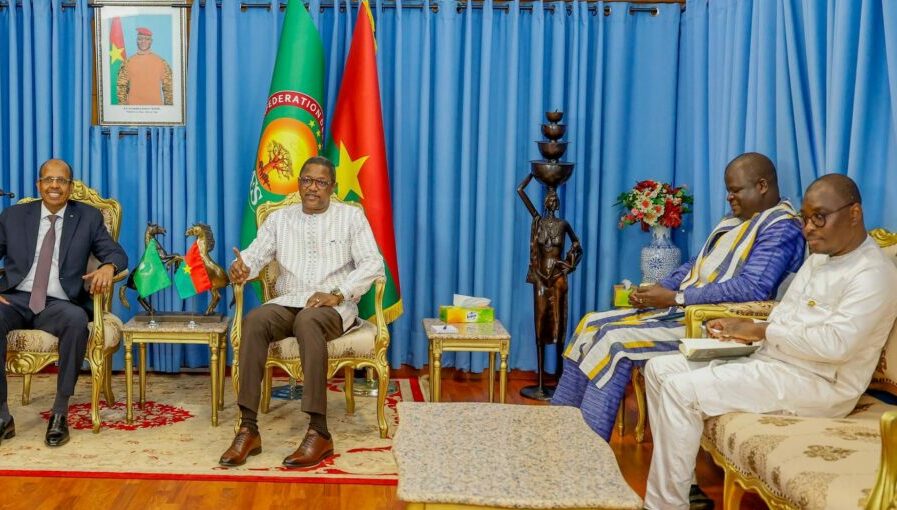
During a working visit to Burkina Faso as part of a regional tour, Mahamoud Ali Youssouf, President of the African Union Commission, engaged in critical discussions with Karamoko Jean Marie Traoré, Burkina Faso’s Minister of Foreign Affairs, on Wednesday, July 15. The meeting focused on strengthening ties between the continental body and the West African nation while addressing shared challenges in the Sahel region.
The bilateral talks covered Burkina Faso’s evolving political landscape, its security situation, and the country’s relationships with neighboring states. A key topic was the ongoing dialogue between the Economic Community of West African States (ECOWAS) and the Alliance of Sahel States (AES), a coalition formed by Burkina Faso, Mali, and Niger to address regional instability.
The African Union delegation emphasized a renewed commitment to collaboration with Burkina Faso, guided by the principles of continental integration and mutual solidarity. Mahamoud Ali Youssouf outlined the AU’s strategic vision for the Sahel, structured around three pillars: governance, security, and sustainable development.
The AU’s strategy includes operationalizing specialized agencies within Burkina Faso and launching initiatives that deliver tangible benefits to local communities. Youssouf stressed the importance of translating continental policies into real-world impact, ensuring that Burkina Faso—and the broader Sahel—sees measurable improvements in stability and prosperity.
Minister Traoré provided historical context for the AES, framing its creation as a response to perceived failures in continental solidarity amid escalating security threats. He called for bold and impartial reforms within the African Union to restore confidence among member states. Traoré warned that without meaningful change, frustrations could deepen, particularly among nations actively seeking to secure their populations and assert their sovereignty.
Highlighting the need for a self-reliant African Union, Traoré proposed financial autonomy as a cornerstone of modernization. He argued that over-reliance on external funding restricts the continent’s strategic decision-making freedom. Additionally, he underscored the importance of strategic communication to counter negative narratives and showcase the progress of African states.
The Minister advocated for a diplomacy of proximity, emphasizing inclusive engagement with all member states to foster a more responsive and united African Union.