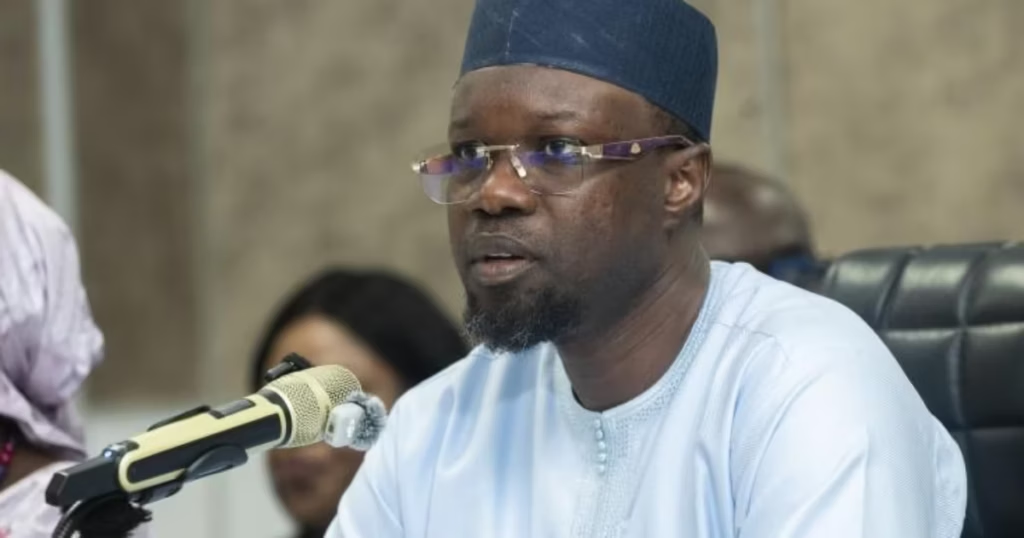
Ousmane Sonko exposes systemic reshuffle in Senegal’s leadership
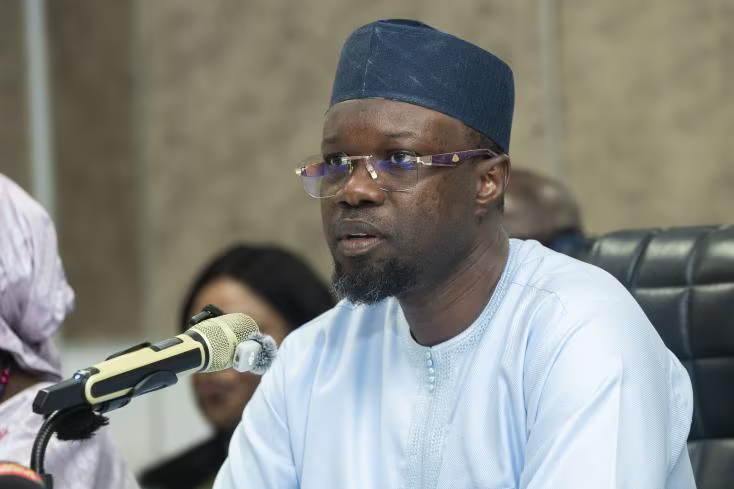
In a candid address, Ousmane Sonko dissected the evolving power dynamics reshaping Senegal’s political landscape, warning of a troubling regression.
During a high-energy rally in Dahra Djoloff last Saturday, Ousmane Sonko, President of the National Assembly, delivered a scathing critique of what he described as the re-emergence of entrenched political practices under the current administration. Addressing a packed crowd of activists, he expressed disbelief at the apparent betrayal of founding principles by once-loyal allies, particularly after the historic transition that brought them to power.
The opposition leader emphasized that this shift transcends individual personalities, framing it as a systemic failure to uphold core commitments: transparency, accountability, and judicial integrity. « This isn’t about people—it’s about the integrity of our promises, our vision for a Senegal free from the shadows of the past, » he declared, outlining the pillars of the reform agenda that once galvanized supporters nationwide.
But it was his analysis of the structural overhaul within state institutions that resonated most deeply. « The very system we sought to dismantle has reorganized itself within the Palace, slipping back into familiar but destructive habits, » he asserted, accusing the government of reverting to the very practices they had pledged to eradicate.
Institutional power vs. popular sovereignty
Sonko highlighted what he sees as a dangerous imbalance between institutional authority and democratic legitimacy. « President Diomaye may command state institutions, but institutions alone do not make a democracy. The true sovereign is the people—not the apparatus of the state, » he warned, suggesting that a leadership disconnected from its electoral base may increasingly rely on state machinery to consolidate power.
Judicial independence under threat
He further alleged systematic efforts to influence Senegal’s highest courts, claiming maneuvers are underway to bring the Supreme Court and Constitutional Council under political control. « These developments reveal the depth of this reorganization—six years into the promised alternance, » he argued, framing the issue as a betrayal of the transformative vision that once defined their movement.

More Stories
Senegal’s electoral system: can a bold overhaul make every vote count?
Can Senegal’s President really dissolve a parliament led by his rival?
Can Sadio Mané really beat Ousmane Sonko in Bambali in 2029?