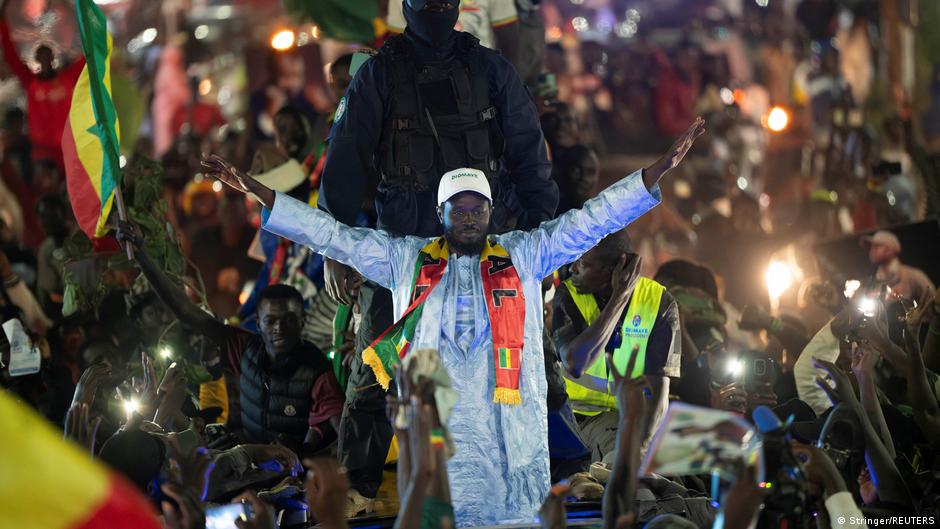
In his hometown of Mbour, Senegal, the presidential coalition Diomaye Président sent a clear message to the political party Pastef. Two years into his presidency, Bassirou Diomaye Faye is now asserting his own political leadership, moving beyond the movement that propelled him to power in 2024.
The event, labeled as a routine meeting of assessment, carries significant political weight. It reflects the internal power dynamics within the ruling majority and sets the stage for upcoming electoral challenges, including legislative and presidential elections.
Building an autonomous presidency
For months, the Senegalese president has been gradually distancing himself from Pastef, the party led by his Prime Minister Ousmane Sonko. In an interview in early May, Bassirou Diomaye Faye criticized what he described as an “excessive personalization” of the political project—a veiled critique aimed at Sonko’s dominant role in Senegalese politics.
The Mbour meeting is part of this strategy. Observers see it as an attempt to nurture a “Diomayiste” movement, centered around the presidency and distinct from Pastef’s militant base. This shift underscores the constitutional hierarchy, reinforcing the president as the ultimate authority in the executive branch.
The high-stakes popularity test
Choosing Mbour was no coincidence. The city is both an electoral stronghold and a secure venue to gauge presidential mobilization. The impressive turnout at the Caroline Faye stadium demonstrated the coalition’s support beyond strict Pastef networks, even though the president’s absence—replaced by a video address—sparked discussion.
Analysts highlight two key objectives: proving a broad popular base and preparing the public for potential political reshuffling ahead of the 2029 presidential election. This meeting also served as a rallying point, with the executive acknowledging “challenging times” ahead due to budget constraints and debt pressures.
The 2029 question: a second term in sight?
At Mbour, coalition leaders openly urged Bassirou Diomaye Faye to seek re-election—a premature yet telling stance. If permitted by the Constitution, this ambition could reshape the majority, either through prolonged cohabitation with Sonko or a clear division of roles and ambitions.
The relationship between the two leaders is increasingly strained. Targeted dismissals, a revamped presidential communication strategy, and power struggles within the coalition reveal a simmering power struggle at the highest level. While an open rupture could destabilize the majority, an unclear cohabitation risks accelerating political fatigue.
The president faces immense social expectations: youth employment, living costs, judicial reforms, and economic governance. Despite some progress, delayed reforms and lingering public dissatisfaction—especially regarding economic hardships—are fueling impatience across Senegal.
A defining moment for Senegal
The Mbour gathering marks a turning point in the five-year term. It signals Bassirou Diomaye Faye’s transition into a more traditional, yet riskier, phase of leadership—one where he must balance political loyalty, institutional authority, and future planning.
Will this strategy of differentiation strengthen his position or trigger a prolonged crisis within the majority? In a country where unity has long been touted as the cornerstone of the “rupture” promised in 2024, the stakes couldn’t be higher.