Sénégal’s debt dilemma draws experts to Dakar conference
The bustling city of Dakar recently hosted a pivotal two-day event: the International Conference on Debt in Sénégal. Titled « Debt crisis in Sénégal: toward sustainable, progressive solutions beyond IMF austerity », the gathering brought together economists, financial analysts, and policymakers to dissect the nation’s escalating debt burden.
Participants emphasized the urgency of rethinking traditional approaches, with many questioning the role of international financial institutions in shaping Africa’s economic trajectory.
Criticism mounts against IMF’s role in African debt
Among the most vocal critics was Ndongo Samba Sylla, regional director for Africa at the International Development Economics Associates (Ideas). Sylla argued that the International Monetary Fund (IMF) is not part of the solution but rather a contributor to Sénégal’s debt crisis.
« The IMF doesn’t solve the problem—it perpetuates it, » Sylla declared to a packed auditorium. « Its pro-creditor policies, often steered by geopolitical interests of Western powers like the United States and France, entrap African nations in cycles of unsustainable debt. The most indebted countries are usually those aligned with Western agendas, reinforcing global power imbalances. The IMF will never be the answer. »
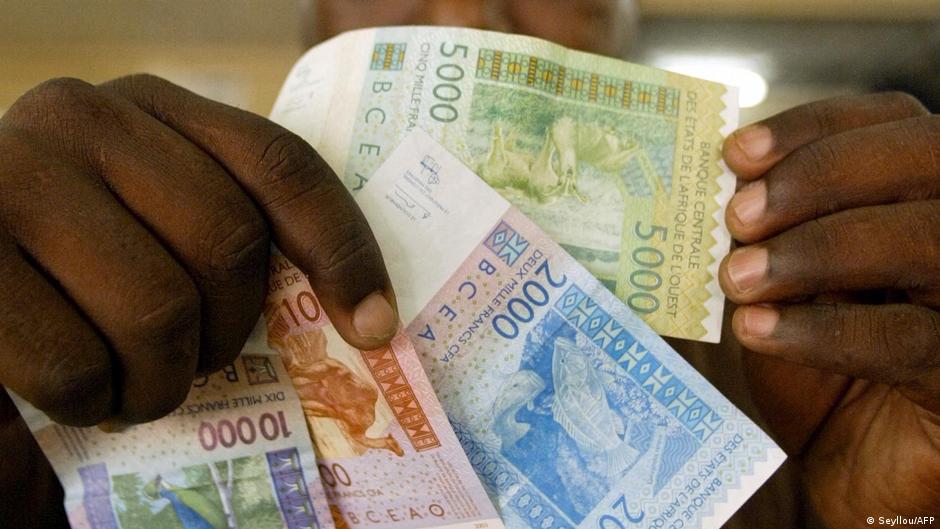
Illustration: West African CFA franc banknotes, 2004
Proposals for collective African solutions
The debate extended beyond IMF criticism, with Sylla highlighting the West African franc (CFA franc) as a structural obstacle. However, this view was challenged by Alioune Tine, founder of the Afrikajom Center, who framed the debt crisis as fundamentally political.
« A collective African response is essential, » Tine asserted. « Only through unified action can countries resist austerity measures that suffocate our economies. Sovereignty shouldn’t mean isolation—we must leverage global interdependence to reshape debt negotiations. »
Sénégal’s debt exceeds 130% of GDP
In late 2024, Prime Minister Ousmane Sonko exposed hidden debts and budgetary irregularities inherited from the previous administration. These revelations were later corroborated by the IMF, which estimates Sénégal’s debt at over 130% of GDP.
Sylla advocated for outright cancellation of « illegal debts, » arguing that a well-managed central bank could restructure payments without crippling state budgets. Tine, meanwhile, urged a pragmatic approach, warning against emotional reactions that sidestep systemic realities.
« We must move beyond outdated notions of sovereignty, » he said. « In today’s globalized world, power dynamics demand collaborative strategies—no nation can tackle debt in isolation. »
Government vows to strengthen fiscal oversight
The ruling Pastef-Les Patriotes party has pledged reforms to prevent future debt crises. Ayib Daffé, parliamentary group leader, stressed the need for stricter parliamentary oversight of debt management and budget execution.
« To prevent repetition of this crisis, » Daffé stated, « we must enforce rigorous parliamentary control over debt accumulation and ensure budget laws adhere to transparency and accuracy. »
Meanwhile, President Bassirou Diomaye Faye met with IMF Managing Director Kristalina Georgieva in Nairobi, framing the talks as a search for « a viable pathway forward for a nation grappling with economic hardship since 2023. »