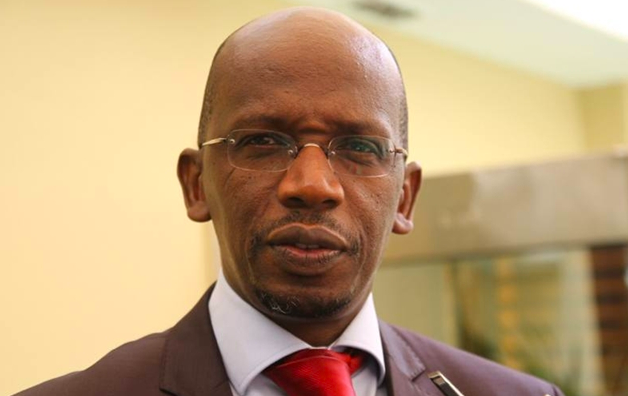
From 2024 to 2026, Senegal experienced a profoundly insightful chapter in its modern history, impacting governance, country risk, strategic communication, and global perception. The period, highlighted by Ousmane Sonko’s tenure as Prime Minister, starkly revealed how precarious governance, aggressive public rhetoric, and institutional unpredictability can swiftly undermine a nation, even one with robust economic foundations. International analysts now consider this era a pivotal case study, given its far-reaching consequences on investor confidence, overall stability, job creation, financial credibility, and Senegal’s international appeal.
A historic collapse in foreign direct investment: governance, not economics, was sanctioned
In 2025, foreign direct investment (FDI) in Senegal plummeted by an unprecedented 98.9%, falling from 3,319 million USD to a mere 37 million USD. This dramatic decline marked the largest contraction ever witnessed in an African nation without a significant external shock. The shift cannot be attributed to weakening economic fundamentals; growth remained strong at approximately 7.9%, oil production was rising, and the existing FDI stock exceeded 24.9 billion USD. Despite this, Senegal slid from being Africa’s second-leading FDI destination in 2023 to the 46th position by 2025.
Investors were not penalizing the economy itself, but rather its governance. The perceived power struggle within the Prime Minister’s office, conflicting policy signals, aggressive renegotiations of oil contracts, the disclosure of a hidden debt that pushed national indebtedness to 119% of GDP, and the reluctance to formalize an IMF program collectively generated institutional uncertainty. This uncertainty was swiftly priced in as a risk premium. Four downgrades by Moody’s within a year, coupled with S&P’s rating cut to CCC+, exacerbated the situation, leading to a widespread sell-off of Senegalese eurobonds.
A major social shock: the destruction of job creation momentum
The repercussions on job creation were both immediate and profound. The sharp decline in FDI brought an abrupt halt to greenfield projects, industrial expansions, service sector establishments, and the development of logistical or technological hubs. Greenfield projects had already seen a 37% reduction in 2024, signaling a deepening crisis of confidence. In a nation where FDI drives industry, services, and infrastructure, this contraction led to a mechanical reduction in direct, indirect, and induced employment. This created an unprecedented disconnect between a seemingly high-growth economy and a contracting labor market.
Adding to this challenge was the sudden cessation of construction and public works (BTP) projects, a sector traditionally responsible for vast job opportunities. The suspension of both public and private initiatives resulted in a significant loss of employment, affecting laborers, technicians, machinery operators, subcontracting SMEs, and the entire building supply chain. The BTP sector, which typically stimulates commerce, transport, materials, and services, found itself paralyzed, thereby exacerbating social vulnerability. Thus, the contentious governance exerted a dual destructive impact: it halted value-creating investments and crippled the projects that underpinned daily economic activity.
A suffocated national private sector: the primary crisis barometer
Senegal’s national private sector was the first to bear the brunt of this governance crisis. Facing substantial payment delays, dwindling credit lines, a lack of clear foresight, and public statements that fueled uncertainty, businesses saw their profit margins shrink and their future prospects diminish. A definitive assessment indicated that Senegal “won the battle of numbers but lost the battle of narrative,” with public discourse evolving into a “financial asset; its inconsistency, a risk premium.”
The nation entered a critical zone on the Country Narrative Risk Index (IRNP), where the risk narrative became 5.1 times more prominent than the opportunity narrative. This shift intensified caution among banks, investors, and international partners, escalating a governance issue into a systemic crisis of confidence.
Destabilizing geopolitical rhetoric: when discourse becomes a diplomatic risk
The geopolitical pronouncements made by the former Prime Minister further solidified the perception of diplomatic unpredictability. By characterizing the Iran-United States conflict as a “war initiated by the United States and its Israeli ally,” he projected an image of confrontation within an already polarized international landscape. For investors, every statement becomes a country risk indicator, particularly when internal governance is already perceived as unstable.
In an interconnected world where financial markets scrutinize diplomatic signals with extreme sensitivity, a comment made in Dakar can quickly become a headline in London, an alert in New York, or an analyst’s note in Washington. Public discourse has transformed into a critical tool for financial stability, and its inconsistency, a significant driver of volatility.
A case study for international institutions and governance schools
This period in Senegal’s history should now serve as a definitive case study in curricula for geopolitics, public governance, strategic communication, and country risk management. It illustrates that sovereignty is not merely declared; it is meticulously built through rigor, consistency, discipline, and a skilled command of the international narrative. Furthermore, it demonstrates that fragmented or confrontational public discourse can evolve into a significant financial risk factor, capable of eroding a state’s credibility irrespective of its underlying fundamentals.
The return of donors: evidence of a shifting international narrative
The evidence now unequivocally supports this conclusion. Less than three months following the former Prime Minister’s departure, international donors began their return. The World Bank approved 140 million USD to enhance road connectivity in the Northern and Central agricultural regions. Concurrently, the African Development Bank endorsed 35 million USD to bolster public finances.
These commitments are more than mere technical operations; they offer tangible proof that Senegal’s international narrative is undergoing a transformation. Donors typically resume engagement only when governance becomes predictable once more, when public discourse ceases to be a risk factor, and when the state demonstrates a renewed capacity to communicate with a unified voice.
A lesson for Africa and for emerging markets
Senegal’s recent experience provides a broader lesson for emerging markets globally: in an environment where financial flows are highly sensitive to narrative, stability is not declared; it is proven. Trust is not demanded; it is painstakingly built. And attractiveness is not maintained through slogans, but through daily discipline, institutional coherence, assumed predictability, and expertly managed economic communication.
Senegal has the opportunity to mend the disruption of 2025. However, this recovery necessitates a governance approach that acknowledges the narrative as a crucial financial asset. When governance consistently aligns, international appeal inevitably follows. Always.
More Stories
Can Gabon’s poultry import ban survive the WTO test?
Can Mali’s independence parade coexist with a shared AES identity?
Gabon’s fisheries deal with Europe: can Libreville turn access rights into real local wealth?